“Within a boys’ school environment, teachers are able to tailor learning experiences specifically to how boys engage best.”

Across Australia and internationally, there is growing research highlighting a concerning trend in boys’ education.
While many boys appear settled and compliant while studying, research from organisations including the Australian Council for Educational Research (ACER), the University of Melbourne and UNESCO suggest boys are increasingly at risk of disengaging from learning over time, particularly in literacy, motivation and academic confidence.
Importantly, this disengagement is not always visible through poor behaviour or disruption. More often, it appears quietly through reduced confidence, reluctance to take academic risks, lower levels of persistence and gradual withdrawal from reading, writing and classroom participation.
This research continues to reinforce the importance of environments intentionally designed for the way boys learn and develop.
At Toowoomba Grammar School, our approach to boys’ education is grounded in the understanding that boys benefit from clarity, structure, positive relationships, purposeful challenges and a culture where it is socially acceptable to engage fully in learning.
From the earliest years of Junior School through to the Senior School, we intentionally shape learning environments that support boys academically, socially and developmentally.
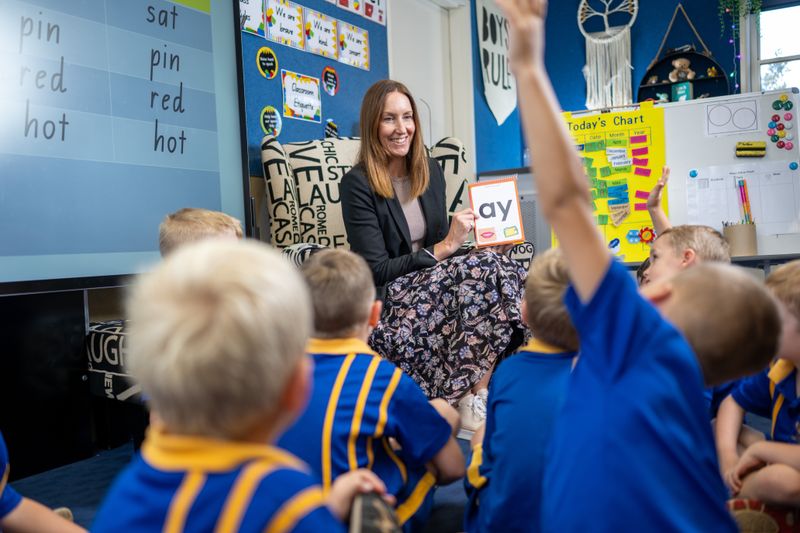
Building strong foundations in the Junior School
Research consistently shows that the primary school years are critical in shaping boys’ attitudes towards learning, literacy and self-belief.
This is particularly important for boys, who often develop language, organisation and self-regulation skills at different rates to girls during early childhood and adolescence (Rinaldi et al., 2021; van Tetering et al., 2020).
An all‑boys environment provides a valuable context to respond intentionally to these developmental patterns, supporting confidence, participation and a willingness to take academic risks.
This includes clear routines, explicit instruction, movement and hands-on learning opportunities, strong relational teaching and consistent expectations.
Importantly, boys are able to learn, contribute and grow without many of the social pressures that can emerge during adolescence.
This creates classrooms where boys are encouraged to ask questions, participate openly and develop confidence in themselves as learners from an early age.
A strong focus on literacy and communication
One of the greatest challenges identified globally in boys’ education is literacy engagement. Research shows boys are statistically less likely to read for enjoyment and are more at risk of falling behind in writing and communication skills as they progress through schooling (OECD, 2019).
At TGS, literacy development remains a significant focus across all year levels and subject areas. Reading, writing, discussion and communication are embedded intentionally throughout the curriculum. They are not confined to English classrooms alone.
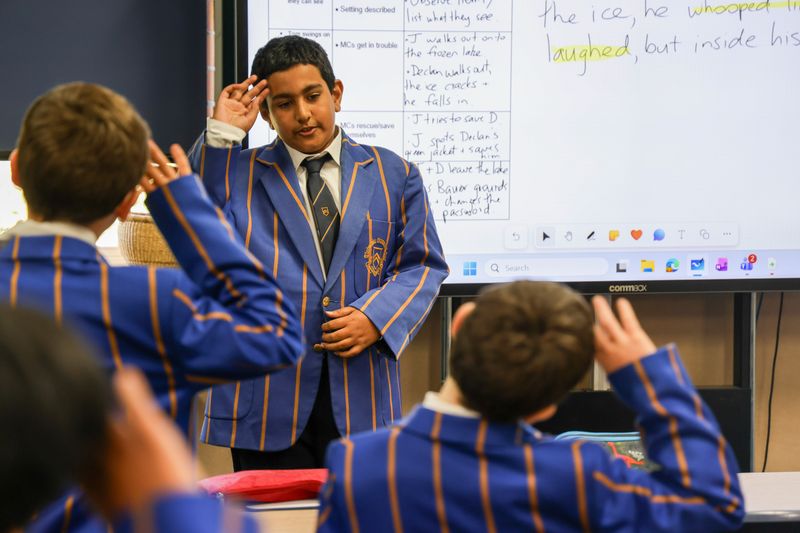
Teachers work deliberately to make learning visible and achievable, helping boys build confidence through structured support, clear feedback and explicit teaching practices.
Importantly, we see strong evidence that boys respond positively when expectations are high, learning is purposeful, and teachers provide clarity around what success looks like.
The power of positive academic culture
One of the often-overlooked strengths of boys’ education is culture.
In schools where academic effort is visible, encouraged and respected, boys are significantly more likely to participate openly and engage deeply in learning.
At TGS, we work intentionally to create a culture where boys can pursue academic success without hesitation and where curiosity, participation and effort are positively reinforced.
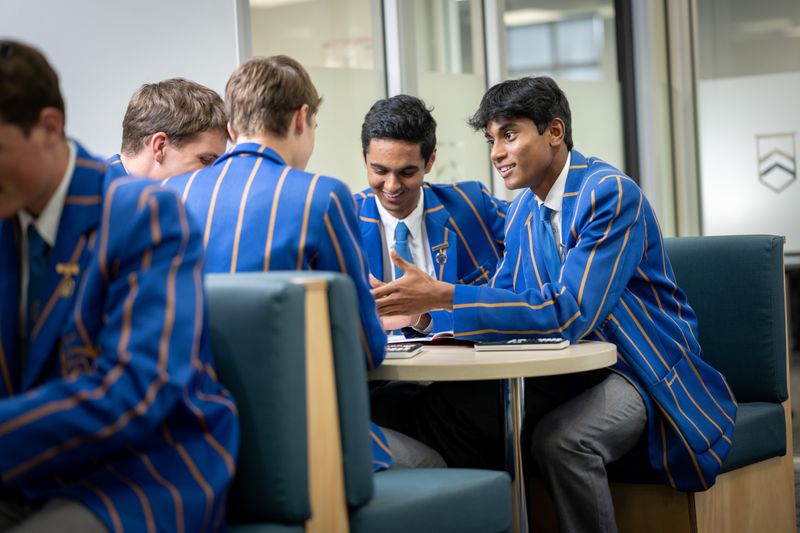
This matters because peer culture has a profound impact on boys’ attitudes towards learning, particularly during adolescence.
When boys see other boys contributing in class, asking questions, reading, performing, creating and striving for improvement, it helps normalise academic engagement and builds confidence across the cohort.
Relationships remain central
While structure and teaching practice are important, relationships remain at the centre of effective boys’ education.
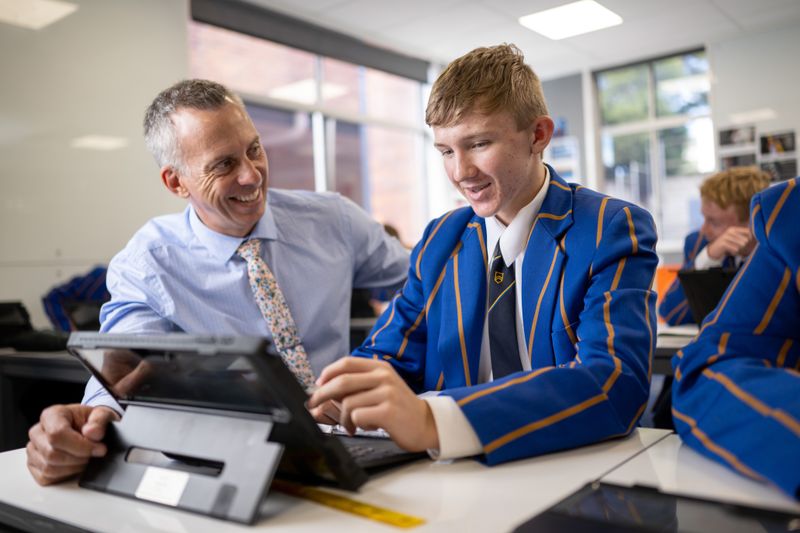
Boys engage best when they feel known, supported and challenged by trusted adults who genuinely understand them.
Across the School, strong relationships between staff and students help create learning environments where boys feel safe to contribute, seek feedback, persist through challenge and continue developing confidence over time.
This relational approach is particularly important during the middle years of schooling, when boys are navigating significant academic, emotional and social growth.
Preparing boys for the future
A high-quality boys’ education is not simply about improving classroom engagement. It is about developing capable young men who can think critically, communicate effectively, collaborate with others and approach challenge with confidence.
At TGS, we believe boys thrive when learning environments are intentionally designed to support both achievement and character development.
By combining strong relationships, explicit teaching, high expectations and a culture that values participation and growth, we continue to create conditions where boys can engage deeply in their learning and build the foundations for long-term success.
References
OECD. (2019). PISA 2018 results (Volume I): What students know and can do. OECD Publishing. https://doi.org/10.1787/5f07c754-en
Rinaldi, P., Pasqualetti, P., & Caselli, M. C. (2021). Gender differences in early stages of language development: Some evidence and possible explanations. Journal of Neuroscience Research, 99(10), 2435–2447
van Tetering, M. A. J., van der Laan, A. M., de Kogel, C. H., de Groot, R. H. M., & Jolles, J. (2020). Sex differences in self‑regulation in early, middle and late adolescence. PLOS ONE, 15(1), e0227607
Want to know more?
The best way to understand the value of a TGS education is to see the School in action via a Personalised Tour.
Book Your TourLatest Blog
Honouring Tradition, Preparing for the Future
They will invariably be inspired by effective teaching and the satisfaction of personal achievement will always be motivating. At Toowoomba Grammar School, the power of high-quality instructional practices has resulted in the development of a strong academic culture that has endured for nearly 150 years. Preserving core principles provides stability and continuity. However, we must be open to continuously adapting our methods so that our students are well-prepared for the ever-changing world…
We See You - Mitchell Wilkes
That was the heart-wrenching diagnosis for Year 10 student, Mitchell Wilkes, right on Christmas in 2021. Mitchell’s mum noticed he wasn’t reading properly and had a gut feeling that there was something wrong with his eyesight. A trip to the optometrist revealed a thinning in the retina, and further tests showed that Mitchell had a genetic condition called Stargardt Disease, a juvenile macular degeneration illness that results in slow central vision loss.
Correcting our School's official record commemorating World War I and World War II
On the eve of our 150th year, we're calling on the School's alumni, parents, past parents and greater community to aid us in correcting the record of our involvement in two watershed geopolitical events of the 20th century. For the last four years Toowoomba Grammar School Museum Volunteers, Mrs Ann Hallam and Mrs Sue Palmer, have been updating the School records on Old Boys, staff and Trustees for the World War I and World War II theatres of war. Over the years several staff and volunteers have…
A Pioneering Woman of TGS
My late husband was a teacher, and our four children are all teachers, which we encouraged them to do because it is the best job in the world. It’s hard to believe I’ve been here for 36 years, working under four Headmasters: Mr Bill Dent, Mr Hugh Rose, Mr Peter Hauser and now Dr John Kinniburgh. I still drive into the School each day and smile, looking at the beautiful place it is — magnificent ovals, gracious trees and historically significant buildings. It is difficult to express the…
NZ Rugby Tour success, more than winning matches across the Ditch
The teams were undefeated and it was a trip the players will never forget. This tour was years in the making and heralds a new era of touring and hosting different rugby schools to give our players opportunities for growth as athletes and as people. Head of Sport - Rugby, Mr Lincoln Clapham, explained they selected 46 students to take part in the ten-day tour and began training last year. From Term 1 onwards, the squad trained twice weekly on the oval plus two and sometimes three gym sessions…
Aussie Teen Reading Habits Revealed
I was recently sent an article, summarising some research from Deakin University around the reading habits of teens in 2024. Some of it was, as the title suggests, surprising. Some was not. However, all of it was built around the importance of reading, and supporting our teens to read, which is something that every one of us should do. While we tend to see our teens as digital natives, recent research from Deakin University suggests that the average Aussie teen reader would rather flick through…
Now More Than Ever
The one-of-a-kind Indigenous artwork is emblazoned across the shirts for the First IV Tennis team, jerseys for the First XI Football team and First XV Rugby team and First V Basketball team's singlets. National Reconciliation Week is a significant date on the calendar for all Australians, running from Monday, 27 May to Monday, 3 June. The incorporation of this Indigenous design in our uniforms is a significant milestone for our School, especially for our 47 Aboriginal and Torres Strait…
It's a numbers game, making mathematics mainstream
Term 2 has been a busy one in the Mathematics department; from multiple year levels having extended assessment tasks to competitions run inside and outside the School. Using mathematical equations to recreate artwork The Year 11 Mathematical Methods students got a chance to be very creative with their assessment - using numbers to reproduce artwork. The boys visited the 2024 Grammar Art Show in Term 1 and were given the task to reproduce a chosen work using their knowledge of mathematical…
Bucolic beginnings, boarding and becoming a bowel surgeon
Coming from a cattle property near Injune I was in awe of the School’s ovals with lush, green grass and immaculate facilities. I found being able to throw yourself around and not risk skin cuts and grazes quite novel. Sharing the same field where many Old Boys and past heroes trotted was inspirational. I found the comradery among the boarders my most overwhelming memory. It was like having 60 brothers with similar interests all living under the same roof. There was always someone around to kick…


