“Within a boys’ school environment, teachers are able to tailor learning experiences specifically to how boys engage best.”

Across Australia and internationally, there is growing research highlighting a concerning trend in boys’ education.
While many boys appear settled and compliant while studying, research from organisations including the Australian Council for Educational Research (ACER), the University of Melbourne and UNESCO suggest boys are increasingly at risk of disengaging from learning over time, particularly in literacy, motivation and academic confidence.
Importantly, this disengagement is not always visible through poor behaviour or disruption. More often, it appears quietly through reduced confidence, reluctance to take academic risks, lower levels of persistence and gradual withdrawal from reading, writing and classroom participation.
This research continues to reinforce the importance of environments intentionally designed for the way boys learn and develop.
At Toowoomba Grammar School, our approach to boys’ education is grounded in the understanding that boys benefit from clarity, structure, positive relationships, purposeful challenges and a culture where it is socially acceptable to engage fully in learning.
From the earliest years of Junior School through to the Senior School, we intentionally shape learning environments that support boys academically, socially and developmentally.
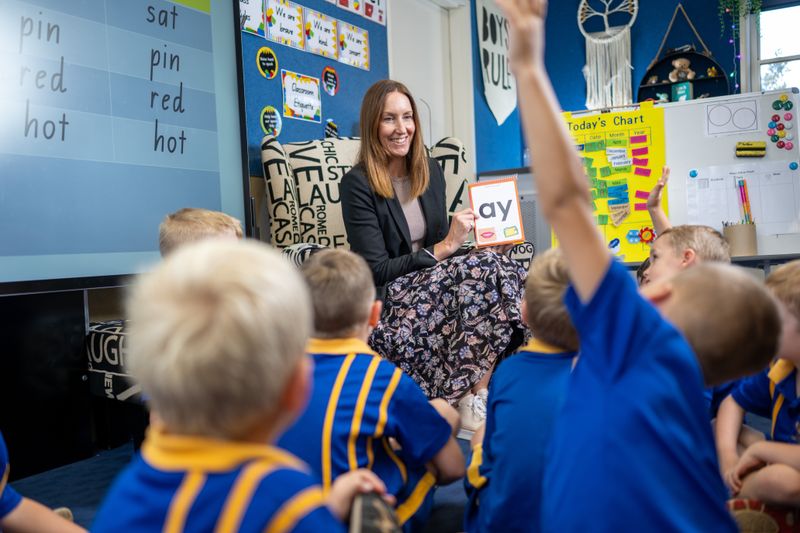
Building strong foundations in the Junior School
Research consistently shows that the primary school years are critical in shaping boys’ attitudes towards learning, literacy and self-belief.
This is particularly important for boys, who often develop language, organisation and self-regulation skills at different rates to girls during early childhood and adolescence (Rinaldi et al., 2021; van Tetering et al., 2020).
An all‑boys environment provides a valuable context to respond intentionally to these developmental patterns, supporting confidence, participation and a willingness to take academic risks.
This includes clear routines, explicit instruction, movement and hands-on learning opportunities, strong relational teaching and consistent expectations.
Importantly, boys are able to learn, contribute and grow without many of the social pressures that can emerge during adolescence.
This creates classrooms where boys are encouraged to ask questions, participate openly and develop confidence in themselves as learners from an early age.
A strong focus on literacy and communication
One of the greatest challenges identified globally in boys’ education is literacy engagement. Research shows boys are statistically less likely to read for enjoyment and are more at risk of falling behind in writing and communication skills as they progress through schooling (OECD, 2019).
At TGS, literacy development remains a significant focus across all year levels and subject areas. Reading, writing, discussion and communication are embedded intentionally throughout the curriculum. They are not confined to English classrooms alone.
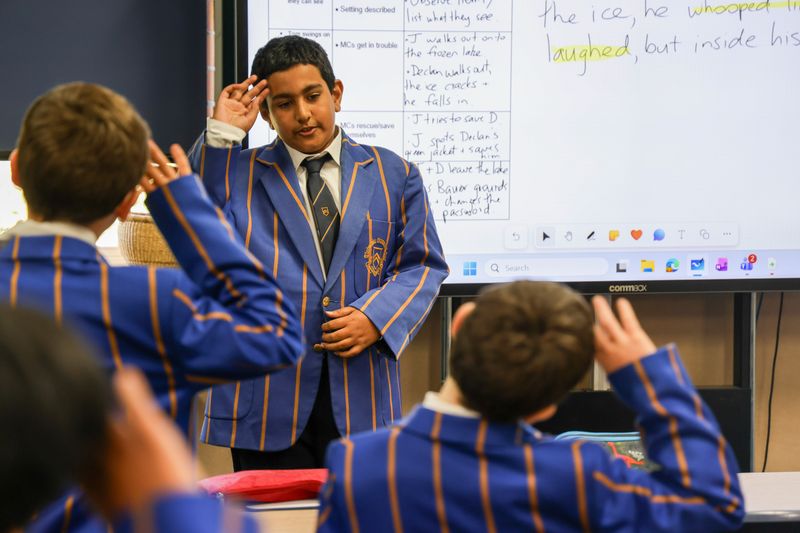
Teachers work deliberately to make learning visible and achievable, helping boys build confidence through structured support, clear feedback and explicit teaching practices.
Importantly, we see strong evidence that boys respond positively when expectations are high, learning is purposeful, and teachers provide clarity around what success looks like.
The power of positive academic culture
One of the often-overlooked strengths of boys’ education is culture.
In schools where academic effort is visible, encouraged and respected, boys are significantly more likely to participate openly and engage deeply in learning.
At TGS, we work intentionally to create a culture where boys can pursue academic success without hesitation and where curiosity, participation and effort are positively reinforced.
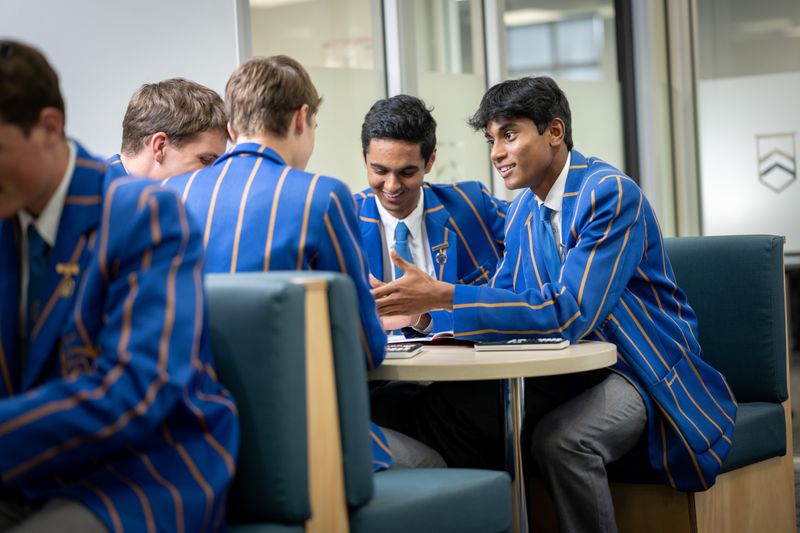
This matters because peer culture has a profound impact on boys’ attitudes towards learning, particularly during adolescence.
When boys see other boys contributing in class, asking questions, reading, performing, creating and striving for improvement, it helps normalise academic engagement and builds confidence across the cohort.
Relationships remain central
While structure and teaching practice are important, relationships remain at the centre of effective boys’ education.
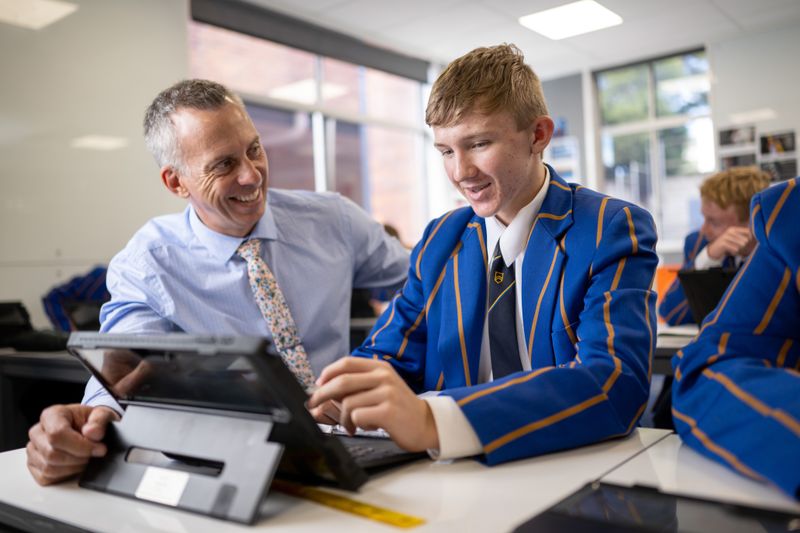
Boys engage best when they feel known, supported and challenged by trusted adults who genuinely understand them.
Across the School, strong relationships between staff and students help create learning environments where boys feel safe to contribute, seek feedback, persist through challenge and continue developing confidence over time.
This relational approach is particularly important during the middle years of schooling, when boys are navigating significant academic, emotional and social growth.
Preparing boys for the future
A high-quality boys’ education is not simply about improving classroom engagement. It is about developing capable young men who can think critically, communicate effectively, collaborate with others and approach challenge with confidence.
At TGS, we believe boys thrive when learning environments are intentionally designed to support both achievement and character development.
By combining strong relationships, explicit teaching, high expectations and a culture that values participation and growth, we continue to create conditions where boys can engage deeply in their learning and build the foundations for long-term success.
References
OECD. (2019). PISA 2018 results (Volume I): What students know and can do. OECD Publishing. https://doi.org/10.1787/5f07c754-en
Rinaldi, P., Pasqualetti, P., & Caselli, M. C. (2021). Gender differences in early stages of language development: Some evidence and possible explanations. Journal of Neuroscience Research, 99(10), 2435–2447
van Tetering, M. A. J., van der Laan, A. M., de Kogel, C. H., de Groot, R. H. M., & Jolles, J. (2020). Sex differences in self‑regulation in early, middle and late adolescence. PLOS ONE, 15(1), e0227607
Want to know more?
The best way to understand the value of a TGS education is to see the School in action via a Personalised Tour.
Book Your TourLatest Blog
More Than Just an Education and That Makes All the Difference
Toowoomba Grammar School excels in its extensive co-curricular programs, particularly in performing arts and sports. Our boys learn that success comes from hard work and dedication. This ethos is inspired by quotes like “You don’t have to be great to start, but you have to start to be great,” “The harder I work, the luckier I get” and the words emblazoned on our P.B. Hauser Aquatic Centre wall “Success is the celebration of preparation.” These opportunities allow students to excel in programs…
Stewardship: Leading the Way in Safety, Sustainability and Security
However, the challenges facing the Director of Facilities, Mr Bengie Dickeson and the Director of Information Technology, Mr Ron Robinson certainly are. This month's weather has been nothing if not unpredictable and it's in those conditions that both these men's skills come to the fore. With Tropical Cyclone Alfred and its threat to our School campus and community - Mr Bengie Dickeson and Mr Ron Robinson played integral roles in keeping everyone and everything on our 150-year-old campus safe.…
Pursuing New Horizons in Horticulture
Jake Moon is a sixth-generation primary producer. He is dedicated to agriculture and is currently working at his family’s St George farming enterprise, tackling some of the sector’s biggest challenges. The 28-year-old says his family moved to the St George irrigation precinct in 1978, initially growing rockmelons and watermelons, hence the business name Moonrocks. Seasonal and market changes led them to switch crops frequently, growing grapes, broccoli and even wax flowers over the years.…
Crushing it at Cricket and Conveying Culture
He explains that he’s named after Yarramundi, a respected and influential leader of the Richmond tribes of the Dharagnora (Hawkesbury-Nepean region of New South Wales) and a respected elder of the Boorooberongal clan of the Dharug people. “I’m proud of my culture and excited to have just started learning Dharug Dalang as part of the language revitalisation with my family.” During one week late last year he juggled exams, balanced representative cricket in Mackay with being the emcee of the…
Disappointment: A Necessary Part of School Life
Schools are inherently hopeful and happy places. Their natural focus on growth, connectedness and preparing youth for a better future creates an optimistic atmosphere in which ambitions are born. These positive emotions and experiences lay the foundation for our expectations and while these can be highly motivating, they come with a catch: the greater our expectations, the greater the disappointments, too. Disappointment is not a popular feeling. Rightly so, not many of us wish to feel sad,…
Boys and Belonging at TGS
As a boarding master of adolescent boys, my role fundamentally concerns pastoral wellbeing and character development to support a successful academic journey. A positive sense of belonging — where boarders feel safe, supported and heard — is fundamental to an effective boarding environment. As such, I felt there was a distinct connection between the International Boys’ Schools Coalition’s (IBSC) theme for the 2024–25 Action Research Cohort, “Boys and Belonging” and what I believe is best…
Fostering Growth and Resilience
This philosophy is vividly demonstrated through our Junior School MATES program, an initiative designed to equip boys from Prep to Year 6 with the skills they need to thrive both in and out of the classroom. Year 6 leader Hugo Seaby epitomises what the program is all about. As a leader in Stephens House, he explains its importance: “It’s about spending time with the younger boys and learning about honesty, respect, kindness and other attributes like that.” He said that it’s helpful for the…
Preparing for the Future of Work
For months I have been watching the earthworks being undertaken ahead of construction for the new DET Centre at Toowoomba Grammar School with interest. It is hard to miss, given that the Headmaster’s residence, our family home, is right next to the building site. The vibrations can be unsettling, and the noises are constant. However, each day reminds me of the important work underway to secure a part of the School’s future. Soon, all boys at TGS will have the opportunity to immerse themselves…
“Watch your character, it becomes your destiny.”
Whether it was American essayist Ralph Waldo Emerson, Chinese philosopher Lao Tzu, or even UK Prime Minister Margaret Thatcher’s father who coined the phrase “watch your character, it becomes your destiny,” it was Dr Linda Evans who gave it real relevance to a theatre full of students, staff and families. After a decade and a half in charge of Toowoomba’s respected Fairholme College as Principal and some 22 years in total on staff, Dr Evans will leave the institution she has led and loved by…


