“Within a boys’ school environment, teachers are able to tailor learning experiences specifically to how boys engage best.”

Across Australia and internationally, there is growing research highlighting a concerning trend in boys’ education.
While many boys appear settled and compliant while studying, research from organisations including the Australian Council for Educational Research (ACER), the University of Melbourne and UNESCO suggest boys are increasingly at risk of disengaging from learning over time, particularly in literacy, motivation and academic confidence.
Importantly, this disengagement is not always visible through poor behaviour or disruption. More often, it appears quietly through reduced confidence, reluctance to take academic risks, lower levels of persistence and gradual withdrawal from reading, writing and classroom participation.
This research continues to reinforce the importance of environments intentionally designed for the way boys learn and develop.
At Toowoomba Grammar School, our approach to boys’ education is grounded in the understanding that boys benefit from clarity, structure, positive relationships, purposeful challenges and a culture where it is socially acceptable to engage fully in learning.
From the earliest years of Junior School through to the Senior School, we intentionally shape learning environments that support boys academically, socially and developmentally.
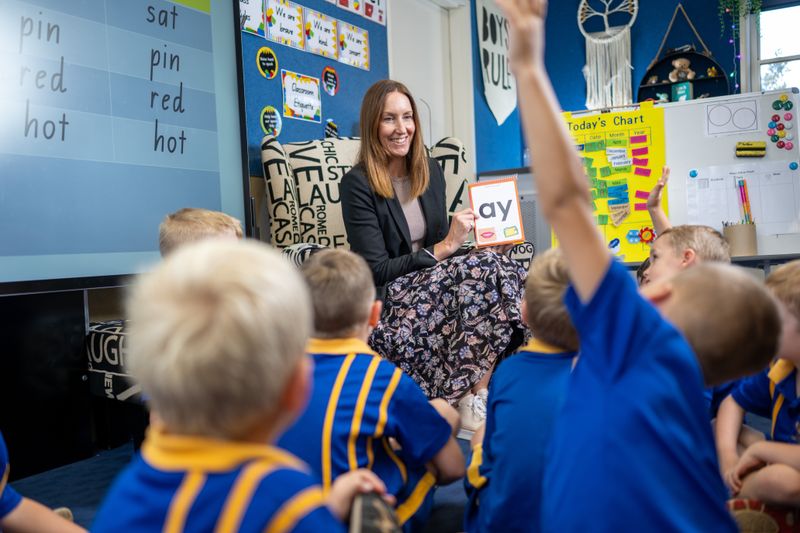
Building strong foundations in the Junior School
Research consistently shows that the primary school years are critical in shaping boys’ attitudes towards learning, literacy and self-belief.
This is particularly important for boys, who often develop language, organisation and self-regulation skills at different rates to girls during early childhood and adolescence (Rinaldi et al., 2021; van Tetering et al., 2020).
An all‑boys environment provides a valuable context to respond intentionally to these developmental patterns, supporting confidence, participation and a willingness to take academic risks.
This includes clear routines, explicit instruction, movement and hands-on learning opportunities, strong relational teaching and consistent expectations.
Importantly, boys are able to learn, contribute and grow without many of the social pressures that can emerge during adolescence.
This creates classrooms where boys are encouraged to ask questions, participate openly and develop confidence in themselves as learners from an early age.
A strong focus on literacy and communication
One of the greatest challenges identified globally in boys’ education is literacy engagement. Research shows boys are statistically less likely to read for enjoyment and are more at risk of falling behind in writing and communication skills as they progress through schooling (OECD, 2019).
At TGS, literacy development remains a significant focus across all year levels and subject areas. Reading, writing, discussion and communication are embedded intentionally throughout the curriculum. They are not confined to English classrooms alone.
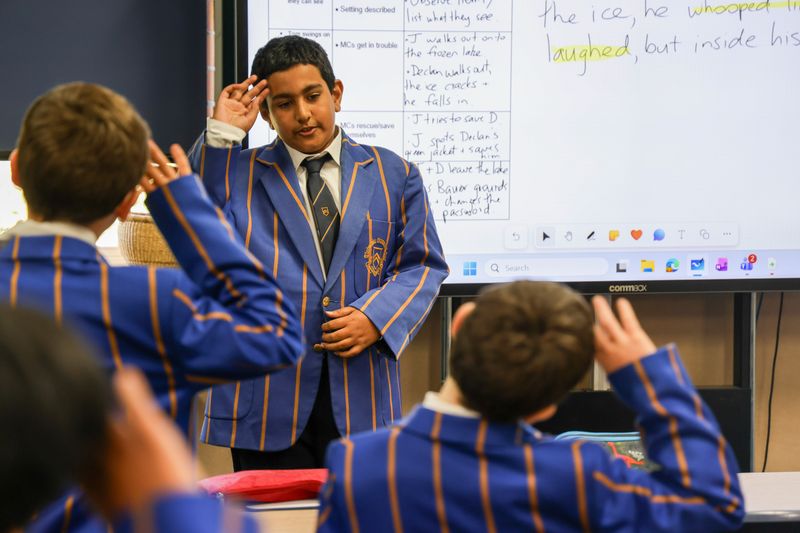
Teachers work deliberately to make learning visible and achievable, helping boys build confidence through structured support, clear feedback and explicit teaching practices.
Importantly, we see strong evidence that boys respond positively when expectations are high, learning is purposeful, and teachers provide clarity around what success looks like.
The power of positive academic culture
One of the often-overlooked strengths of boys’ education is culture.
In schools where academic effort is visible, encouraged and respected, boys are significantly more likely to participate openly and engage deeply in learning.
At TGS, we work intentionally to create a culture where boys can pursue academic success without hesitation and where curiosity, participation and effort are positively reinforced.
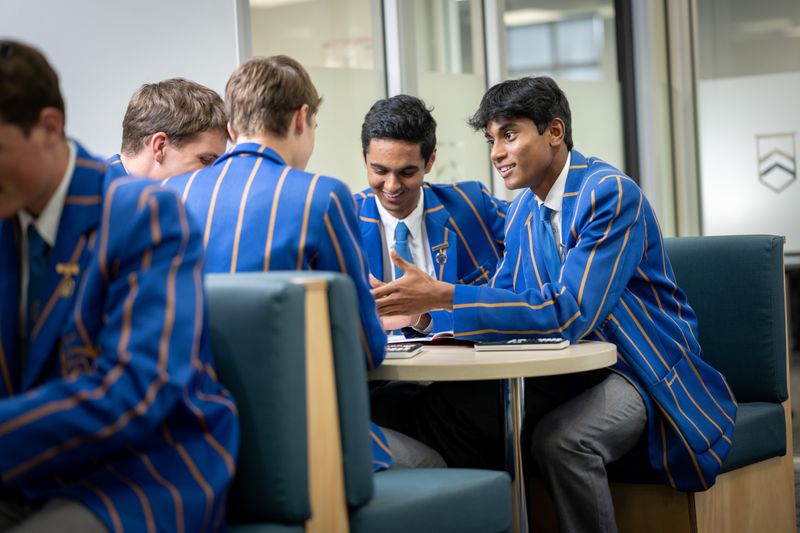
This matters because peer culture has a profound impact on boys’ attitudes towards learning, particularly during adolescence.
When boys see other boys contributing in class, asking questions, reading, performing, creating and striving for improvement, it helps normalise academic engagement and builds confidence across the cohort.
Relationships remain central
While structure and teaching practice are important, relationships remain at the centre of effective boys’ education.
Boys engage best when they feel known, supported and challenged by trusted adults who genuinely understand them.
Across the School, strong relationships between staff and students help create learning environments where boys feel safe to contribute, seek feedback, persist through challenge and continue developing confidence over time.
This relational approach is particularly important during the middle years of schooling, when boys are navigating significant academic, emotional and social growth.
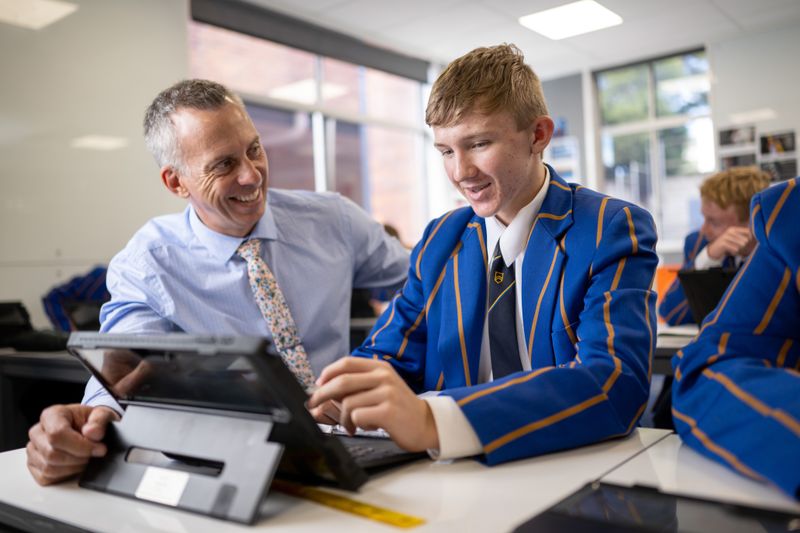
Preparing boys for the future
A high-quality boys’ education is not simply about improving classroom engagement. It is about developing capable young men who can think critically, communicate effectively, collaborate with others and approach challenge with confidence.
At TGS, we believe boys thrive when learning environments are intentionally designed to support both achievement and character development.
By combining strong relationships, explicit teaching, high expectations and a culture that values participation and growth, we continue to create conditions where boys can engage deeply in their learning and build the foundations for long-term success.
References
OECD. (2019). PISA 2018 results (Volume I): What students know and can do. OECD Publishing. https://doi.org/10.1787/5f07c754-en
Rinaldi, P., Pasqualetti, P., & Caselli, M. C. (2021). Gender differences in early stages of language development: Some evidence and possible explanations. Journal of Neuroscience Research, 99(10), 2435–2447
van Tetering, M. A. J., van der Laan, A. M., de Kogel, C. H., de Groot, R. H. M., & Jolles, J. (2020). Sex differences in self‑regulation in early, middle and late adolescence. PLOS ONE, 15(1), e0227607
Want to know more?
The best way to understand the value of a TGS education is to see the School in action via a Personalised Tour.
Book Your TourLatest Blog
2024 IBSC Conference
It is part of our Strategic Plan's People Pillar which is "build a high-performing culture that supports the wellbeing and development of staff, who exemplify the TGS values and share our commitment to the growth of our boys". In fact, that focus was acknowledged in our receiving The Educator’s 2024 5-Star Employer of Choice award. The Award acknowledges excellence in providing professional development opportunities and nurturing a culture of inclusion and respect. So it was with great pleasure…
Filmmaker, Storyteller and Visionary
From his days as a boarding student at Toowoomba Grammar School, where he first dipped his toes into the world of filming GPS sporting events, to his current roles as sports documentarian and founder of the Outback Film Club, Clancy’s journey is a testament to the power of passion and perseverance. Establishing Outback Film Club has been a real triumph The echoes of school war cries reverberating around the Chandler Aquatic Centre in 2011 marked the start of Clancy’s cinematic journey.…
A Cut Shot Above The Rest
Ben’s sport takes him to the best beaches on the planet, but his love of volleyball began back at Toowoomba Grammar School, inspired after seeing his older brother play. As Ben explains, he was hooked:
Gummingurru Excursion - Deep Time History of Australia on our Doorstep
Gummingurru is unique in being the best-preserved initiation site in southeast Queensland, including bora rings and various stone arrangements that have ancient links to the totems and kinship practices of the Jarowair and Giabal people of Toowoomba and the Darling Downs, as well as the broader region within the highly significant cultural landscape of the Bunya Mountains. The boys were welcomed to, and guided through, the site and its learning centre by Mr Shannon Bauwens, a Western Wakka…
Responding to Negative Peer Interactions
As we approach the end of Term 3, we find it is typically a time when boys start to get tired and emotional and are most likely to make poor decisions that can lead to relationship challenges between peers. Comments and humour shared between mates that may have been received without concern in the first week of the term may change as boys start to tire and their tolerance levels decrease. This may lead to boys reacting with heightened and overly emotional responses. This is normal as boys are…
Remembering James Russell McWilliam AO
Jim McWilliam was a pioneering agricultural scientist and the first Director of the Australian Centre for International Agricultural Research (1982–89), where he built lasting partnerships between Australian researchers and developing countries. James Russell McWilliam AO Born near Leyburn, Queensland, Jim studied forestry at the University of Queensland and in the US, completing a PhD at Yale. He worked with the Queensland Forestry Service, CSIRO and later as Professor of Agronomy at the…
Boarding is who we are
Our boarders make up nearly one third of our student cohort from Years 5 to 12, which enables us to consider the boarding experience in all that we do at the School. Every boarding experience at TGS is about equipping boys with the skills to function as a student and preparing them for their future.
Making a Positive Impact with Homework Assistance
The Anglicare Homework Assistance Program (HAP), run in conjunction with Darling Heights State School, sees many of our boys volunteer their time on Wednesdays after class to help many young refugee and primary school students facing challenging times with their homework, or to chat and play games. Our boys thoroughly enjoy meeting, supporting and learning about the lives of the younger children. This forges community connections and fosters inclusion for the Darling Heights students; it also…
Fresh Faces Guide - TGS Sportsmen into the Fray
With their dedication to excellence and player development, TGS athletes are in good hands as they navigate the challenges and triumphs of competitive sports.


