“Within a boys’ school environment, teachers are able to tailor learning experiences specifically to how boys engage best.”
Across Australia and internationally, there is growing research highlighting a concerning trend in boys’ education.
While many boys appear settled and compliant while studying, research from organisations including the Australian Council for Educational Research (ACER), the University of Melbourne and UNESCO suggest boys are increasingly at risk of disengaging from learning over time, particularly in literacy, motivation and academic confidence.
Importantly, this disengagement is not always visible through poor behaviour or disruption. More often, it appears quietly through reduced confidence, reluctance to take academic risks, lower levels of persistence and gradual withdrawal from reading, writing and classroom participation.
This research continues to reinforce the importance of environments intentionally designed for the way boys learn and develop.
At Toowoomba Grammar School, our approach to boys’ education is grounded in the understanding that boys benefit from clarity, structure, positive relationships, purposeful challenges and a culture where it is socially acceptable to engage fully in learning.
From the earliest years of Junior School through to the Senior School, we intentionally shape learning environments that support boys academically, socially and developmentally.
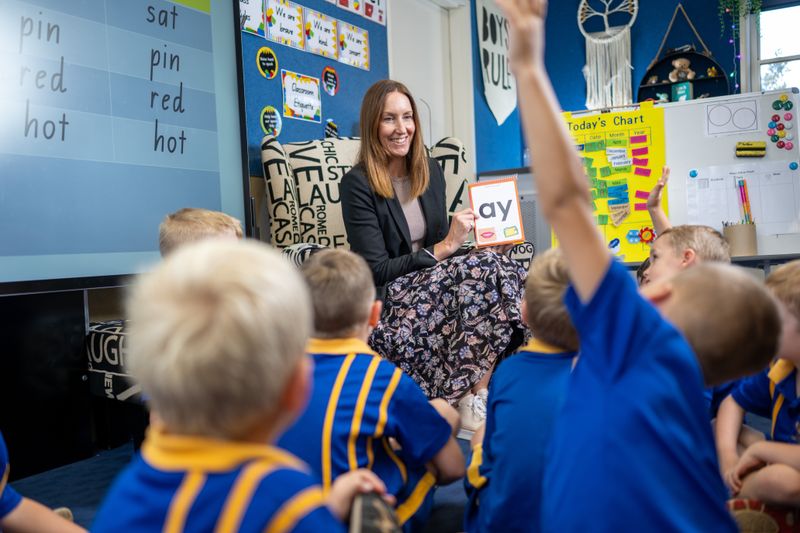
Building strong foundations in the Junior School
Research consistently shows that the primary school years are critical in shaping boys’ attitudes towards learning, literacy and self-belief.
This is particularly important for boys, who often develop language, organisation and self-regulation skills at different rates to girls during early childhood and adolescence (Rinaldi et al., 2021; van Tetering et al., 2020).
An all‑boys environment provides a valuable context to respond intentionally to these developmental patterns, supporting confidence, participation and a willingness to take academic risks.
This includes clear routines, explicit instruction, movement and hands-on learning opportunities, strong relational teaching and consistent expectations.
Importantly, boys are able to learn, contribute and grow without many of the social pressures that can emerge during adolescence.
This creates classrooms where boys are encouraged to ask questions, participate openly and develop confidence in themselves as learners from an early age.
A strong focus on literacy and communication
One of the greatest challenges identified globally in boys’ education is literacy engagement. Research shows boys are statistically less likely to read for enjoyment and are more at risk of falling behind in writing and communication skills as they progress through schooling (OECD, 2019).
At TGS, literacy development remains a significant focus across all year levels and subject areas. Reading, writing, discussion and communication are embedded intentionally throughout the curriculum. They are not confined to English classrooms alone.
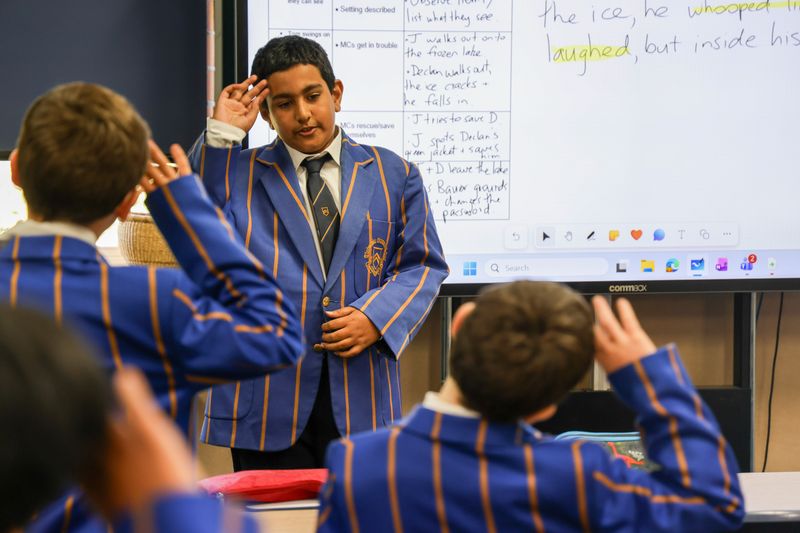
Teachers work deliberately to make learning visible and achievable, helping boys build confidence through structured support, clear feedback and explicit teaching practices.
Importantly, we see strong evidence that boys respond positively when expectations are high, learning is purposeful, and teachers provide clarity around what success looks like.
The power of positive academic culture
One of the often-overlooked strengths of boys’ education is culture.
In schools where academic effort is visible, encouraged and respected, boys are significantly more likely to participate openly and engage deeply in learning.
At TGS, we work intentionally to create a culture where boys can pursue academic success without hesitation and where curiosity, participation and effort are positively reinforced.
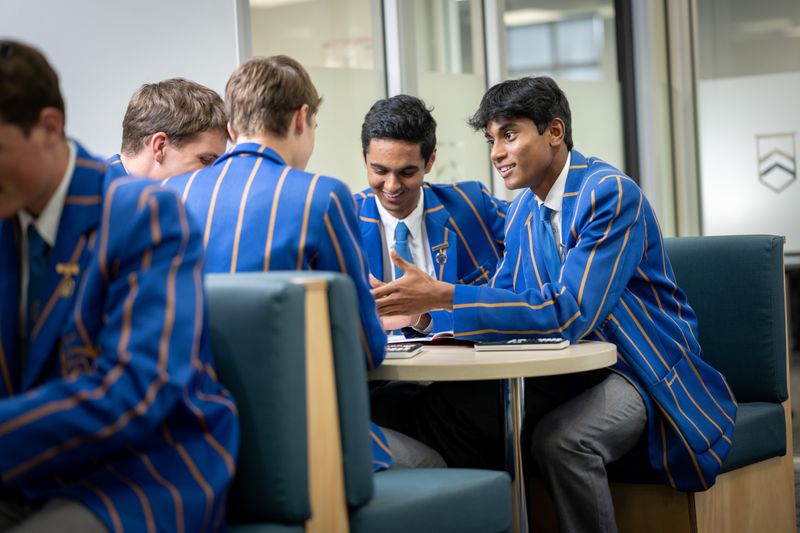
This matters because peer culture has a profound impact on boys’ attitudes towards learning, particularly during adolescence.
When boys see other boys contributing in class, asking questions, reading, performing, creating and striving for improvement, it helps normalise academic engagement and builds confidence across the cohort.
Relationships remain central
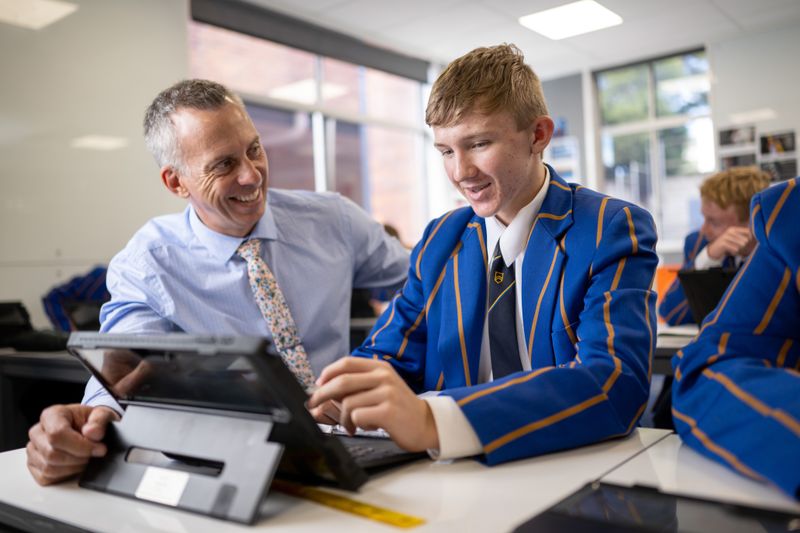
While structure and teaching practice are important, relationships remain at the centre of effective boys’ education.
Boys engage best when they feel known, supported and challenged by trusted adults who genuinely understand them.
Across the School, strong relationships between staff and students help create learning environments where boys feel safe to contribute, seek feedback, persist through challenge and continue developing confidence over time.
This relational approach is particularly important during the middle years of schooling, when boys are navigating significant academic, emotional and social growth.
Preparing boys for the future
A high-quality boys’ education is not simply about improving classroom engagement. It is about developing capable young men who can think critically, communicate effectively, collaborate with others and approach challenge with confidence.
At TGS, we believe boys thrive when learning environments are intentionally designed to support both achievement and character development.
By combining strong relationships, explicit teaching, high expectations and a culture that values participation and growth, we continue to create conditions where boys can engage deeply in their learning and build the foundations for long-term success.
References
OECD. (2019). PISA 2018 results (Volume I): What students know and can do. OECD Publishing. https://doi.org/10.1787/5f07c754-en
Rinaldi, P., Pasqualetti, P., & Caselli, M. C. (2021). Gender differences in early stages of language development: Some evidence and possible explanations. Journal of Neuroscience Research, 99(10), 2435–2447
van Tetering, M. A. J., van der Laan, A. M., de Kogel, C. H., de Groot, R. H. M., & Jolles, J. (2020). Sex differences in self‑regulation in early, middle and late adolescence. PLOS ONE, 15(1), e0227607
Want to know more?
The best way to understand the value of a TGS education is to see the School in action via a Personalised Tour.
Book Your TourLatest Blog
Our Other Mother
Meet Ms Janelle Fletcher, the House Mum of Corfe, whose journey at TGS began back in 1992 as an instrumental music teacher. Her story is one of deep connections, love for the arts and an unshakeable bond with the students of TGS. From the time that Janelle first stepped onto campus and shared her musical talents with young minds to now creating her own “mum moments” in Corfe — she has nurtured a profound sense of community and established connections that have lasted through generations. Her…
Fostering a creative generation and getting exhibited at GoMA
2023 Visual Arts student Ben Rosenberg (TGS 2019-2023) had his film “Mitchell” selected and it's now on display as part of the 2024 Creative Generation Excellence Awards in Visual Art at GoMA. For 30 years the Awards have recognised and promoted excellence in senior visual art education throughout Queensland schools. Secondary schools typically enter the work of up to four Senior students. Previous winners from TGS include Sam McCosker (2013) and Austin Reed (2017). Ben is a filmmaker and…
In memory of Light Horse Field Ambulances
Toowoomba Grammar School would like to acknowledge our admiration for the loyalty, service and bravery exhibited by TGS Old Boys who so valiantly served. We are all the beneficiaries of their sacrifice, and their selfless actions continue to inspire a spirit of service amongst our current students. Today we focus on the contribution of one TGS Old Boy who made a significant contribution to World War I. Here is some of the incredible story of Major Avery, DSO and if you visit the School Museum…
New Caledonia, new horizons and travel through an educational lens
The opportunity to travel not only opens doors to new experiences but also fosters an increased intercultural understanding and empathy, both essential qualities for navigating and existing within our diverse world. For a group of language students travelling to New Caledonia, our recent French Language and Cultural Tour was a unique opportunity for such experiential learning, where language acquisition went beyond just learning vocabulary and grammar - and instead became a gateway to connect…
Erik Sheppard - making TGS Army Cadet Unit history
The 2024 Dining in Night was made even more special with the appointment of the first Toowoomba Grammar School Army Cadet Unit (TGS ACU) Regimental Sergeant Major, Warrant Officer Class 1 (WO1) Erik Sheppard who was awarded his rank and pace stick by the 16th Battalion Commanding officer MAJ (AAC) Gary MacLachlan. WO1 Sheppard enlisted in the TGS ACU just before the COVID shutdown in 2020. Although this was not the ideal way to begin a cadet career, he was able to adapt and overcome the virtual…
The Big Six Reading Tips
Unlocking Literacy - The Big Six Elements for Your Child’s Reading Success Literacy skills are a core component of each day for our students, and parents often ask how they can support this from home. I am delighted to share with our parent community the essential components that underpin successful reading development. These elements, known as the Big Six, provide a solid foundation for your son’s literacy journey. These critical building blocks include: Oral Language: Communication skills are…
Boarding - Building Men of Good Character
Over the past five years, we have found one of the most valuable lessons that boarding can teach teenage boys is the ability to self-navigate and overcome challenges. Entering a boarding house is the first time many boarders have stepped away from the comfort and security of their parents and guardians. Although this can be a daunting experience, one of the things that this unfamiliarity creates is the ability to organise yourself. With a larger workload than previous years, a greater number…
The Learning Pit
Learning is at our core and covers all subject disciplines, co-curricular pursuits, personal development and interest areas. Helping our Toowoomba Grammar School boys view learning as a disposition that goes well beyond the classroom context is incredibly important. Learning has a life-long value in all we do. We also acknowledge that learning can be challenging at times, and it can be uncomfortable, but also wonderfully inspiring and fulfilling. Appreciating the full range of feelings and…
Leap Before You Look
The boarding journey offers students a plethora of opportunities to step outside of their comfort zone and take advantage of new environments, relationships, and opportunities during their time at Toowoomba Grammar School. We often talk about “character education” – a theory that originated in the US and has been increasingly embraced by leading schools globally. It is encouraging all students to develop new approaches to their learning, including aspects of morals and ethics, thinking,…


