“Within a boys’ school environment, teachers are able to tailor learning experiences specifically to how boys engage best.”
Across Australia and internationally, there is growing research highlighting a concerning trend in boys’ education.
While many boys appear settled and compliant while studying, research from organisations including the Australian Council for Educational Research (ACER), the University of Melbourne and UNESCO suggest boys are increasingly at risk of disengaging from learning over time, particularly in literacy, motivation and academic confidence.
Importantly, this disengagement is not always visible through poor behaviour or disruption. More often, it appears quietly through reduced confidence, reluctance to take academic risks, lower levels of persistence and gradual withdrawal from reading, writing and classroom participation.
This research continues to reinforce the importance of environments intentionally designed for the way boys learn and develop.
At Toowoomba Grammar School, our approach to boys’ education is grounded in the understanding that boys benefit from clarity, structure, positive relationships, purposeful challenges and a culture where it is socially acceptable to engage fully in learning.
From the earliest years of Junior School through to the Senior School, we intentionally shape learning environments that support boys academically, socially and developmentally.
Building strong foundations in the Junior School
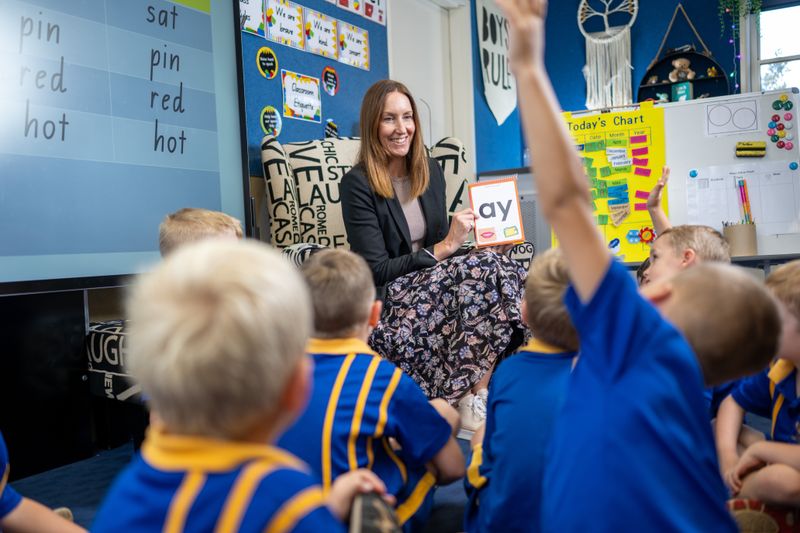
Research consistently shows that the primary school years are critical in shaping boys’ attitudes towards learning, literacy and self-belief.
This is particularly important for boys, who often develop language, organisation and self-regulation skills at different rates to girls during early childhood and adolescence (Rinaldi et al., 2021; van Tetering et al., 2020).
An all‑boys environment provides a valuable context to respond intentionally to these developmental patterns, supporting confidence, participation and a willingness to take academic risks.
This includes clear routines, explicit instruction, movement and hands-on learning opportunities, strong relational teaching and consistent expectations.
Importantly, boys are able to learn, contribute and grow without many of the social pressures that can emerge during adolescence.
This creates classrooms where boys are encouraged to ask questions, participate openly and develop confidence in themselves as learners from an early age.
A strong focus on literacy and communication
One of the greatest challenges identified globally in boys’ education is literacy engagement. Research shows boys are statistically less likely to read for enjoyment and are more at risk of falling behind in writing and communication skills as they progress through schooling (OECD, 2019).
At TGS, literacy development remains a significant focus across all year levels and subject areas. Reading, writing, discussion and communication are embedded intentionally throughout the curriculum. They are not confined to English classrooms alone.
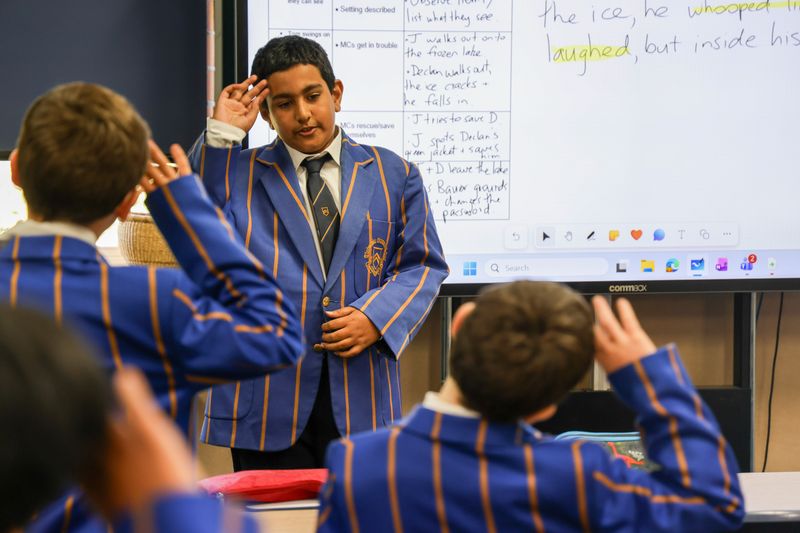
Teachers work deliberately to make learning visible and achievable, helping boys build confidence through structured support, clear feedback and explicit teaching practices.
Importantly, we see strong evidence that boys respond positively when expectations are high, learning is purposeful, and teachers provide clarity around what success looks like.
The power of positive academic culture
One of the often-overlooked strengths of boys’ education is culture.
In schools where academic effort is visible, encouraged and respected, boys are significantly more likely to participate openly and engage deeply in learning.
At TGS, we work intentionally to create a culture where boys can pursue academic success without hesitation and where curiosity, participation and effort are positively reinforced.
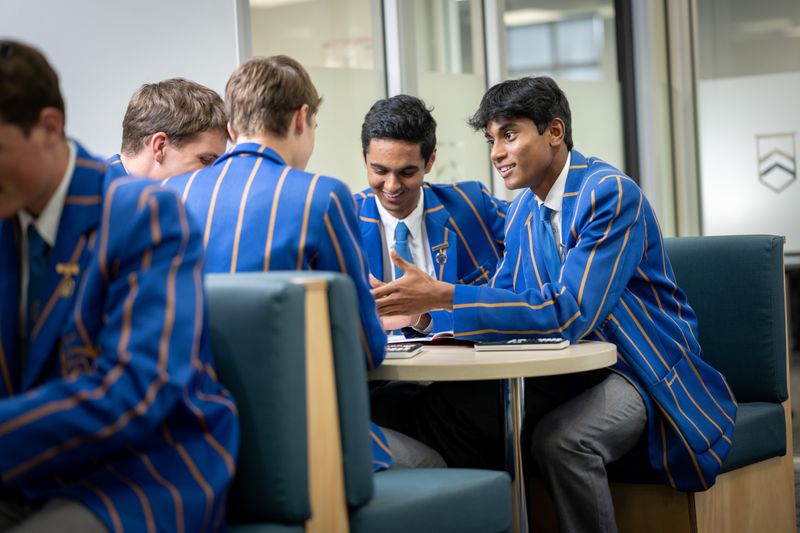
This matters because peer culture has a profound impact on boys’ attitudes towards learning, particularly during adolescence.
When boys see other boys contributing in class, asking questions, reading, performing, creating and striving for improvement, it helps normalise academic engagement and builds confidence across the cohort.
Relationships remain central
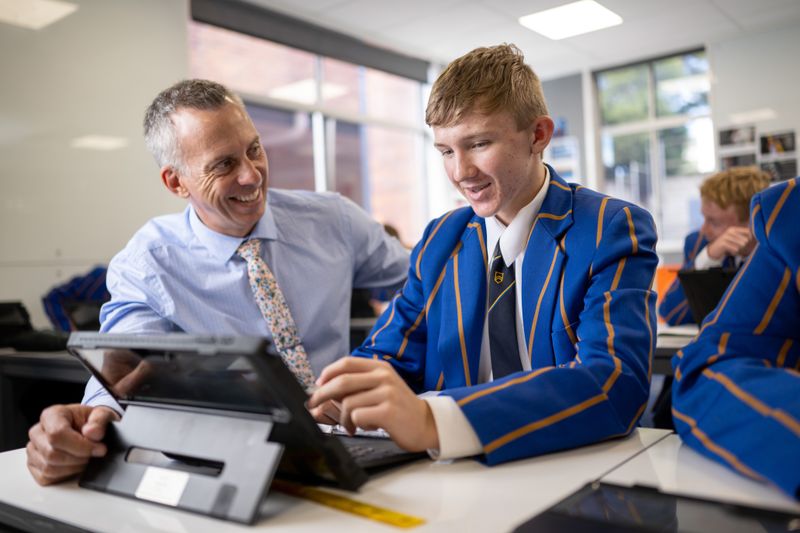
While structure and teaching practice are important, relationships remain at the centre of effective boys’ education.
Boys engage best when they feel known, supported and challenged by trusted adults who genuinely understand them.
Across the School, strong relationships between staff and students help create learning environments where boys feel safe to contribute, seek feedback, persist through challenge and continue developing confidence over time.
This relational approach is particularly important during the middle years of schooling, when boys are navigating significant academic, emotional and social growth.
Preparing boys for the future
A high-quality boys’ education is not simply about improving classroom engagement. It is about developing capable young men who can think critically, communicate effectively, collaborate with others and approach challenge with confidence.
At TGS, we believe boys thrive when learning environments are intentionally designed to support both achievement and character development.
By combining strong relationships, explicit teaching, high expectations and a culture that values participation and growth, we continue to create conditions where boys can engage deeply in their learning and build the foundations for long-term success.
References
OECD. (2019). PISA 2018 results (Volume I): What students know and can do. OECD Publishing. https://doi.org/10.1787/5f07c754-en
Rinaldi, P., Pasqualetti, P., & Caselli, M. C. (2021). Gender differences in early stages of language development: Some evidence and possible explanations. Journal of Neuroscience Research, 99(10), 2435–2447
van Tetering, M. A. J., van der Laan, A. M., de Kogel, C. H., de Groot, R. H. M., & Jolles, J. (2020). Sex differences in self‑regulation in early, middle and late adolescence. PLOS ONE, 15(1), e0227607
Want to know more?
The best way to understand the value of a TGS education is to see the School in action via a Personalised Tour.
Book Your TourLatest Blog
Literacy at TGS: A research-informed approach
A recent Grattan Institute report has shared that one-third of Australian students are failing to learn to read proficiently, referring to the situation as a ‘preventable tragedy’. In addition, the report identifies evidence-based approaches utilising structured literacy programs with phonics and explicit instruction as the most effective methods of teaching literacy. At Toowoomba Grammar School, we implement a structured synthetic phonics approach to teaching spelling and reading that…
Past Mothers, Present Supporters
Any Old Boy will tell you the Blue and Gold is part of their blood. They love the history, the traditions, the memories, and the lifelong friends they made during their time at Toowoomba Grammar School. Well, it seems the same can be said for many TGS mums. The Past Mothers’ Group was formed in 1979 by Mrs Mary Campbell who contacted as many past mothers as she could and invited them to meet at her home where the Past Mothers’ Group was officially formed with the intention of retaining links…
The TGS Interact Club - the Reward for Work Well Done
The Interact Club successfully raised over $10,000 last year for charities and services on a local, statewide and international scale through the hard work and commitment of its members. With these funds, the Interact Club has donated Backpack Blankets to Toowoomba's homeless, helped AEIOU's efforts in supporting children with autism, contributed to the "Are You Bogged Mate?" campaign for rural mental health and raised funds for the Royal Flying Doctor Service. As well as many other individual…
A Question of Character
In an age bursting with technological innovations and an overwhelming abundance of information, the present era appears to be characterised by a swift and unrelenting pace of change. Our society, young and old alike, finds itself constantly bombarded with provocative and sensationalist narratives. The media floods our consciousness with constant streams of global dilemmas, highlighting the flaws of our leaders, uncovering corporate or political scandals, and bringing conflicts and tragedies…
Coping with Homesickness
Homesickness can be brutal for both your son and for parents. As a parent it can feel like your heart is being ripped out in some cases daily. It is extremely hard hearing how sad your boy may sound on the phone, and then you are left reeling for 24 hours until the next call – you are often left worried that they are feeling like this all day. Rest assured only vary rare cases are that bad and in most cases it’s temporary and things usually improve as your son settles in. The reality is that…
Introducing Gabe Robbie, the new Head of Curriculum
I am excited to be joining the staff here at Toowoomba Grammar School in the role of Head of Curriculum. I grew up in a small coastal town in NSW and attended the University of Sydney to complete my undergraduate degree. Please don’t hold my NSW origin against me (Go Blues!). Teaching, and education, has always been a passion of mine and ever since I was in high school, the plan was to be a teacher. I graduated from the University of Sydney with a double degree in Education and Arts, majoring…
What Old Boys Have Contributed to TGS Over Time
The Old Boys’ Association has played an integral role in the history and tradition of Toowoomba Grammar School. It was formed on December 29, 1888, when 25 Toowoomba Grammar School Old Boys met at Long’s Imperial Hotel to create a new society. The Toowoomba Grammar School Old Boys’ Association rules were drawn up, and office-bearers elected. The inaugural president was Mr Joesph Vincent Herbert Esq. (TGS 1877-80) From there, the TGSOBA has grown significantly, ensuring that the Blue and Gold…
TGS Strength and Conditioning Program
Toowoomba Grammar School has a unique approach to athlete development that focuses on providing students with the skills, tools and mindset required to succeed in sports and life. At TGS, the long-term athlete development (LTAD) philosophy is ingrained in every aspect of the School's approach to sport and fitness. The LTAD philosophy emphasises the importance of age-appropriate training and skill development over a long period of time. This approach recognises that athlete development is a…
We Knew Them Before They Were Stars
Our boys at Toowoomba Grammar School are fortunate that Performing Arts is as popular as sport and academics, thanks to our culture of respect and inclusivity. Boys are supported and encouraged to immerse themselves in music, drama and art and are not afraid to chase their dreams in these fields. The success of our performing arts students dates back decades, with our Old Boys performing all around the world in theatre, music, film and photography and are accomplished and well recognised in…


