“Within a boys’ school environment, teachers are able to tailor learning experiences specifically to how boys engage best.”

Across Australia and internationally, there is growing research highlighting a concerning trend in boys’ education.
While many boys appear settled and compliant while studying, research from organisations including the Australian Council for Educational Research (ACER), the University of Melbourne and UNESCO suggest boys are increasingly at risk of disengaging from learning over time, particularly in literacy, motivation and academic confidence.
Importantly, this disengagement is not always visible through poor behaviour or disruption. More often, it appears quietly through reduced confidence, reluctance to take academic risks, lower levels of persistence and gradual withdrawal from reading, writing and classroom participation.
This research continues to reinforce the importance of environments intentionally designed for the way boys learn and develop.
At Toowoomba Grammar School, our approach to boys’ education is grounded in the understanding that boys benefit from clarity, structure, positive relationships, purposeful challenges and a culture where it is socially acceptable to engage fully in learning.
From the earliest years of Junior School through to the Senior School, we intentionally shape learning environments that support boys academically, socially and developmentally.
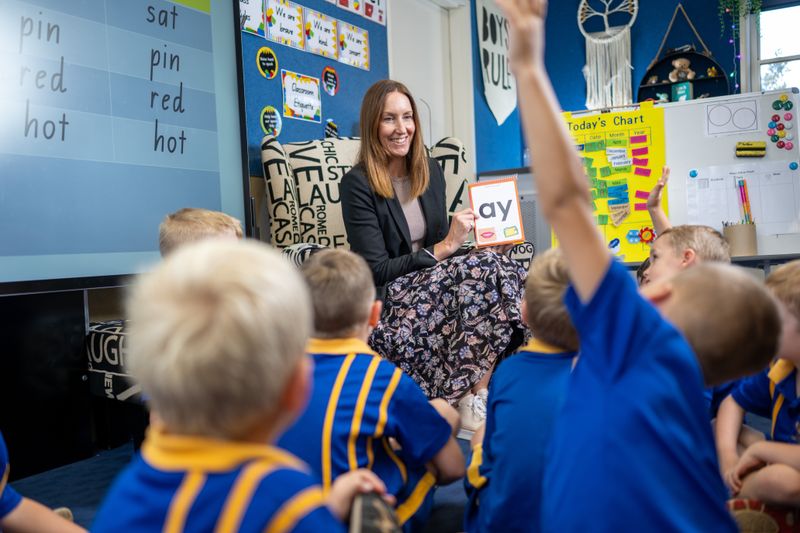
Building strong foundations in the Junior School
Research consistently shows that the primary school years are critical in shaping boys’ attitudes towards learning, literacy and self-belief.
This is particularly important for boys, who often develop language, organisation and self-regulation skills at different rates to girls during early childhood and adolescence (Rinaldi et al., 2021; van Tetering et al., 2020).
An all‑boys environment provides a valuable context to respond intentionally to these developmental patterns, supporting confidence, participation and a willingness to take academic risks.
This includes clear routines, explicit instruction, movement and hands-on learning opportunities, strong relational teaching and consistent expectations.
Importantly, boys are able to learn, contribute and grow without many of the social pressures that can emerge during adolescence.
This creates classrooms where boys are encouraged to ask questions, participate openly and develop confidence in themselves as learners from an early age.
A strong focus on literacy and communication
One of the greatest challenges identified globally in boys’ education is literacy engagement. Research shows boys are statistically less likely to read for enjoyment and are more at risk of falling behind in writing and communication skills as they progress through schooling (OECD, 2019).
At TGS, literacy development remains a significant focus across all year levels and subject areas. Reading, writing, discussion and communication are embedded intentionally throughout the curriculum. They are not confined to English classrooms alone.
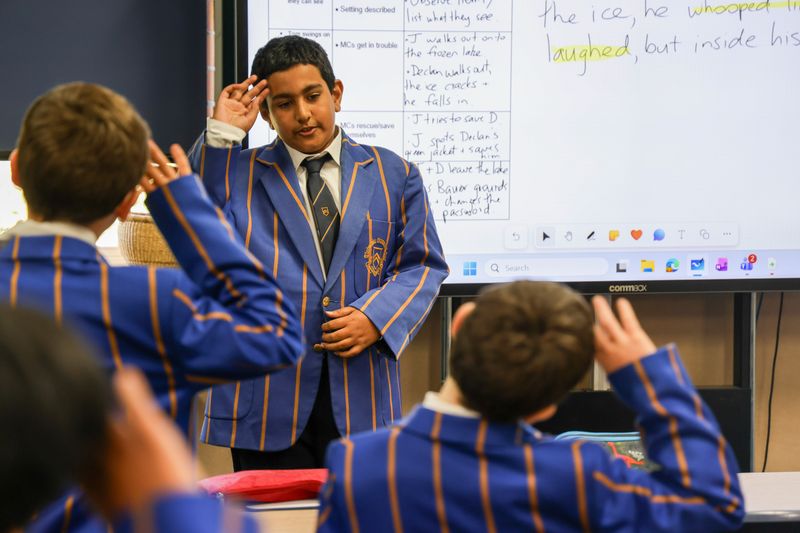
Teachers work deliberately to make learning visible and achievable, helping boys build confidence through structured support, clear feedback and explicit teaching practices.
Importantly, we see strong evidence that boys respond positively when expectations are high, learning is purposeful, and teachers provide clarity around what success looks like.
The power of positive academic culture
One of the often-overlooked strengths of boys’ education is culture.
In schools where academic effort is visible, encouraged and respected, boys are significantly more likely to participate openly and engage deeply in learning.
At TGS, we work intentionally to create a culture where boys can pursue academic success without hesitation and where curiosity, participation and effort are positively reinforced.
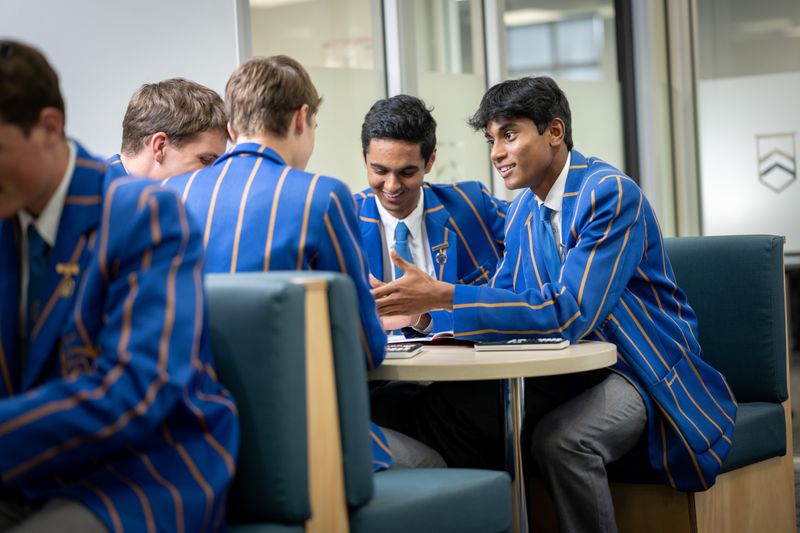
This matters because peer culture has a profound impact on boys’ attitudes towards learning, particularly during adolescence.
When boys see other boys contributing in class, asking questions, reading, performing, creating and striving for improvement, it helps normalise academic engagement and builds confidence across the cohort.
Relationships remain central
While structure and teaching practice are important, relationships remain at the centre of effective boys’ education.
Boys engage best when they feel known, supported and challenged by trusted adults who genuinely understand them.
Across the School, strong relationships between staff and students help create learning environments where boys feel safe to contribute, seek feedback, persist through challenge and continue developing confidence over time.
This relational approach is particularly important during the middle years of schooling, when boys are navigating significant academic, emotional and social growth.
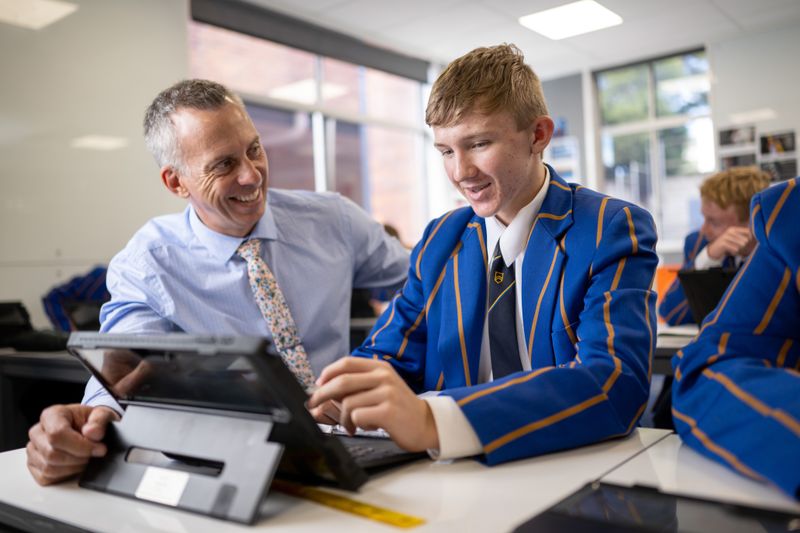
Preparing boys for the future
A high-quality boys’ education is not simply about improving classroom engagement. It is about developing capable young men who can think critically, communicate effectively, collaborate with others and approach challenge with confidence.
At TGS, we believe boys thrive when learning environments are intentionally designed to support both achievement and character development.
By combining strong relationships, explicit teaching, high expectations and a culture that values participation and growth, we continue to create conditions where boys can engage deeply in their learning and build the foundations for long-term success.
References
OECD. (2019). PISA 2018 results (Volume I): What students know and can do. OECD Publishing. https://doi.org/10.1787/5f07c754-en
Rinaldi, P., Pasqualetti, P., & Caselli, M. C. (2021). Gender differences in early stages of language development: Some evidence and possible explanations. Journal of Neuroscience Research, 99(10), 2435–2447
van Tetering, M. A. J., van der Laan, A. M., de Kogel, C. H., de Groot, R. H. M., & Jolles, J. (2020). Sex differences in self‑regulation in early, middle and late adolescence. PLOS ONE, 15(1), e0227607
Want to know more?
The best way to understand the value of a TGS education is to see the School in action via a Personalised Tour.
Book Your TourLatest Blog
Elevating Early Years Mathematics: Insights from a Global Teaching Fellowship
As a primary school teacher with ten years of classroom experience, I’ve had the opportunity to teach across year levels from Prep to Year 3. Throughout my teaching journey, I’ve developed a strong passion for ensuring that every student feels a sense of success in the classroom and equally, that every teacher feels confident and equipped to deliver high-quality lessons. Over time, I’ve become increasingly interested in how we can bring greater consistency and clarity to the way we teach…
Innovation at TGS: Preparing Boys for a Future of Possibilities
This commitment is reflected in how, for generations, our Old Boys have maintained strong connections with the School and their region, demonstrating a dedication to making a meaningful difference in the world. Having students who are able to think critically and evolve with technology will prepare them better for the workforce. Honouring the Past, Preparing for the Future The Grammar 150 celebrations offered a special opportunity to reflect on the significant contributions of our former…
Remembering CMDR Rowley Alan Waddell-Wood
Rowley was born in Moree, NSW on 30 July 1932 and moved to a property on the Darling Downs at an early age. He attended Esk State School followed by two years at Toowoomba Grammar School (1946-47). After completing his schooling, he worked on the family property and then as a Trainee Executive at Coles in Brisbane. Always fascinated by flying and the Fleet Air Arm, Rowley signed up for a short service engagement in March 1954, aged 22. After completing basic training at HMAS Cerberus, he was…
75 Years of Rivalry and Respect
This year’s match holds special meaning, as it marks 75 years since the very first O’Callaghan Cup clash in 1950. Among those who remember the early days is Malcolm Powell, a proud TGS Old Boy (1948-52) who played fullback for the First XV in 1951. Malcolm, now in his nineties, still vividly recalls the thrill of those early games. “I watched the first Cup from the sidelines, I was in the Thirds that year,” Malcolm recalls. The fiercest of rivals but the greatest of friends “Downlands won that…
Our Sesquicentenary
The day was filled with reflection, celebration and a deep sense of connection to the generations who have shaped the School’s legacy. From the opening of a time capsule sealed in 1975, to a Sesquicentenary Assembly that honoured our roots and looked to the future, the occasion was a powerful reminder of what it means to be part of the TGS community. And of course there was cake! A Message Across Time: Opening the 1975 Time Capsule
Better Together - 2025 IBSC Conference
With its global network of over 300 member schools spanning more than 20 countries, the IBSC advocates for educational opportunities that focus on the holistic development of young men. This year, the IBSC Annual Conference was hosted by Belmont Hill School in Boston, United States, where teachers, school leaders and experts in boys' education gathered under the inspiring theme of "Better Together". Toowoomba Grammar School was proudly represented by Mr Luke Rawle, Ms Abby Varley and Mr Henry…
Reliving the Past, Shaping the Future
Mr Nicholas Hess has been a coach for both rugby and tennis and a boarding supervisor after he finished Year 12 His connection to the School runs deep, from the friendships he formed as a student to his dedication now as a Boarding House Assistant and long-standing member of the Old Boys’ Association (OBA). TGS has had a lasting impact on his life, and he has been only too willing to give back to the place that he loves so much. “There’s something special about being part of the Blue and Gold,”…
Never Give Up
Six years ago, after experiencing ongoing muscle weakness, he was given a life-changing diagnosis - Limb Girdle Muscular Dystrophy 2i (LGMD2i). Basically, Matt’s body doesn’t produce the chemical substance, Ribitol which is crucial for muscle function. He was told there is no treatment or cure, that he would be wheelchair bound in five to ten years and require oxygen, with the likelihood of an early death. But Matt would not accept that fate. Instead, he took up the fight – not just for…
A Magical Collaboration - “Midnight: The Cinderella Musical”
A co-production between Toowoomba Grammar School and Fairholme College, this enchanting musical captivated audiences at the Empire Theatre for two nights in early June, leaving a lasting impression on all who attended. A Story Brought to Life “Midnight” is a fresh take on the Cinderella story, featuring music and lyrics by John Foreman and Anthony Costanzo, with orchestrations by Anthony Barnhill and additional contributions from Kate Miller-Heidke. The book, written by Dean Murphy and Pip…


