“Within a boys’ school environment, teachers are able to tailor learning experiences specifically to how boys engage best.”

Across Australia and internationally, there is growing research highlighting a concerning trend in boys’ education.
While many boys appear settled and compliant while studying, research from organisations including the Australian Council for Educational Research (ACER), the University of Melbourne and UNESCO suggest boys are increasingly at risk of disengaging from learning over time, particularly in literacy, motivation and academic confidence.
Importantly, this disengagement is not always visible through poor behaviour or disruption. More often, it appears quietly through reduced confidence, reluctance to take academic risks, lower levels of persistence and gradual withdrawal from reading, writing and classroom participation.
This research continues to reinforce the importance of environments intentionally designed for the way boys learn and develop.
At Toowoomba Grammar School, our approach to boys’ education is grounded in the understanding that boys benefit from clarity, structure, positive relationships, purposeful challenges and a culture where it is socially acceptable to engage fully in learning.
From the earliest years of Junior School through to the Senior School, we intentionally shape learning environments that support boys academically, socially and developmentally.
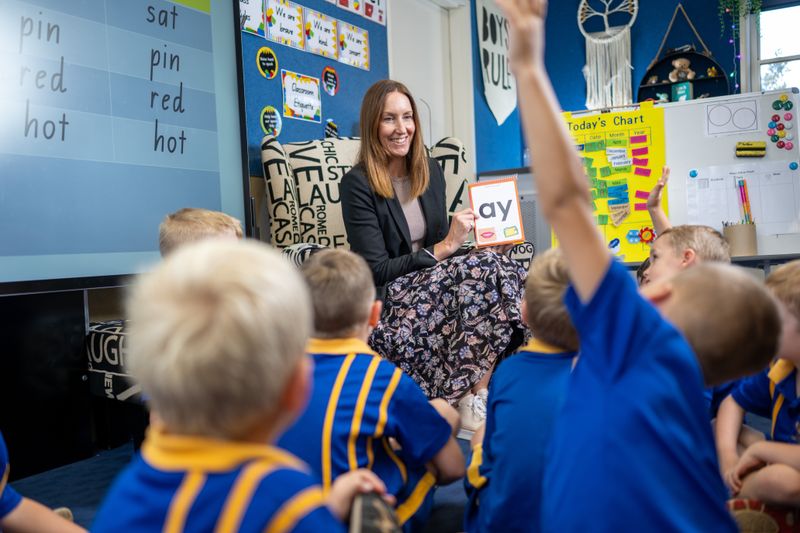
Building strong foundations in the Junior School
Research consistently shows that the primary school years are critical in shaping boys’ attitudes towards learning, literacy and self-belief.
This is particularly important for boys, who often develop language, organisation and self-regulation skills at different rates to girls during early childhood and adolescence (Rinaldi et al., 2021; van Tetering et al., 2020).
An all‑boys environment provides a valuable context to respond intentionally to these developmental patterns, supporting confidence, participation and a willingness to take academic risks.
This includes clear routines, explicit instruction, movement and hands-on learning opportunities, strong relational teaching and consistent expectations.
Importantly, boys are able to learn, contribute and grow without many of the social pressures that can emerge during adolescence.
This creates classrooms where boys are encouraged to ask questions, participate openly and develop confidence in themselves as learners from an early age.
A strong focus on literacy and communication
One of the greatest challenges identified globally in boys’ education is literacy engagement. Research shows boys are statistically less likely to read for enjoyment and are more at risk of falling behind in writing and communication skills as they progress through schooling (OECD, 2019).
At TGS, literacy development remains a significant focus across all year levels and subject areas. Reading, writing, discussion and communication are embedded intentionally throughout the curriculum. They are not confined to English classrooms alone.
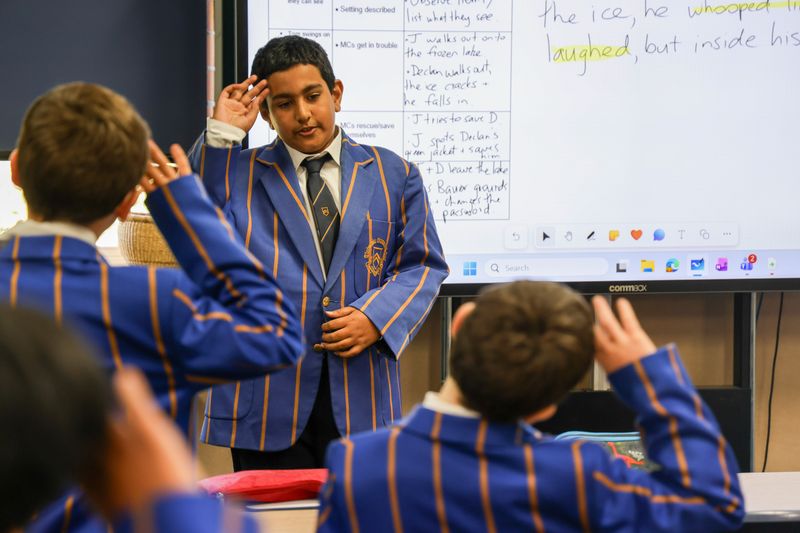
Teachers work deliberately to make learning visible and achievable, helping boys build confidence through structured support, clear feedback and explicit teaching practices.
Importantly, we see strong evidence that boys respond positively when expectations are high, learning is purposeful, and teachers provide clarity around what success looks like.
The power of positive academic culture
One of the often-overlooked strengths of boys’ education is culture.
In schools where academic effort is visible, encouraged and respected, boys are significantly more likely to participate openly and engage deeply in learning.
At TGS, we work intentionally to create a culture where boys can pursue academic success without hesitation and where curiosity, participation and effort are positively reinforced.
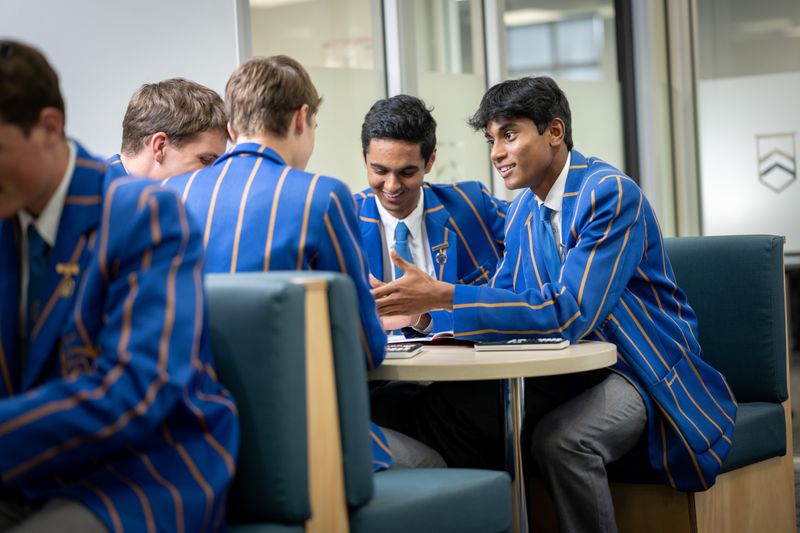
This matters because peer culture has a profound impact on boys’ attitudes towards learning, particularly during adolescence.
When boys see other boys contributing in class, asking questions, reading, performing, creating and striving for improvement, it helps normalise academic engagement and builds confidence across the cohort.
Relationships remain central
While structure and teaching practice are important, relationships remain at the centre of effective boys’ education.
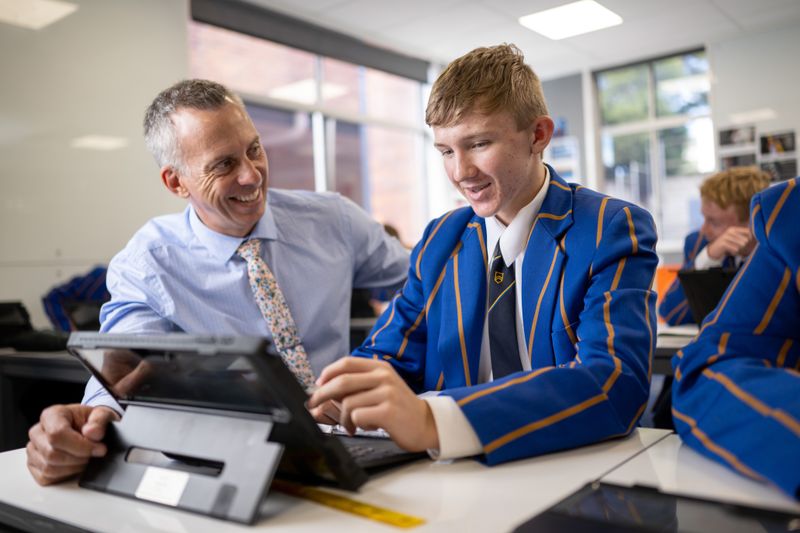
Boys engage best when they feel known, supported and challenged by trusted adults who genuinely understand them.
Across the School, strong relationships between staff and students help create learning environments where boys feel safe to contribute, seek feedback, persist through challenge and continue developing confidence over time.
This relational approach is particularly important during the middle years of schooling, when boys are navigating significant academic, emotional and social growth.
Preparing boys for the future
A high-quality boys’ education is not simply about improving classroom engagement. It is about developing capable young men who can think critically, communicate effectively, collaborate with others and approach challenge with confidence.
At TGS, we believe boys thrive when learning environments are intentionally designed to support both achievement and character development.
By combining strong relationships, explicit teaching, high expectations and a culture that values participation and growth, we continue to create conditions where boys can engage deeply in their learning and build the foundations for long-term success.
References
OECD. (2019). PISA 2018 results (Volume I): What students know and can do. OECD Publishing. https://doi.org/10.1787/5f07c754-en
Rinaldi, P., Pasqualetti, P., & Caselli, M. C. (2021). Gender differences in early stages of language development: Some evidence and possible explanations. Journal of Neuroscience Research, 99(10), 2435–2447
van Tetering, M. A. J., van der Laan, A. M., de Kogel, C. H., de Groot, R. H. M., & Jolles, J. (2020). Sex differences in self‑regulation in early, middle and late adolescence. PLOS ONE, 15(1), e0227607
Want to know more?
The best way to understand the value of a TGS education is to see the School in action via a Personalised Tour.
Book Your TourLatest Blog
Dr Ian Gunn
When Ian Gunn arrived at Toowoomba Grammar School, he did so on an academic scholarship that opened doors his family could never have imagined. As a young boarder from regional Queensland, he embraced the opportunities before him and quickly immersed himself in School life. Then tragedy struck. During his first year at TGS, Ian’s father passed away unexpectedly. Suddenly, his mother was left to raise three children alone while facing significant financial uncertainty. What had begun as an…
Emmanuel Geu
When Emmanuel Geu arrived in Australia from South Sudan in 2014, his family was seeking safety, stability and the chance to build a brighter future. Adjusting to a new country, culture and education system brought challenges, but it also opened the door to opportunities that would help shape the young man he is today. Through the support of a bursary at Toowoomba Grammar School, Emmanuel was able to access an education that would become transformational. Boarding life was not easy at first.…
From Toowoomba to the World Stage
After months on the road performing to thousands across the globe, Mason Watts has returned to Australia with a renewed appreciation for home and a career that continues to gain momentum. “It’s really nice,” Watts said of being back. “You don’t realise how good Australia is until you go overseas and you come back… it’s nice being home around Australians and family.” A TGS Old Boy who graduated in 2016, Watts’ journey from school performances to international touring has been anything but…
Single-Sex Education and Boys’ Learning: Why It Matters
While many boys appear settled and compliant while studying, research from organisations including the Australian Council for Educational Research (ACER), the University of Melbourne and UNESCO suggest boys are increasingly at risk of disengaging from learning over time, particularly in literacy, motivation and academic confidence. Importantly, this disengagement is not always visible through poor behaviour or disruption. More often, it appears quietly through reduced confidence, reluctance to…
Nurturing Curious Minds
Children are naturally curious about their world and always eager to explore. Harnessing that energy and enthusiasm is key for us in the Junior School. We want our boys to expand their knowledge base and approach learning with a passion that will set them up for the Senior School and beyond. First, let’s clarify some terms: extension and enrichment. Extension is curriculum-focused; it’s where a student’s knowledge, understanding and skills are advanced. Students feel a sense of “stretch” and…
Where it Began
Two of the three books that Louis has published are tucked into the Fantasy section in the W.M. Dent Library I really think my enthusiasm began in the younger grades, when an annual writing competition encouraged all boys to think creatively. This was where I was first truly introduced to writing fiction. These competitions planted a seed of creativity in my mind that would later grow. That seed first flourished in Years 5 and 6, when I wrote my first book with help from a friend called…
A Steady Rhythm, Exceptional Results
When Henry Geise first picked up the clarinet in Year 4, playing an instrument was compulsory at his primary school; he simply gave it a go. What followed has been shaped less by a single decision and more by years of steady commitment. Henry’s love of clarinet started when he was around eight years old He started on clarinet and bass guitar at the same time, and those two instruments have remained his favourites despite trying piano and picking up acoustic guitar more recently. “I would have…
2026 College Baudoux Visit
Early this term, we were delighted to host 24 students and two teachers for a week-long exchange, an experience made possible through the generosity of TGS families and our valued partnership with Fairholme College. What makes this exchange so special is the richness of the cultural experience. While 15 boys were immersed in daily life at TGS, the nine girls attended Fairholme College, allowing both schools to play an active role. Across the week, students participated in lessons, school…
Beyond Achievement: Cultivating Humanity in Boys’ Education
Mark Oliphant, Head of Senior School and Acting Deputy Headmaster and Luke Rawle, Head of Teacher Learning presenting in Adelaide The International Boys’ School Coalition Australasian Regional Conference was co-hosted by Prince Alfred College and St Peter’s College in Adelaide, South Australia between 3-5 May. The conference theme of Cultivating Humanity: A Compelling Responsibility in Boys’ Education drew over 150 educators from boys’ schools across Australia and New Zealand. Many of the…


