“Within a boys’ school environment, teachers are able to tailor learning experiences specifically to how boys engage best.”
Across Australia and internationally, there is growing research highlighting a concerning trend in boys’ education.
While many boys appear settled and compliant while studying, research from organisations including the Australian Council for Educational Research (ACER), the University of Melbourne and UNESCO suggest boys are increasingly at risk of disengaging from learning over time, particularly in literacy, motivation and academic confidence.
Importantly, this disengagement is not always visible through poor behaviour or disruption. More often, it appears quietly through reduced confidence, reluctance to take academic risks, lower levels of persistence and gradual withdrawal from reading, writing and classroom participation.
This research continues to reinforce the importance of environments intentionally designed for the way boys learn and develop.
At Toowoomba Grammar School, our approach to boys’ education is grounded in the understanding that boys benefit from clarity, structure, positive relationships, purposeful challenges and a culture where it is socially acceptable to engage fully in learning.
From the earliest years of Junior School through to the Senior School, we intentionally shape learning environments that support boys academically, socially and developmentally.
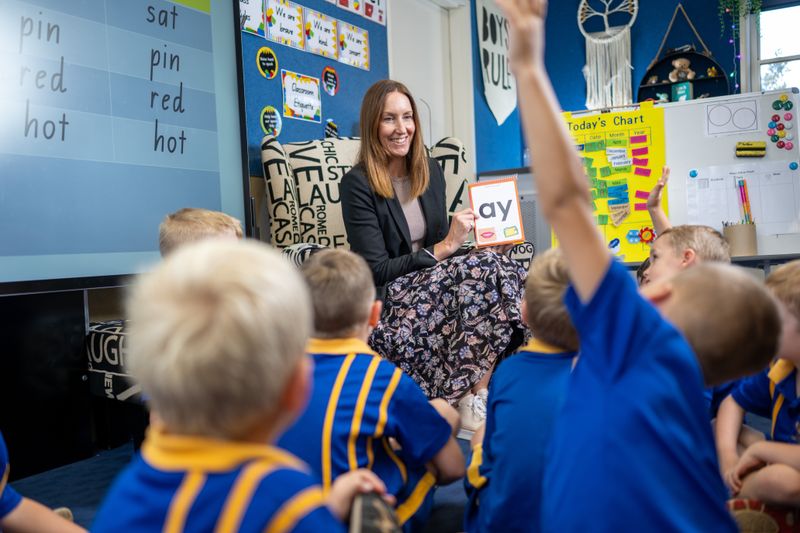
Building strong foundations in the Junior School
Research consistently shows that the primary school years are critical in shaping boys’ attitudes towards learning, literacy and self-belief.
This is particularly important for boys, who often develop language, organisation and self-regulation skills at different rates to girls during early childhood and adolescence (Rinaldi et al., 2021; van Tetering et al., 2020).
An all‑boys environment provides a valuable context to respond intentionally to these developmental patterns, supporting confidence, participation and a willingness to take academic risks.
This includes clear routines, explicit instruction, movement and hands-on learning opportunities, strong relational teaching and consistent expectations.
Importantly, boys are able to learn, contribute and grow without many of the social pressures that can emerge during adolescence.
This creates classrooms where boys are encouraged to ask questions, participate openly and develop confidence in themselves as learners from an early age.
A strong focus on literacy and communication
One of the greatest challenges identified globally in boys’ education is literacy engagement. Research shows boys are statistically less likely to read for enjoyment and are more at risk of falling behind in writing and communication skills as they progress through schooling (OECD, 2019).
At TGS, literacy development remains a significant focus across all year levels and subject areas. Reading, writing, discussion and communication are embedded intentionally throughout the curriculum. They are not confined to English classrooms alone.
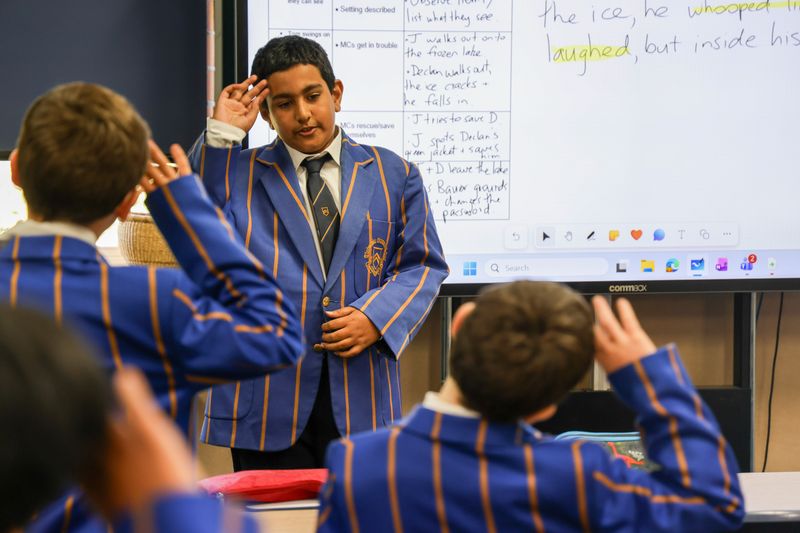
Teachers work deliberately to make learning visible and achievable, helping boys build confidence through structured support, clear feedback and explicit teaching practices.
Importantly, we see strong evidence that boys respond positively when expectations are high, learning is purposeful, and teachers provide clarity around what success looks like.
The power of positive academic culture
One of the often-overlooked strengths of boys’ education is culture.
In schools where academic effort is visible, encouraged and respected, boys are significantly more likely to participate openly and engage deeply in learning.
At TGS, we work intentionally to create a culture where boys can pursue academic success without hesitation and where curiosity, participation and effort are positively reinforced.
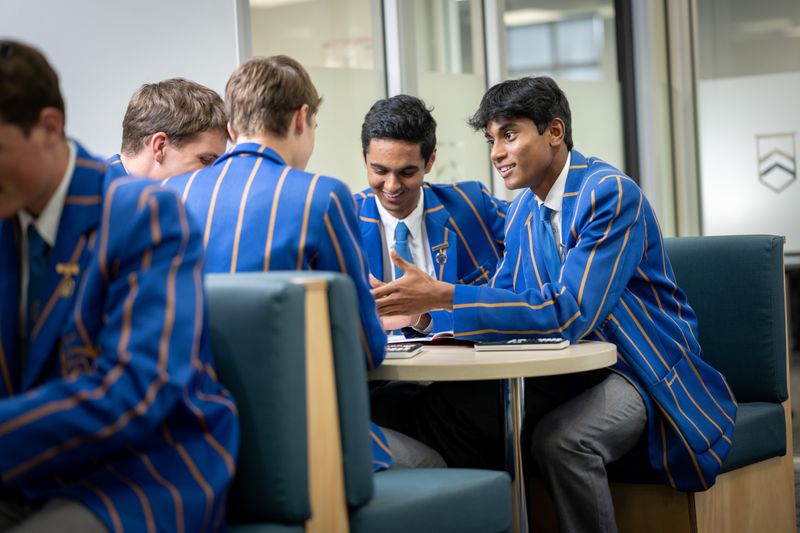
This matters because peer culture has a profound impact on boys’ attitudes towards learning, particularly during adolescence.
When boys see other boys contributing in class, asking questions, reading, performing, creating and striving for improvement, it helps normalise academic engagement and builds confidence across the cohort.
Relationships remain central
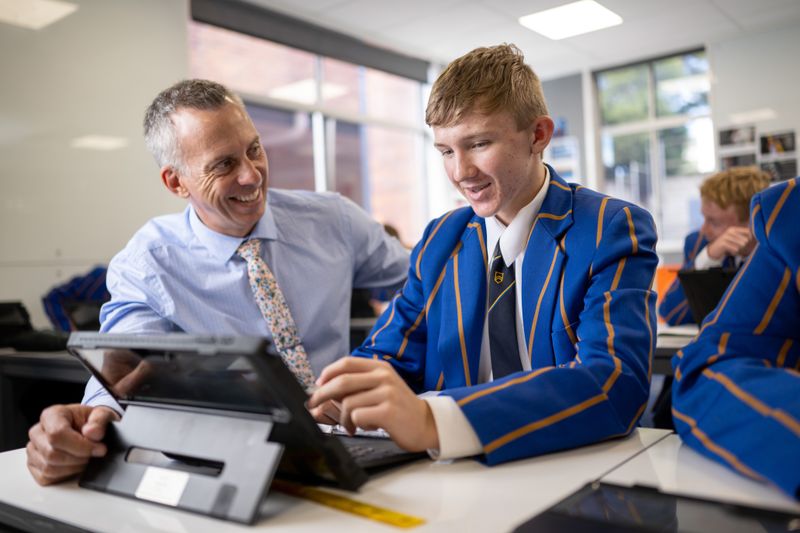
While structure and teaching practice are important, relationships remain at the centre of effective boys’ education.
Boys engage best when they feel known, supported and challenged by trusted adults who genuinely understand them.
Across the School, strong relationships between staff and students help create learning environments where boys feel safe to contribute, seek feedback, persist through challenge and continue developing confidence over time.
This relational approach is particularly important during the middle years of schooling, when boys are navigating significant academic, emotional and social growth.
Preparing boys for the future
A high-quality boys’ education is not simply about improving classroom engagement. It is about developing capable young men who can think critically, communicate effectively, collaborate with others and approach challenge with confidence.
At TGS, we believe boys thrive when learning environments are intentionally designed to support both achievement and character development.
By combining strong relationships, explicit teaching, high expectations and a culture that values participation and growth, we continue to create conditions where boys can engage deeply in their learning and build the foundations for long-term success.
References
OECD. (2019). PISA 2018 results (Volume I): What students know and can do. OECD Publishing. https://doi.org/10.1787/5f07c754-en
Rinaldi, P., Pasqualetti, P., & Caselli, M. C. (2021). Gender differences in early stages of language development: Some evidence and possible explanations. Journal of Neuroscience Research, 99(10), 2435–2447
van Tetering, M. A. J., van der Laan, A. M., de Kogel, C. H., de Groot, R. H. M., & Jolles, J. (2020). Sex differences in self‑regulation in early, middle and late adolescence. PLOS ONE, 15(1), e0227607
Want to know more?
The best way to understand the value of a TGS education is to see the School in action via a Personalised Tour.
Book Your TourLatest Blog
Echoes of Home: Boarding is who we are
It's there in the early mornings before the day has properly begun, in the noise of boys lining up in the dining hall and in the easy banter that carries them back from sport in the afternoon. Just as often, it shows up in the quieter moments, the ones that tend to go unnoticed at the time but, slowly and steadily, shape who they become. There's also a shared understanding that doesn't need much explaining. What good rainfall means after a long dry spell, or how strong cattle prices on a Friday…
Fiji Rugby Tour 2026: Lessons in Adaptability and Gratitude
Set against the stunning backdrop of Fiji, the tour, held from 3 to 10 April 2026, blended high-level competition, cultural immersion and unexpected challenges. Two demanding matches against local opposition tested adaptability and resilience, while a late-season Severe Tropical Cyclone Vaianu forced significant changes to plans and schedules. Throughout the disruption, the boys’ behaviour was exemplary, drawing praise from hosts and reinforcing the values at the heart of the program. Based in…
Musicians First, Teachers Always
When the lights came up on & Juliet at the Empire Theatre, more than 6,700 audience members were treated to a bold, high‑energy production backed by an extraordinary team of professional musicians. Among them were two familiar faces from Toowoomba Grammar School: Ms Teresa Brix and Mr Mark Chalmers. For the TGS community, their involvement in one of the region’s largest theatrical productions is something to celebrate, not simply as a professional achievement, but as a powerful reminder of…
Building Good Character
This commitment extends beyond the classroom into every aspect of School life, including programs that encourage our boys to reflect on who they are, how they treat others and the kind of men they hope to become. This week, students from Years 7 to 10 took part in two significant character and wellbeing programs delivered by Damon Joseph and Daniel Principe. Although different in design, both workshops reinforced the same message, that character is learned, practised and strengthened through…
Stateside Success: The Growing US College Pathway for TGS Boys
A Parent's Perspective: From Blue & Gold to Bowling Green For the TGS boys that take the trip to the United States, their pathways are diverse, but they share a common foundation: the support, discipline and belief built on the 52 acres that is our 150-year-old campus. For past TGS mum, Adele Spurgin, the journey from watching her boys run out in the blue and gold of Toowoomba Grammar School to seeing them play together in the orange and brown strip of Bowling Green State University’s…
Helping Boys Build Stronger Identities at TGS
Social media influencers, hyper‑masculine stereotypes and the pressure to “perform” academically, socially and emotionally can distort a young man’s sense of self long before he has the tools to understand what he’s feeling. Toowoomba Grammar School (TGS) has recognised this challenge and responded with intention. Through a bespoke Pastoral Care model and a powerful partnership with Tomorrow Man and other leading professionals, the School is reshaping how boys understand identity, connection…
Cambodia Cultural and Service Tour
Across twelve days with RAW Impact, the group moved through moments of cultural immersion, physical work, reflection and genuine connection with local communities. Their words capture the impact more powerfully than any adult could. Phnom Penh: Confronting history to understand the present The tour began in Phnom Penh, where the group visited the Killing Fields and S21 before beginning their service work. For many boys, this was the moment they realised the tour would be life changing. As Year…
Old Boy Geoffrey Smith inspires at our Senior School Speech Night
Toowoomba Grammar School’s Senior School Speech Night was marked by a powerful address from Old Boy Geoffrey Smith (2002–06), recently named the 2025 Australian of the Year for Queensland. Geoffrey, co-founder of Australian Spatial Analytics (ASA), has become a national leader in recognising the untapped potential of neurodivergent Australians in the workforce. His organisation provides geo-spatial and engineering services while creating meaningful employment opportunities - with 80 per cent…
Tears at the Gate, Pride at the Finish
Melanie Elms says she regularly sees a group of TGS parents socially, they've become lifelong friends Heartfelt moments bookend the boarding years “It feels very surreal. I'm proud, but it is very surreal.” Those were the words of Mrs Melanie Elms from 'Taringa' near Edgeroi, New South Wales, as she reflected on the moment her youngest son Sam finished his time at Toowoomba Grammar School. An end to walking up to Taylor House returning a boarder to TGS forever and it comes just 12 months after…


