“Within a boys’ school environment, teachers are able to tailor learning experiences specifically to how boys engage best.”

Across Australia and internationally, there is growing research highlighting a concerning trend in boys’ education.
While many boys appear settled and compliant while studying, research from organisations including the Australian Council for Educational Research (ACER), the University of Melbourne and UNESCO suggest boys are increasingly at risk of disengaging from learning over time, particularly in literacy, motivation and academic confidence.
Importantly, this disengagement is not always visible through poor behaviour or disruption. More often, it appears quietly through reduced confidence, reluctance to take academic risks, lower levels of persistence and gradual withdrawal from reading, writing and classroom participation.
This research continues to reinforce the importance of environments intentionally designed for the way boys learn and develop.
At Toowoomba Grammar School, our approach to boys’ education is grounded in the understanding that boys benefit from clarity, structure, positive relationships, purposeful challenges and a culture where it is socially acceptable to engage fully in learning.
From the earliest years of Junior School through to the Senior School, we intentionally shape learning environments that support boys academically, socially and developmentally.
Building strong foundations in the Junior School
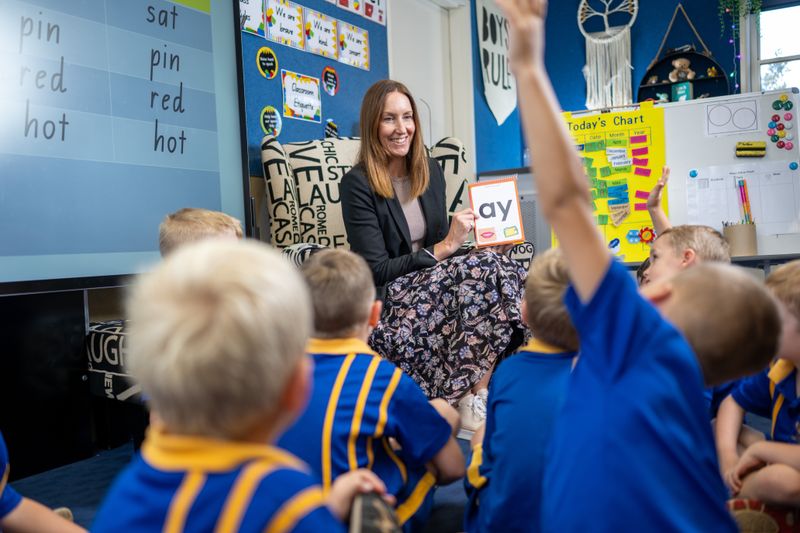
Research consistently shows that the primary school years are critical in shaping boys’ attitudes towards learning, literacy and self-belief.
This is particularly important for boys, who often develop language, organisation and self-regulation skills at different rates to girls during early childhood and adolescence (Rinaldi et al., 2021; van Tetering et al., 2020).
An all‑boys environment provides a valuable context to respond intentionally to these developmental patterns, supporting confidence, participation and a willingness to take academic risks.
This includes clear routines, explicit instruction, movement and hands-on learning opportunities, strong relational teaching and consistent expectations.
Importantly, boys are able to learn, contribute and grow without many of the social pressures that can emerge during adolescence.
This creates classrooms where boys are encouraged to ask questions, participate openly and develop confidence in themselves as learners from an early age.
A strong focus on literacy and communication
One of the greatest challenges identified globally in boys’ education is literacy engagement. Research shows boys are statistically less likely to read for enjoyment and are more at risk of falling behind in writing and communication skills as they progress through schooling (OECD, 2019).
At TGS, literacy development remains a significant focus across all year levels and subject areas. Reading, writing, discussion and communication are embedded intentionally throughout the curriculum. They are not confined to English classrooms alone.
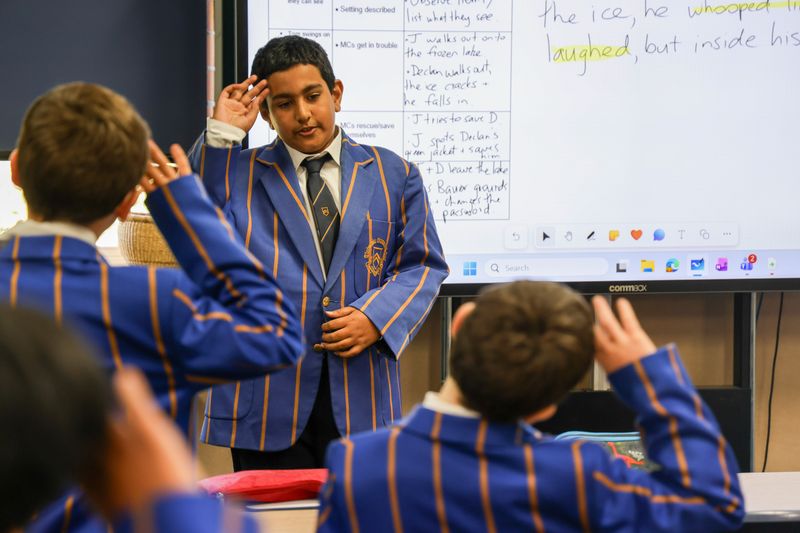
Teachers work deliberately to make learning visible and achievable, helping boys build confidence through structured support, clear feedback and explicit teaching practices.
Importantly, we see strong evidence that boys respond positively when expectations are high, learning is purposeful, and teachers provide clarity around what success looks like.
The power of positive academic culture
One of the often-overlooked strengths of boys’ education is culture.
In schools where academic effort is visible, encouraged and respected, boys are significantly more likely to participate openly and engage deeply in learning.
At TGS, we work intentionally to create a culture where boys can pursue academic success without hesitation and where curiosity, participation and effort are positively reinforced.
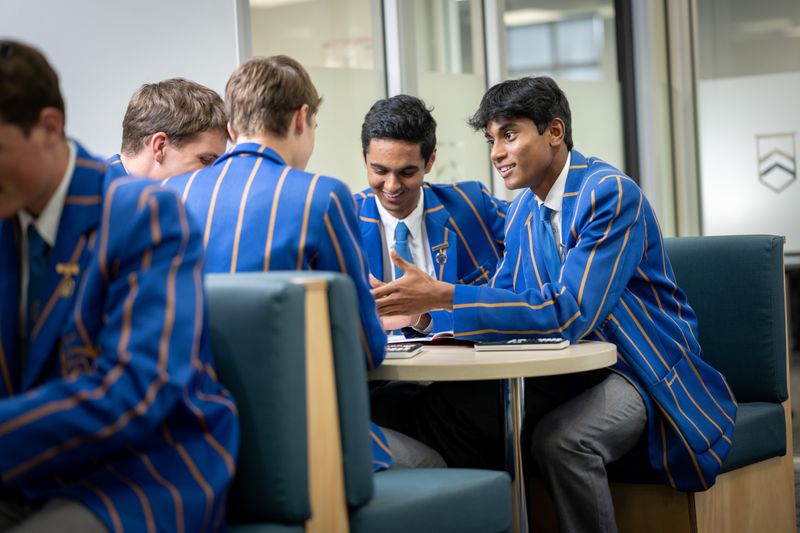
This matters because peer culture has a profound impact on boys’ attitudes towards learning, particularly during adolescence.
When boys see other boys contributing in class, asking questions, reading, performing, creating and striving for improvement, it helps normalise academic engagement and builds confidence across the cohort.
Relationships remain central
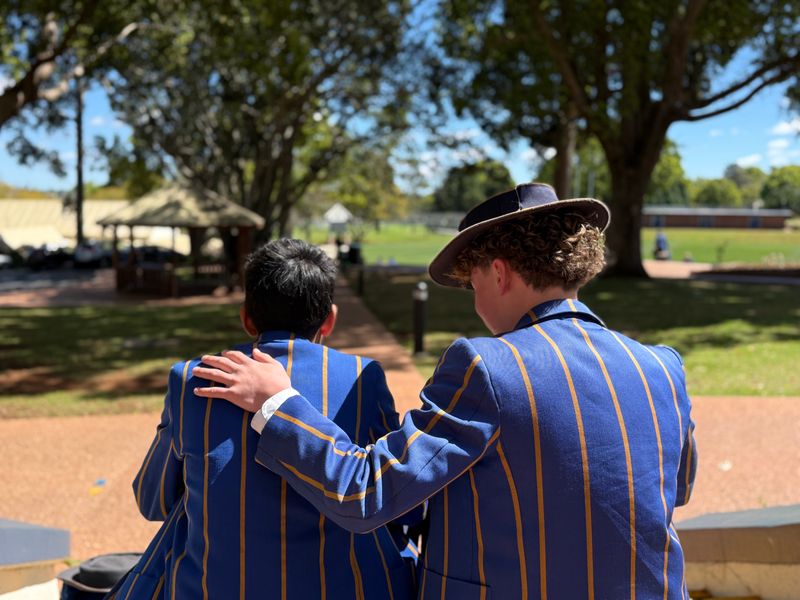
While structure and teaching practice are important, relationships remain at the centre of effective boys’ education.
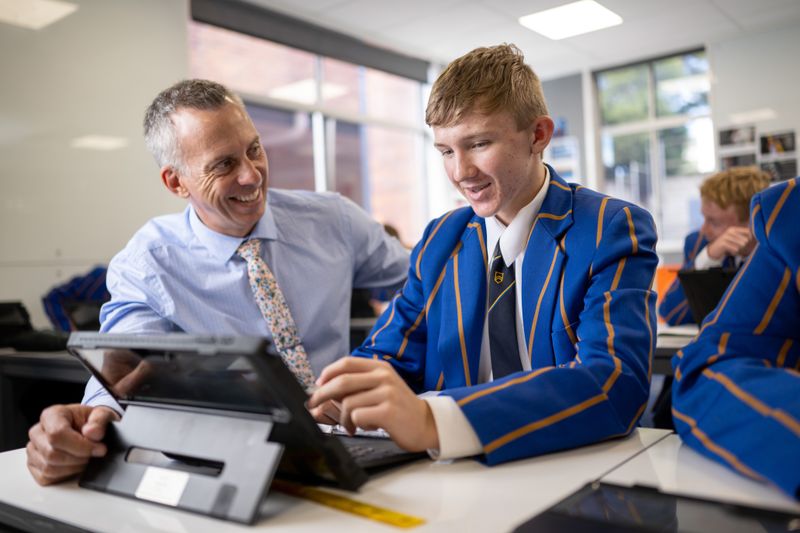
Boys engage best when they feel known, supported and challenged by trusted adults who genuinely understand them.
Across the School, strong relationships between staff and students help create learning environments where boys feel safe to contribute, seek feedback, persist through challenge and continue developing confidence over time.
This relational approach is particularly important during the middle years of schooling, when boys are navigating significant academic, emotional and social growth.
Preparing boys for the future
A high-quality boys’ education is not simply about improving classroom engagement. It is about developing capable young men who can think critically, communicate effectively, collaborate with others and approach challenge with confidence.
At TGS, we believe boys thrive when learning environments are intentionally designed to support both achievement and character development.
By combining strong relationships, explicit teaching, high expectations and a culture that values participation and growth, we continue to create conditions where boys can engage deeply in their learning and build the foundations for long-term success.
References
OECD. (2019). PISA 2018 results (Volume I): What students know and can do. OECD Publishing. https://doi.org/10.1787/5f07c754-en
Rinaldi, P., Pasqualetti, P., & Caselli, M. C. (2021). Gender differences in early stages of language development: Some evidence and possible explanations. Journal of Neuroscience Research, 99(10), 2435–2447
van Tetering, M. A. J., van der Laan, A. M., de Kogel, C. H., de Groot, R. H. M., & Jolles, J. (2020). Sex differences in self‑regulation in early, middle and late adolescence. PLOS ONE, 15(1), e0227607
Want to know more?
The best way to understand the value of a TGS education is to see the School in action via a Personalised Tour.
Book Your TourLatest Blog
The Grammar Boy: TGS Character Cast in Bronze for All Time
Unveiled on Friday, 7 November 2025, this new statue is more than a work of art. It is a symbol of the enduring character that has shaped Toowoomba Grammar School for 150 years. The ceremony began with the ringing of the School House bell, it’s a sound many current students were hearing for the first time but one that may just have stirred memories for some of the Old Boys in attendance. As Headmaster Dr John Kinniburgh remarked in his address, “Today is a special occasion… one I’ve been…
Taking TGS Rugby West: making mates in the Longreach district
Last month, Head of Rugby Lincoln Clapham, TGS Old Boys' Association Vice President, Trent Raymond (1989-93) and two Year 11 boarding students, Luke Burrow (2025 First XV Co-captain) and Archie Smart, travelled 11.5 hours west to Longreach to deliver rugby clinics in partnership with the Longreach School of Distance Education (LSODE) and Western Queensland Rugby Union. Archie and Luke had both been to Longreach before but enjoyed the QANTAS Founders Museum The visit was part of a broader…
The Modified Rugby Program’s Game-Changing Impact
Founded in Brisbane in 2014 by the not-for-profit GingerCloud Foundation Limited, the Modified Rugby Program (MRP) gives neurodiverse young people the chance to play a sport and their families the opportunity to be part of a sporting community. It also allows coaches and player mentors the very privileged role of helping these young people have what many consider a normal experience - the joy of being part of a team. For Year 12 boarder Will Brown, it is a cause that is close to his heart.…
When School days become years of Mateship, Growth and Unforgettable Memories
Yesterday’s Awards Assembly for our senior cohort saw lashings of pride, reflection and a time for parents and caregivers to savour the very nearness of graduation after years of growth and grit. As the boys prepare for their final external exams and the much-anticipated Formal, this gathering marked the beginning of their final chapter at Toowoomba Grammar School. The assembly featured a moving reel that traced their growth from wide-eyed Junior School boys to confident young men. There were…
Japan: A Journey of Discovery, Culture and Connection
For 30 students and four staff members from Toowoomba Grammar School, the recent Japan Cultural and Technology Tour was a vibrant tapestry of tradition, innovation and transformation. From the bustling streets of Tokyo to the serene temples of Kyoto, this immersive experience offered students a unique lens through which to view the world. The Kinkaku-ji (Golden Pavilion)
TGS Puts Boys’ Online Safety First with Global EdTech Honour
This year, Toowoomba Grammar School was honoured at the Global EdTech Awards, becoming the only Australian school to receive recognition in this category of the prestigious international program. While the category - Best Network Manager - may not often make headlines, it celebrates the quiet achievers who empower learning, protect students and enable innovation. Arthur C. Clarke once said, “Any sufficiently advanced technology is indistinguishable from magic.” If that’s true, then network…
Ompelliargo - Episode 2 - School House: A Gothic Revival at the Heart of TGS
School House in 1907 Constructed in 1875, School House is more than just a structure - it’s a symbol of the community’s commitment to education and a cornerstone of the School’s heritage. Designed by Toowoomba architect Willoughby Powell and built by local craftsman John William Garget, the building reflects the Gothic Revival style, a design language that blends classical proportions with pointed arches, intricate fretwork and a sense of grandeur. Heritage architect Ms Stephanie Keays, a…
The Power of Character and Connection Every Day
As we mark R U OK? Day, it’s a timely reminder of the importance of looking out for one another and staying connected. Whilst today is a National Day of Action, the message is clear: asking “R U OK?” should not be reserved for just one day of the year. By having regular, meaningful conversations with each other, we create trust and normalise talking about what’s really going on in our lives. This simple but powerful practice ensures that when someone is struggling, they know they have a…
Managing Conflict with Pre-Teens and Teenagers
Understanding the developmental challenges of our boys, particularly in managing emotional resilience and independence, helps parents navigate these moments more effectively. Conflict is a natural and inevitable part of adolescence, and for parents of preteens and teenagers at Toowoomba Grammar School, managing these moments effectively is key to nurturing their emotional growth and maintaining a healthy relationship.


