“Within a boys’ school environment, teachers are able to tailor learning experiences specifically to how boys engage best.”

Across Australia and internationally, there is growing research highlighting a concerning trend in boys’ education.
While many boys appear settled and compliant while studying, research from organisations including the Australian Council for Educational Research (ACER), the University of Melbourne and UNESCO suggest boys are increasingly at risk of disengaging from learning over time, particularly in literacy, motivation and academic confidence.
Importantly, this disengagement is not always visible through poor behaviour or disruption. More often, it appears quietly through reduced confidence, reluctance to take academic risks, lower levels of persistence and gradual withdrawal from reading, writing and classroom participation.
This research continues to reinforce the importance of environments intentionally designed for the way boys learn and develop.
At Toowoomba Grammar School, our approach to boys’ education is grounded in the understanding that boys benefit from clarity, structure, positive relationships, purposeful challenges and a culture where it is socially acceptable to engage fully in learning.
From the earliest years of Junior School through to the Senior School, we intentionally shape learning environments that support boys academically, socially and developmentally.
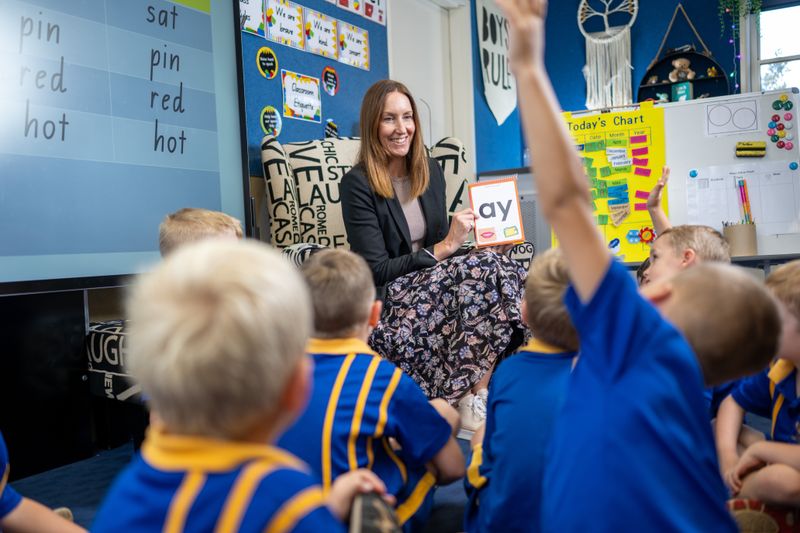
Building strong foundations in the Junior School
Research consistently shows that the primary school years are critical in shaping boys’ attitudes towards learning, literacy and self-belief.
This is particularly important for boys, who often develop language, organisation and self-regulation skills at different rates to girls during early childhood and adolescence (Rinaldi et al., 2021; van Tetering et al., 2020).
An all‑boys environment provides a valuable context to respond intentionally to these developmental patterns, supporting confidence, participation and a willingness to take academic risks.
This includes clear routines, explicit instruction, movement and hands-on learning opportunities, strong relational teaching and consistent expectations.
Importantly, boys are able to learn, contribute and grow without many of the social pressures that can emerge during adolescence.
This creates classrooms where boys are encouraged to ask questions, participate openly and develop confidence in themselves as learners from an early age.
A strong focus on literacy and communication
One of the greatest challenges identified globally in boys’ education is literacy engagement. Research shows boys are statistically less likely to read for enjoyment and are more at risk of falling behind in writing and communication skills as they progress through schooling (OECD, 2019).
At TGS, literacy development remains a significant focus across all year levels and subject areas. Reading, writing, discussion and communication are embedded intentionally throughout the curriculum. They are not confined to English classrooms alone.
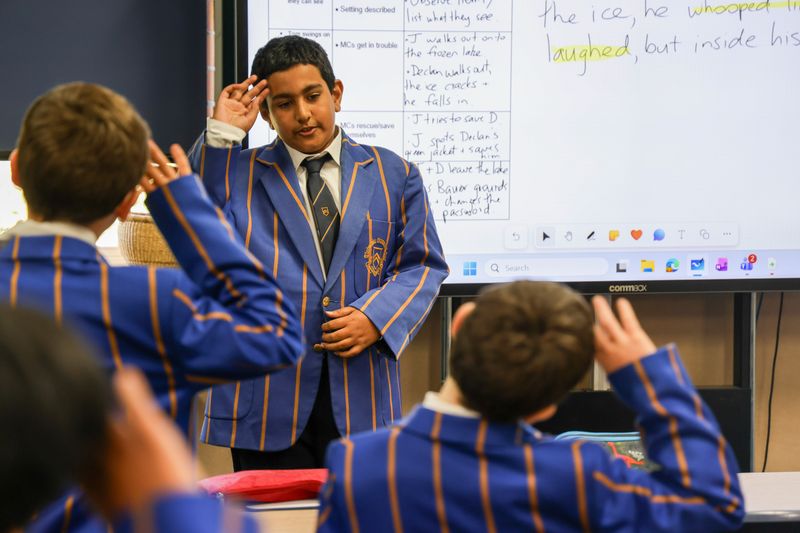
Teachers work deliberately to make learning visible and achievable, helping boys build confidence through structured support, clear feedback and explicit teaching practices.
Importantly, we see strong evidence that boys respond positively when expectations are high, learning is purposeful, and teachers provide clarity around what success looks like.
The power of positive academic culture
One of the often-overlooked strengths of boys’ education is culture.
In schools where academic effort is visible, encouraged and respected, boys are significantly more likely to participate openly and engage deeply in learning.
At TGS, we work intentionally to create a culture where boys can pursue academic success without hesitation and where curiosity, participation and effort are positively reinforced.

This matters because peer culture has a profound impact on boys’ attitudes towards learning, particularly during adolescence.
When boys see other boys contributing in class, asking questions, reading, performing, creating and striving for improvement, it helps normalise academic engagement and builds confidence across the cohort.
Relationships remain central
While structure and teaching practice are important, relationships remain at the centre of effective boys’ education.
Boys engage best when they feel known, supported and challenged by trusted adults who genuinely understand them.
Across the School, strong relationships between staff and students help create learning environments where boys feel safe to contribute, seek feedback, persist through challenge and continue developing confidence over time.
This relational approach is particularly important during the middle years of schooling, when boys are navigating significant academic, emotional and social growth.

Preparing boys for the future
A high-quality boys’ education is not simply about improving classroom engagement. It is about developing capable young men who can think critically, communicate effectively, collaborate with others and approach challenge with confidence.
At TGS, we believe boys thrive when learning environments are intentionally designed to support both achievement and character development.
By combining strong relationships, explicit teaching, high expectations and a culture that values participation and growth, we continue to create conditions where boys can engage deeply in their learning and build the foundations for long-term success.

References
OECD. (2019). PISA 2018 results (Volume I): What students know and can do. OECD Publishing. https://doi.org/10.1787/5f07c754-en
Rinaldi, P., Pasqualetti, P., & Caselli, M. C. (2021). Gender differences in early stages of language development: Some evidence and possible explanations. Journal of Neuroscience Research, 99(10), 2435–2447
van Tetering, M. A. J., van der Laan, A. M., de Kogel, C. H., de Groot, R. H. M., & Jolles, J. (2020). Sex differences in self‑regulation in early, middle and late adolescence. PLOS ONE, 15(1), e0227607
Want to know more?
The best way to understand the value of a TGS education is to see the School in action via a Personalised Tour.
Book Your TourLatest Blog
The Power of Gratitude
“What do you say mate?” your mum nudges you as the waitress hands you your dinosaur nuggets. “Thank you.” You have always been told to use good manners, and to say thank you, but what does thank you actually mean? Is it just two meaningless words uttered with monotonous regularity, or is it a tool that can alleviate mental health issues generating happiness and a sense of wellbeing? Gratitude is the sunlight that lights up those dark days. The ability to be grateful is at the core of personal…
The Silent Epidemic: Unveiling the Consequences of Sleep Deprivation
“Sleep that soothes away all our worries. Sleep that puts each day to rest. Sleep that relieves the weary laborer and heals hurt minds.” William Shakespeare (Macbeth, 1606) Heart Disease, Cancer, and Alzheimer's. Three life-threatening diseases. Three diseases all linked to lack of sleep. According to Dr. Okorie from the children’s health division of Stanford University, “7 out of 10 high school students are falling short of… (sleep) on school nights.” The Bulk of American teens are not getting…
Tik Tok - From Fun to Fear
Social media platforms have ingrained themselves into our daily lives in a time when technology is constantly evolving and drawing millions of users with seductive features and never-ending streams of captivating content. Among these, TikTok has become a worldwide phenomenon, captivating users with its viral challenges and short-form films. Underneath the fun and inventiveness however, there is growing concern about the risks connected to TikTok and other social media platforms. TikTok's…
Active Procrastination – Unlocking the Gates of Time
“Procrastination is like a credit card: it’s a lot of fun until you get the bill.” - Christopher Parker – professional actor. Unfortunately, procrastination is a term that we are all familiar with as students; the vast majority of us have experienced it firsthand. It saps our time and results like a parasite, a burden on its host. However, despite it’s reputation, recent studies have shown that when harnessed correctly, procrastination can be a powerful tool to improve both academic efficiency…
It Takes a Village...
The Toowoomba Grammar School Boarding community plays a pivotal role in shaping the young minds of our boarders and instilling values whilst creating a sense of mateship that can last a lifetime. The nurturing and supportive network of staff not only ensure a safe and structured environment but also cultivates a sense of belonging and camaraderie among the boys. ‘The staff supply the fuel to the ship but ultimately it is the boys who steer it and decide upon its final destination’. Our TGS…
Unlocking Literacy - The Big Six Elements for Your Child’s Reading Success
Literacy skills are a core component of each day for our students, and parents often ask how they can support this from home. I am delighted to share with our parent community the essential components that underpin successful reading development. These elements, known as the Big Six, provide a solid foundation for your son’s literacy journey. These critical building blocks include: Oral Language: Communication skills are the bedrock of reading. Encourage rich conversations with your child.…
The Journey of a Boarding Mother
When you look up mother in the dictionary it reads: female parent of a child. When you look up boarder, it simply reads: a child who lives away from home. So, put “boarder mother” together and we have: the female parent of a child who lives away from home – if only it were that simple. My definition of boarding mother is: a strong, dedicated unbelievably great female parent of a child who has the wisdom to put her son’s educational needs, wellbeing and lifelong endeavours before her own. A…
The Importance of Differentiation
As parents, we all want our children to have the best possible education, and one of the most effective ways for teachers to provide this is through differentiation. Differentiation means tailoring instruction to meet the unique needs and interests of each student, and it can take many forms. First, let's define differentiation. Differentiation is a teaching approach that recognises that students have different strengths, interests, and learning styles. By adjusting instruction to meet these…
Addressing Anger in Teenage Boys
As a community dedicated to the growth and well-being of our teenage boys, it is essential to address the complexities of emotions we experience during adolescence. Among these emotions, anger stands out as a powerful and intense feeling that can influence their behaviour, relationships and overall wellbeing. Untreated anger can lead to a myriad of problems and challenges for our young boys. In this comprehensive guide, we will explore the dangers of untreated anger, ways to support healthy…


