“Within a boys’ school environment, teachers are able to tailor learning experiences specifically to how boys engage best.”

Across Australia and internationally, there is growing research highlighting a concerning trend in boys’ education.
While many boys appear settled and compliant while studying, research from organisations including the Australian Council for Educational Research (ACER), the University of Melbourne and UNESCO suggest boys are increasingly at risk of disengaging from learning over time, particularly in literacy, motivation and academic confidence.
Importantly, this disengagement is not always visible through poor behaviour or disruption. More often, it appears quietly through reduced confidence, reluctance to take academic risks, lower levels of persistence and gradual withdrawal from reading, writing and classroom participation.
This research continues to reinforce the importance of environments intentionally designed for the way boys learn and develop.
At Toowoomba Grammar School, our approach to boys’ education is grounded in the understanding that boys benefit from clarity, structure, positive relationships, purposeful challenges and a culture where it is socially acceptable to engage fully in learning.
From the earliest years of Junior School through to the Senior School, we intentionally shape learning environments that support boys academically, socially and developmentally.
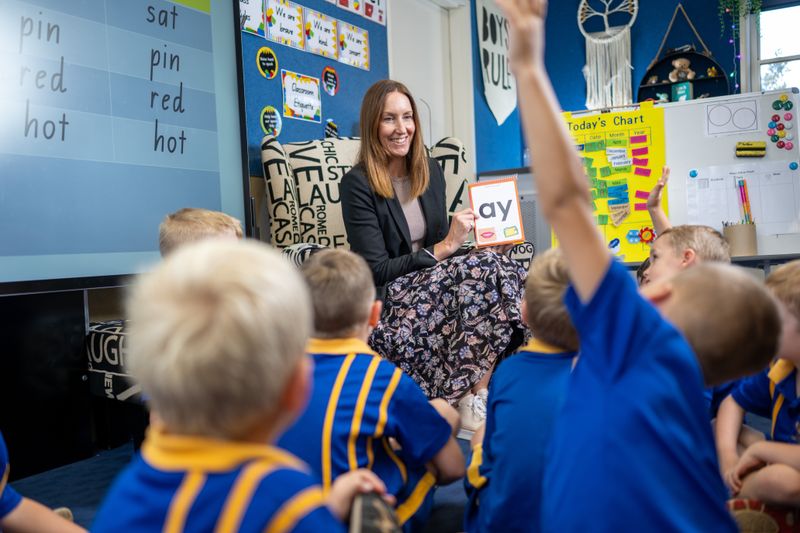
Building strong foundations in the Junior School
Research consistently shows that the primary school years are critical in shaping boys’ attitudes towards learning, literacy and self-belief.
This is particularly important for boys, who often develop language, organisation and self-regulation skills at different rates to girls during early childhood and adolescence (Rinaldi et al., 2021; van Tetering et al., 2020).
An all‑boys environment provides a valuable context to respond intentionally to these developmental patterns, supporting confidence, participation and a willingness to take academic risks.
This includes clear routines, explicit instruction, movement and hands-on learning opportunities, strong relational teaching and consistent expectations.
Importantly, boys are able to learn, contribute and grow without many of the social pressures that can emerge during adolescence.
This creates classrooms where boys are encouraged to ask questions, participate openly and develop confidence in themselves as learners from an early age.
A strong focus on literacy and communication
One of the greatest challenges identified globally in boys’ education is literacy engagement. Research shows boys are statistically less likely to read for enjoyment and are more at risk of falling behind in writing and communication skills as they progress through schooling (OECD, 2019).
At TGS, literacy development remains a significant focus across all year levels and subject areas. Reading, writing, discussion and communication are embedded intentionally throughout the curriculum. They are not confined to English classrooms alone.
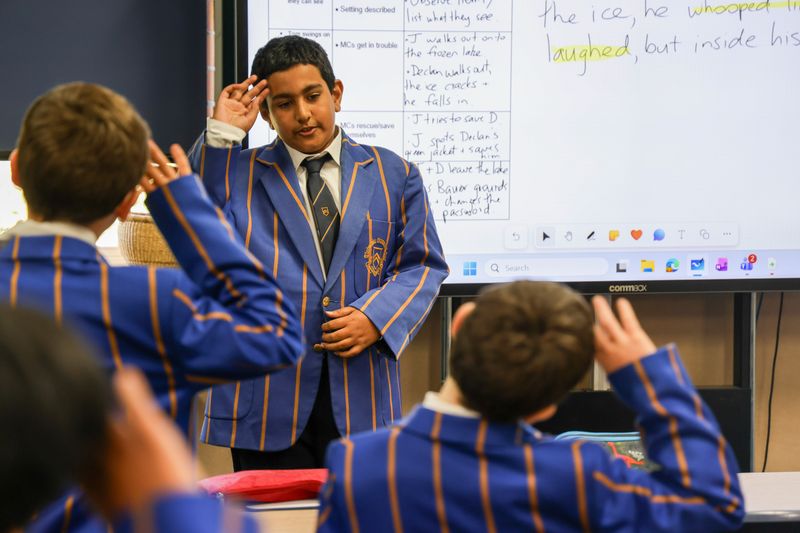
Teachers work deliberately to make learning visible and achievable, helping boys build confidence through structured support, clear feedback and explicit teaching practices.
Importantly, we see strong evidence that boys respond positively when expectations are high, learning is purposeful, and teachers provide clarity around what success looks like.
The power of positive academic culture
One of the often-overlooked strengths of boys’ education is culture.
In schools where academic effort is visible, encouraged and respected, boys are significantly more likely to participate openly and engage deeply in learning.
At TGS, we work intentionally to create a culture where boys can pursue academic success without hesitation and where curiosity, participation and effort are positively reinforced.
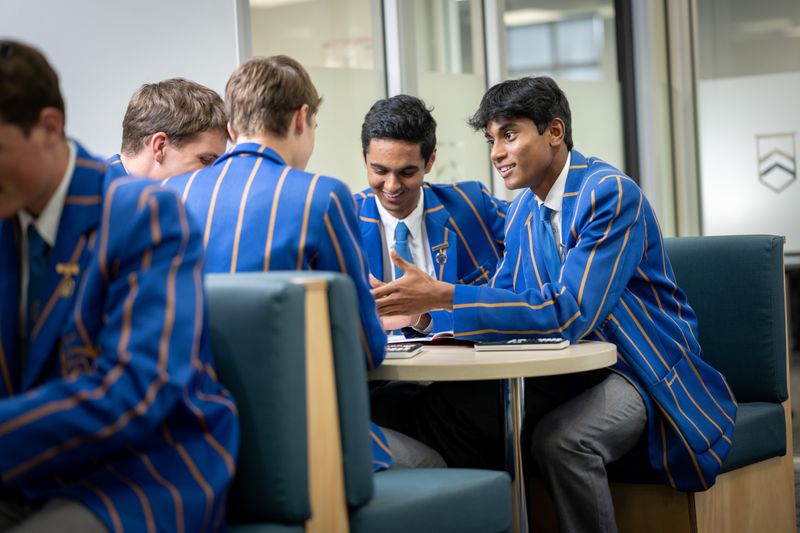
This matters because peer culture has a profound impact on boys’ attitudes towards learning, particularly during adolescence.
When boys see other boys contributing in class, asking questions, reading, performing, creating and striving for improvement, it helps normalise academic engagement and builds confidence across the cohort.
Relationships remain central
While structure and teaching practice are important, relationships remain at the centre of effective boys’ education.
Boys engage best when they feel known, supported and challenged by trusted adults who genuinely understand them.
Across the School, strong relationships between staff and students help create learning environments where boys feel safe to contribute, seek feedback, persist through challenge and continue developing confidence over time.
This relational approach is particularly important during the middle years of schooling, when boys are navigating significant academic, emotional and social growth.
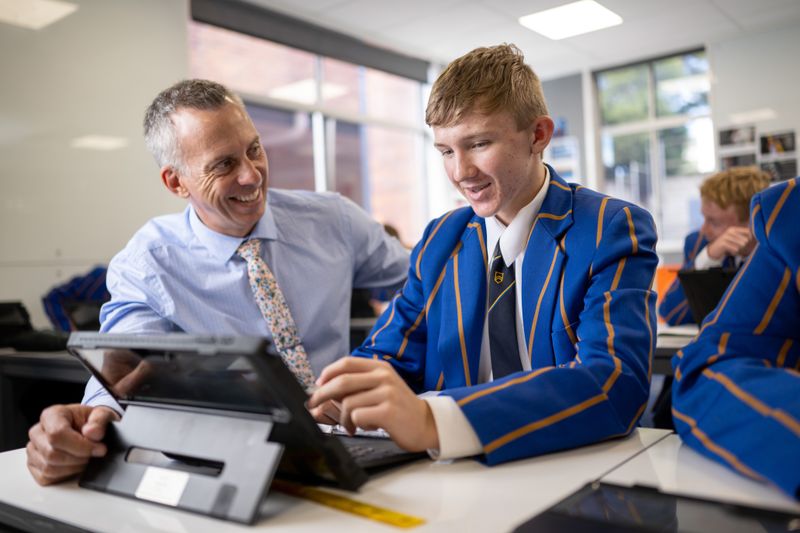
Preparing boys for the future
A high-quality boys’ education is not simply about improving classroom engagement. It is about developing capable young men who can think critically, communicate effectively, collaborate with others and approach challenge with confidence.
At TGS, we believe boys thrive when learning environments are intentionally designed to support both achievement and character development.
By combining strong relationships, explicit teaching, high expectations and a culture that values participation and growth, we continue to create conditions where boys can engage deeply in their learning and build the foundations for long-term success.
References
OECD. (2019). PISA 2018 results (Volume I): What students know and can do. OECD Publishing. https://doi.org/10.1787/5f07c754-en
Rinaldi, P., Pasqualetti, P., & Caselli, M. C. (2021). Gender differences in early stages of language development: Some evidence and possible explanations. Journal of Neuroscience Research, 99(10), 2435–2447
van Tetering, M. A. J., van der Laan, A. M., de Kogel, C. H., de Groot, R. H. M., & Jolles, J. (2020). Sex differences in self‑regulation in early, middle and late adolescence. PLOS ONE, 15(1), e0227607
Want to know more?
The best way to understand the value of a TGS education is to see the School in action via a Personalised Tour.
Book Your TourLatest Blog
Why Study Drama?
As an educator with over 30 years’ experience in the Arts, I specialise in the analytical, creative and practical spheres that quantify and qualify success in drama. I have been a Drama teacher and Arts Project Officer in the Independent, Catholic, state, and private sectors in primary and secondary, single sex and co-educational environments. This longevity of knowledge, gained through firsthand experience, affirms that students who study drama through until at least Year 10 acquire…
Drive and Determination
Jeremy Peacock is ranked third in the world in the PTS4 Para category and his sights are set on selection for the 2024 Paralympic Games in Paris. During Jeremy’s time at TGS he represented the School in numerous endeavours but was particularly known for his contributions to the Arts, particularly Music. On the sports field, Jeremy represented TGS in GPS Athletics, Cross Country, Cricket and Football. After returning from a gap year in the UK teaching music at Port Regis School, Dorset, Jeremy…
That Life-Changing Moment
His teacher, Mrs Rosemary Bishop saw his potential. She believed this young indigenous boy from Murgon had something special to offer the world and she fought to put him on the path to greatness. Mrs Bishop contacted the then Headmaster of Toowoomba Grammar School, Mr William Dent and asked if Waverley could be accepted into Toowoomba Grammar School on a scholarship. Mr Dent agreed and so changed the course of Waverley’s life. “I don’t like to think about where I would be now if that hadn’t…
Senioritis - The way we think affects the way we feel and behave
As high school students approach their final year, they may experience a phenomenon known as "Senioritis". As described by educators, Senioritis is a decrease in motivation and productivity, often accompanied by procrastination, complacency, and negative risk-taking behaviours. While not a medical term, Senioritis is a widely recognized term used to describe a common set of observed behaviours. As Jessica Lahey notes, "Senioritis is a real phenomenon. It can be defined as a decline in…
A Space for Learning
A core pillar of the Toowoomba Grammar School Strategic Plan is to provide an inspiring and broad curriculum for all boys, adopting technology and innovative pedagogy to transform learning outcomes. Over the last couple of years, the COVID-19 pandemic has prompted teachers to explore new frontiers of pedagogy, adapting to the difficult circumstances by launching interactive software, digitising trusty, tried and true resources, recording our lessons, flipping our classrooms, and cultivating an…
When it comes to Music, Variety is the Spice of Life
In the Queensland Curriculum, the content of the music syllabus includes the study of the people, places and cultures involved in musical creation and performance. As our country becomes increasingly diverse, it is important for students in every school setting to study a wide variety of musical styles, cultures and genres. The Toowoomba Grammar School Music program of 2022 embraces this holistic approach to the study of music, encouraging teachers and students to explore a variety of musical…
A Trailblazer for Multicultural Australia
Wellington Lee has been described as a trailblazer for multicultural Australia. He was born in 1925 and attended TGS from 1940-42 before serving with the RAAF during WWII from 1943-46 and the Active Reserve of Officers from 1953-83. Mr Lee was a remarkable man of good character who lived in an exciting time of growth and change during Australia’s, and particularly Victoria’s history; the early days in Melbourne when 10% of their population was a thriving Asian community. It was also a…
REACH - Character Development in the Junior School
Being a kind person is fundamental to the growth of a successful person. Adults in our young men’s lives have a responsibility to model and teach the importance of respect, accepting and acknowledging our need to contribute to society in a positive and meaningful way. In 2016, the Junior School staff felt there was a need to create a program that allowed us to develop the character of the boys in the Junior School. Tailoring a program to meet our boys’ needs rather than a generic one allows…
The Grass is Always Greener
It’s time we put this age-old rumour to rest once and for all… The Toowoomba Grammar School ovals are not painted, dyed or manufactured grass; rather, the glorious green that greets passers-by as they drive into the Garden City comes from the sheer hard work and dedication of our TGS grounds team, led by Danny Beresford. Danny has exceptional pride for his grounds and a strong family connection to TGS. He is an Old Boy (2002-04) who played for the 1st XV in 2004 and was in the Track and Field…


