“Within a boys’ school environment, teachers are able to tailor learning experiences specifically to how boys engage best.”

Across Australia and internationally, there is growing research highlighting a concerning trend in boys’ education.
While many boys appear settled and compliant while studying, research from organisations including the Australian Council for Educational Research (ACER), the University of Melbourne and UNESCO suggest boys are increasingly at risk of disengaging from learning over time, particularly in literacy, motivation and academic confidence.
Importantly, this disengagement is not always visible through poor behaviour or disruption. More often, it appears quietly through reduced confidence, reluctance to take academic risks, lower levels of persistence and gradual withdrawal from reading, writing and classroom participation.
This research continues to reinforce the importance of environments intentionally designed for the way boys learn and develop.
At Toowoomba Grammar School, our approach to boys’ education is grounded in the understanding that boys benefit from clarity, structure, positive relationships, purposeful challenges and a culture where it is socially acceptable to engage fully in learning.
From the earliest years of Junior School through to the Senior School, we intentionally shape learning environments that support boys academically, socially and developmentally.
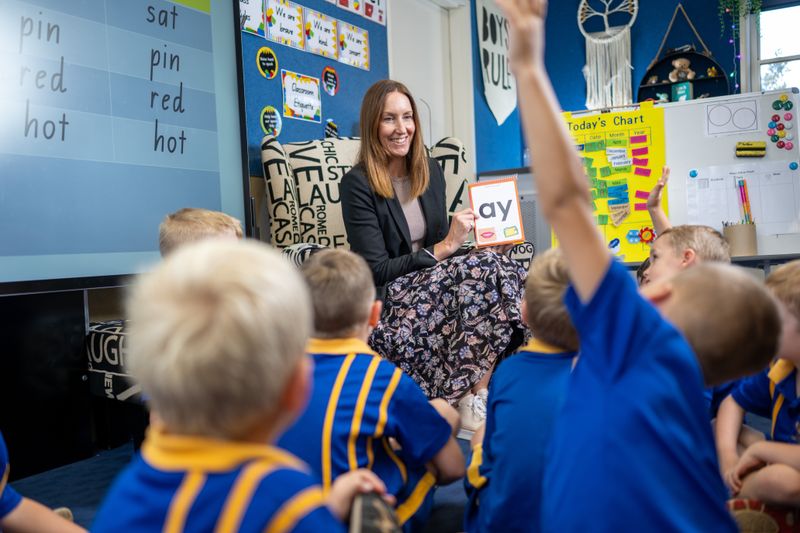
Building strong foundations in the Junior School
Research consistently shows that the primary school years are critical in shaping boys’ attitudes towards learning, literacy and self-belief.
This is particularly important for boys, who often develop language, organisation and self-regulation skills at different rates to girls during early childhood and adolescence (Rinaldi et al., 2021; van Tetering et al., 2020).
An all‑boys environment provides a valuable context to respond intentionally to these developmental patterns, supporting confidence, participation and a willingness to take academic risks.
This includes clear routines, explicit instruction, movement and hands-on learning opportunities, strong relational teaching and consistent expectations.
Importantly, boys are able to learn, contribute and grow without many of the social pressures that can emerge during adolescence.
This creates classrooms where boys are encouraged to ask questions, participate openly and develop confidence in themselves as learners from an early age.
A strong focus on literacy and communication
One of the greatest challenges identified globally in boys’ education is literacy engagement. Research shows boys are statistically less likely to read for enjoyment and are more at risk of falling behind in writing and communication skills as they progress through schooling (OECD, 2019).
At TGS, literacy development remains a significant focus across all year levels and subject areas. Reading, writing, discussion and communication are embedded intentionally throughout the curriculum. They are not confined to English classrooms alone.
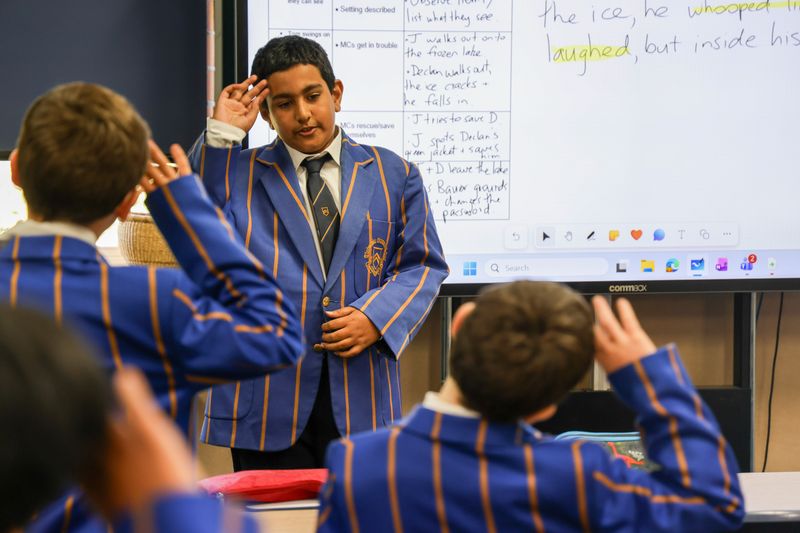
Teachers work deliberately to make learning visible and achievable, helping boys build confidence through structured support, clear feedback and explicit teaching practices.
Importantly, we see strong evidence that boys respond positively when expectations are high, learning is purposeful, and teachers provide clarity around what success looks like.
The power of positive academic culture
One of the often-overlooked strengths of boys’ education is culture.
In schools where academic effort is visible, encouraged and respected, boys are significantly more likely to participate openly and engage deeply in learning.
At TGS, we work intentionally to create a culture where boys can pursue academic success without hesitation and where curiosity, participation and effort are positively reinforced.
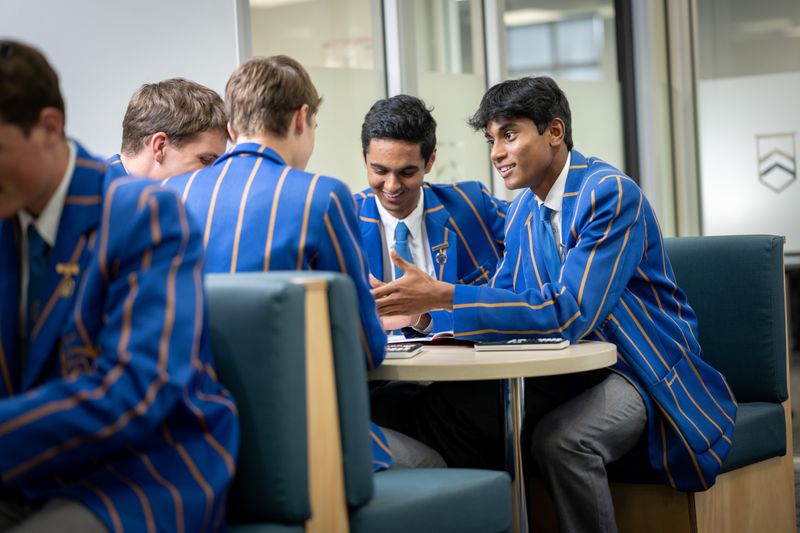
This matters because peer culture has a profound impact on boys’ attitudes towards learning, particularly during adolescence.
When boys see other boys contributing in class, asking questions, reading, performing, creating and striving for improvement, it helps normalise academic engagement and builds confidence across the cohort.
Relationships remain central
While structure and teaching practice are important, relationships remain at the centre of effective boys’ education.
Boys engage best when they feel known, supported and challenged by trusted adults who genuinely understand them.
Across the School, strong relationships between staff and students help create learning environments where boys feel safe to contribute, seek feedback, persist through challenge and continue developing confidence over time.
This relational approach is particularly important during the middle years of schooling, when boys are navigating significant academic, emotional and social growth.
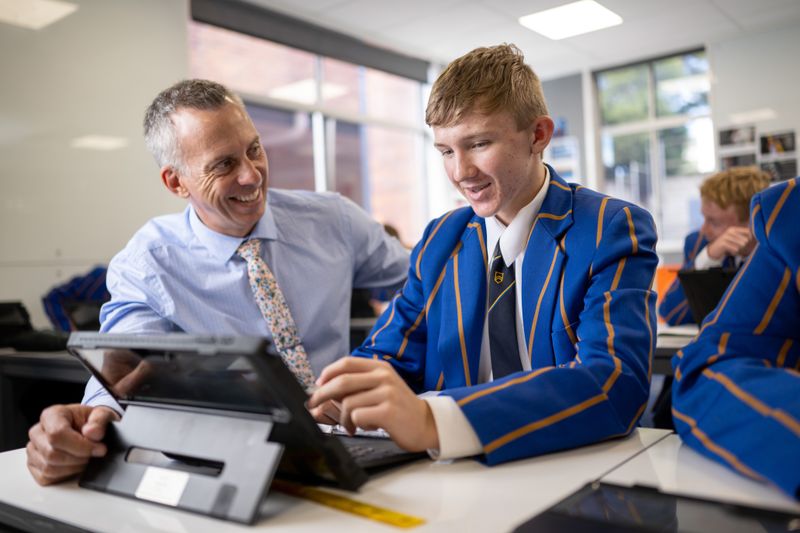
Preparing boys for the future
A high-quality boys’ education is not simply about improving classroom engagement. It is about developing capable young men who can think critically, communicate effectively, collaborate with others and approach challenge with confidence.
At TGS, we believe boys thrive when learning environments are intentionally designed to support both achievement and character development.
By combining strong relationships, explicit teaching, high expectations and a culture that values participation and growth, we continue to create conditions where boys can engage deeply in their learning and build the foundations for long-term success.
References
OECD. (2019). PISA 2018 results (Volume I): What students know and can do. OECD Publishing. https://doi.org/10.1787/5f07c754-en
Rinaldi, P., Pasqualetti, P., & Caselli, M. C. (2021). Gender differences in early stages of language development: Some evidence and possible explanations. Journal of Neuroscience Research, 99(10), 2435–2447
van Tetering, M. A. J., van der Laan, A. M., de Kogel, C. H., de Groot, R. H. M., & Jolles, J. (2020). Sex differences in self‑regulation in early, middle and late adolescence. PLOS ONE, 15(1), e0227607
Want to know more?
The best way to understand the value of a TGS education is to see the School in action via a Personalised Tour.
Book Your TourLatest Blog
The Makings of a Premiership
The 2022 1st V Basketball squad will be forever etched in the pages of Toowoomba Grammar School history as the first TGS team to win a GPS Basketball Premiership since the competition commenced in 1984. Head of Basketball, and 1st V Coach, Mr Kabe Cicolini has been instrumental in the growth and success of not just our leading team, but of the TGS Basketball Program as a whole. Kabe has come from a background of playing GPS sport – cricket, rugby and basketball as a student at Ipswich Grammar…
Creating a Learning Environment that Boys Enjoy
Creating an environment for students to access and engage in learning is the educational philosophy of the new Toowoomba Grammar School Head of Junior School, Mr Ken Raven. “This requires a supportive an inclusive learning environment across the school where everyone feels they can make a positive contribution,” Mr Raven stated. “I encourage evidence-informed, explicit teaching of curriculum that sparks curiosity and interest for students to engage and explore.” Parental interaction and…
Introducing our new Deputy Head of Junior School (Teaching and Learning), Mrs Chantelle Bauer
Toowoomba Grammar School is excited to welcome our new Deputy Head of Junior School (Teaching and Learning), Mrs Chantelle Bauer. Mrs Bauer brings a wealth of experience and passion to her new role, having lived and worked in the Darling Downs and Southwest Queensland region her entire life. She was born and bred in St George, attended university in Toowoomba and took her first teaching role in Roma. She has worked in various roles across the region, including Year Level Coordinator, Head of…
You can't know a student without knowing where they come from
Boarding at Toowoomba Grammar School can be described as many things such as evolving identity, growing personally and developing character in your second home, but it is also about growing your family. Head of Boyce House boarding, Mr Michael Hall and his family, certainly enjoyed that opportunity over January. Catching up with a beautiful collection of current families from Boyce House was a privilege and has helped to build the relationships of trust and care that are essential in a…
DNF (Did Not Finish)
- Dan CrookHead of Library and Information Services I was talking books with a friend the other day; an avid reader, she had been looking for some light reads in new genre for the holidays, and so had sought out the wisdom of the internet. After watching a few BookToks (Tiktok book recommendations) she’d settled on some titles and begun to read. However after investing a good amount of her time and getting half way through the first and most highly recommended book, she asked herself, and then…
TGS Boarding - A Safe, Welcoming and Joyous Community
“From a boarding perspective, enabling young boys to flourish is only achieved within a community that is safe, welcoming, and joyous. These three aspects are at the core of my boarding philosophy and are closely aligned with my fundamental values as a boarding Head of House – acceptance, resilience, and fun,” explains Mr Henry White, Head of Corfe House. Corfe House serves as the entry point for Toowoomba Grammar School’s youngest boarders (Years 5 to 7) and the skills, relationships, and…
Transitioning to Year 7 at TGS
Can you remember your first day in secondary school? It can be a time of mixed feelings - very exciting, but also quite daunting and challenging. Irrespective of whether your son is joining us from the TGS Junior School, or if they are just starting at Toowoomba Grammar School, it can appear to be the start of a long journey. It is a rite of passage in many respects but with this comes increased emotions in response to transition. The boys have a lot to digest with a new, possibly larger campus…
The Boarding Journey
Every parent will have a unique journey with their son whilst he is boarding at Toowoomba Grammar School. I’m Kym Wright, mother of Clancy, who is in Year 12 and this is my journey…. From my very first experience with Toowoomba Grammar School Boarding ten years ago, I had a good feeling straight away that TGS would be the perfect fit for my son. I was picking up my nephew for lunch. He had started boarding at TGS just six weeks prior. It was pouring rain and there were boys enthusiastically…
Building Self-Confidence and Resilience in Year 7s
As your child enters the new and unknown world of secondary school, it is a very important time to nurture the confidence and self-esteem of your son. Adolescence can also be a time of bewildering physical changes and strong emotions, opinions and increasing independence. Nurturing their confidence, self-esteem and assertiveness will go a long way to helping them to have the self-belief to tackle difficult new academic challenges, to developing new friendships and social skills, and…


