“Within a boys’ school environment, teachers are able to tailor learning experiences specifically to how boys engage best.”
Across Australia and internationally, there is growing research highlighting a concerning trend in boys’ education.
While many boys appear settled and compliant while studying, research from organisations including the Australian Council for Educational Research (ACER), the University of Melbourne and UNESCO suggest boys are increasingly at risk of disengaging from learning over time, particularly in literacy, motivation and academic confidence.
Importantly, this disengagement is not always visible through poor behaviour or disruption. More often, it appears quietly through reduced confidence, reluctance to take academic risks, lower levels of persistence and gradual withdrawal from reading, writing and classroom participation.
This research continues to reinforce the importance of environments intentionally designed for the way boys learn and develop.
At Toowoomba Grammar School, our approach to boys’ education is grounded in the understanding that boys benefit from clarity, structure, positive relationships, purposeful challenges and a culture where it is socially acceptable to engage fully in learning.
From the earliest years of Junior School through to the Senior School, we intentionally shape learning environments that support boys academically, socially and developmentally.
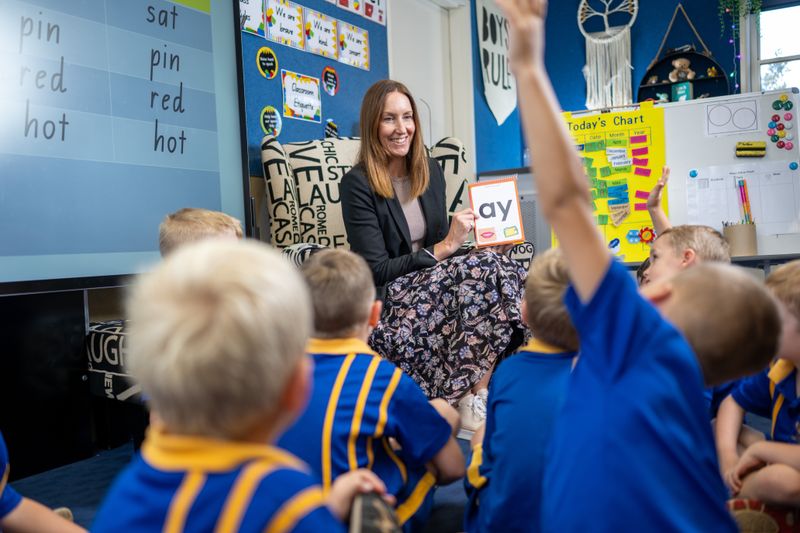
Building strong foundations in the Junior School
Research consistently shows that the primary school years are critical in shaping boys’ attitudes towards learning, literacy and self-belief.
This is particularly important for boys, who often develop language, organisation and self-regulation skills at different rates to girls during early childhood and adolescence (Rinaldi et al., 2021; van Tetering et al., 2020).
An all‑boys environment provides a valuable context to respond intentionally to these developmental patterns, supporting confidence, participation and a willingness to take academic risks.
This includes clear routines, explicit instruction, movement and hands-on learning opportunities, strong relational teaching and consistent expectations.
Importantly, boys are able to learn, contribute and grow without many of the social pressures that can emerge during adolescence.
This creates classrooms where boys are encouraged to ask questions, participate openly and develop confidence in themselves as learners from an early age.
A strong focus on literacy and communication
One of the greatest challenges identified globally in boys’ education is literacy engagement. Research shows boys are statistically less likely to read for enjoyment and are more at risk of falling behind in writing and communication skills as they progress through schooling (OECD, 2019).
At TGS, literacy development remains a significant focus across all year levels and subject areas. Reading, writing, discussion and communication are embedded intentionally throughout the curriculum. They are not confined to English classrooms alone.
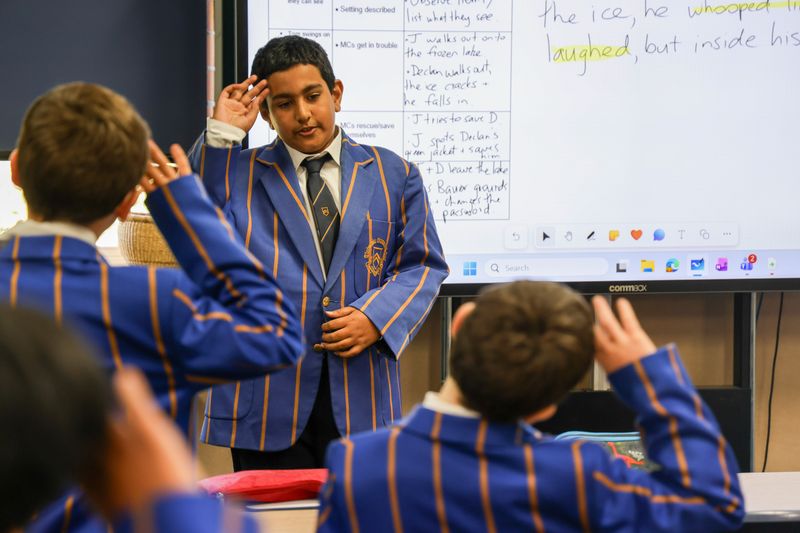
Teachers work deliberately to make learning visible and achievable, helping boys build confidence through structured support, clear feedback and explicit teaching practices.
Importantly, we see strong evidence that boys respond positively when expectations are high, learning is purposeful, and teachers provide clarity around what success looks like.
The power of positive academic culture
One of the often-overlooked strengths of boys’ education is culture.
In schools where academic effort is visible, encouraged and respected, boys are significantly more likely to participate openly and engage deeply in learning.
At TGS, we work intentionally to create a culture where boys can pursue academic success without hesitation and where curiosity, participation and effort are positively reinforced.
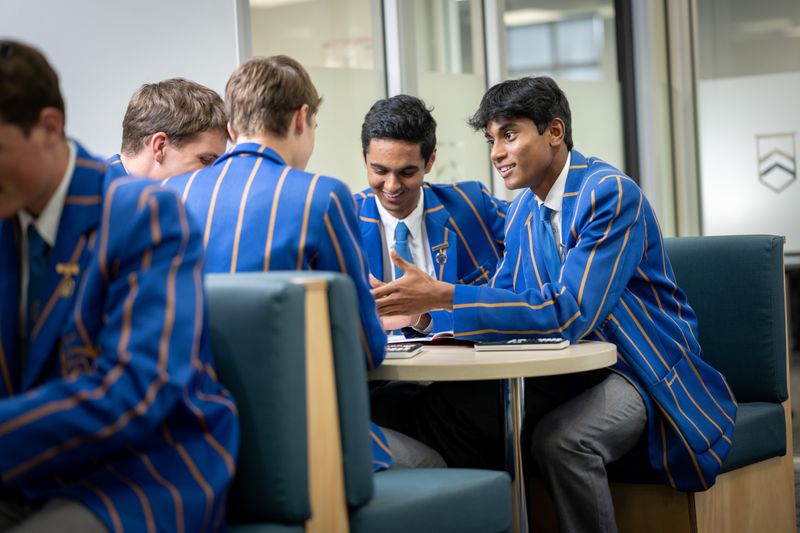
This matters because peer culture has a profound impact on boys’ attitudes towards learning, particularly during adolescence.
When boys see other boys contributing in class, asking questions, reading, performing, creating and striving for improvement, it helps normalise academic engagement and builds confidence across the cohort.
Relationships remain central
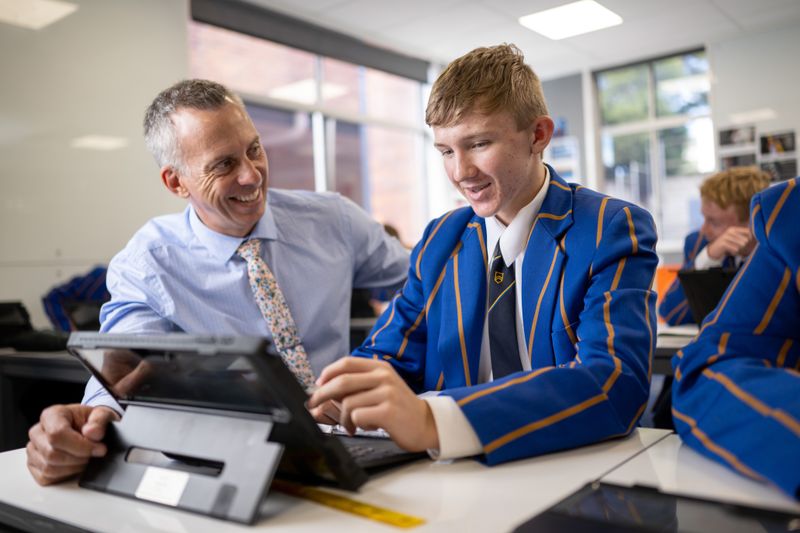
While structure and teaching practice are important, relationships remain at the centre of effective boys’ education.
Boys engage best when they feel known, supported and challenged by trusted adults who genuinely understand them.
Across the School, strong relationships between staff and students help create learning environments where boys feel safe to contribute, seek feedback, persist through challenge and continue developing confidence over time.
This relational approach is particularly important during the middle years of schooling, when boys are navigating significant academic, emotional and social growth.
Preparing boys for the future
A high-quality boys’ education is not simply about improving classroom engagement. It is about developing capable young men who can think critically, communicate effectively, collaborate with others and approach challenge with confidence.
At TGS, we believe boys thrive when learning environments are intentionally designed to support both achievement and character development.
By combining strong relationships, explicit teaching, high expectations and a culture that values participation and growth, we continue to create conditions where boys can engage deeply in their learning and build the foundations for long-term success.
References
OECD. (2019). PISA 2018 results (Volume I): What students know and can do. OECD Publishing. https://doi.org/10.1787/5f07c754-en
Rinaldi, P., Pasqualetti, P., & Caselli, M. C. (2021). Gender differences in early stages of language development: Some evidence and possible explanations. Journal of Neuroscience Research, 99(10), 2435–2447
van Tetering, M. A. J., van der Laan, A. M., de Kogel, C. H., de Groot, R. H. M., & Jolles, J. (2020). Sex differences in self‑regulation in early, middle and late adolescence. PLOS ONE, 15(1), e0227607
Want to know more?
The best way to understand the value of a TGS education is to see the School in action via a Personalised Tour.
Book Your TourLatest Blog
Successful Decision Making - Subject Selections
Term 3 tends to be an important time for students making decisions, and for some, possibly the first time they have really had the opportunity to make a decision that could impact the course of their future. Year 8 students are taking control of their academic program for the first time, being able to select their electives for Year 9. For most, these decisions are mainly about getting the opportunity to pursue subjects which interest them and the joy of not taking some subjects which really do…
TGS Rugby Ambassadors' Program
“As a Grammar boy, you have the Blue and Gold in your blood for life. You’ve got connections and networks because of this special bond. It’s hard to describe what it is exactly; I think it stems from the history and traditions that are passed down to each generation but it’s something you carry your entire life, you’re part of this team.” – TGS Old Boy (1960-63) John Campbell, Senior Prefect 1963, Captain 1st XV Rugby 1963. John was excited to learn in a recent edition of The Blue and Gold…
TGS Leading the Way for IT in Education
Toowoomba Grammar School is fortunate to have a strong partnership with Microsoft / School Locker. We are a Microsoft Lighthouse School, leading the way in technological advancement and deployment in Australian schools. This recognition would not be possible without two key factors: our “whole school” approach to IT, whereby the School supplies every student with the same devices, ensuring equality for all boys from Prep to Year 12.our dedicated IT team, who are based on-site to immediately…
Holiday Reading
Reading is one of those activities that, the more you do, the better you get, and with the holidays fast approaching, now is the perfect time to read that book you’ve always wanted to, finish a book you’ve started or try something new. It is important to keep reading over the holidays, so that we don’t step backward in our reading journey. As the Organisation for Economic Cooperation and Development (OECD) has found, reading for pleasure is a habit that can prove essential to performing well…
Developing Generational Change in our Men – Stand Up and Speak Out
The devastating effects of domestic and family violence (DFV) are more prominent today as this previously ‘taboo’ issue is finally being publicly recognised and addressed. Toowoomba Grammar School is proud to be leading the way in creating generational change for this sensitive issue through a variety of School initiatives and by supporting community groups associated with DFV. Our programs are aimed at developing good men of the future who will “Stand Up and Speak Out.” TGS became a White…
The Barbour Connection
They will tell tales of meeting someone on the other side of the world whom they spotted wearing a TGS cap. It led to an instant connection. Of getting their dream job by simply proudly sporting a TGS Old Boy tie at the interview. It led to an instant connection. There is no denying that Toowoomba Grammar School students share a special bond. We celebrate it with our annual Old Boys’ Sons and Grandsons photo and our Old Boys’ Generations Gathering dinner. You see it in the playground at…
“I’ll Be There for You” at Toowoomba Grammar School
“I’ll be there for you” was the theme of National Boarding Week. This statement is particularly relevant at Toowoomba Grammar School as the boarders, the dayboys and the staff, help each other in the good times and the bad. We see our school as a ‘boarding school’, not a ‘school with boarders’. We are proud to be one of the oldest and most highly regarded boys’ boarding schools in Australia, providing a home away from home for boys for almost 150 years. TGS came from very humble beginnings. The…
Helping families navigate rules, rewards and consequences for boys
Recently I was in a webinar that aimed to tackle the issues surrounding technology and its effects on students. Some members of the forum started openly criticising boys for their poor behaviour. Whilst their criticisms were not directed specifically at our boys, I was offended at their general statements. We can be too quick to criticise boys and we forget that their frontal lobes are still developing. We also forget that their brains are “wired” differently from girls and that they don’t see…
Accepting Our Past, Creating Our Future
Toowoomba Grammar School has added the new role of Indigenous Education Coordinator to the School’s offering, to further promote a culture of diversity, inclusivity, and reconciliation. Mr Scott Gale has been appointed to this ground-breaking position that aims to spread awareness and understanding of the significance of Australia’s culture and history. “That’s something that has been lacking in Australia’s education system for so long,” said Scott. “It’s an extremely significant part of our…


