“Within a boys’ school environment, teachers are able to tailor learning experiences specifically to how boys engage best.”

Across Australia and internationally, there is growing research highlighting a concerning trend in boys’ education.
While many boys appear settled and compliant while studying, research from organisations including the Australian Council for Educational Research (ACER), the University of Melbourne and UNESCO suggest boys are increasingly at risk of disengaging from learning over time, particularly in literacy, motivation and academic confidence.
Importantly, this disengagement is not always visible through poor behaviour or disruption. More often, it appears quietly through reduced confidence, reluctance to take academic risks, lower levels of persistence and gradual withdrawal from reading, writing and classroom participation.
This research continues to reinforce the importance of environments intentionally designed for the way boys learn and develop.
At Toowoomba Grammar School, our approach to boys’ education is grounded in the understanding that boys benefit from clarity, structure, positive relationships, purposeful challenges and a culture where it is socially acceptable to engage fully in learning.
From the earliest years of Junior School through to the Senior School, we intentionally shape learning environments that support boys academically, socially and developmentally.
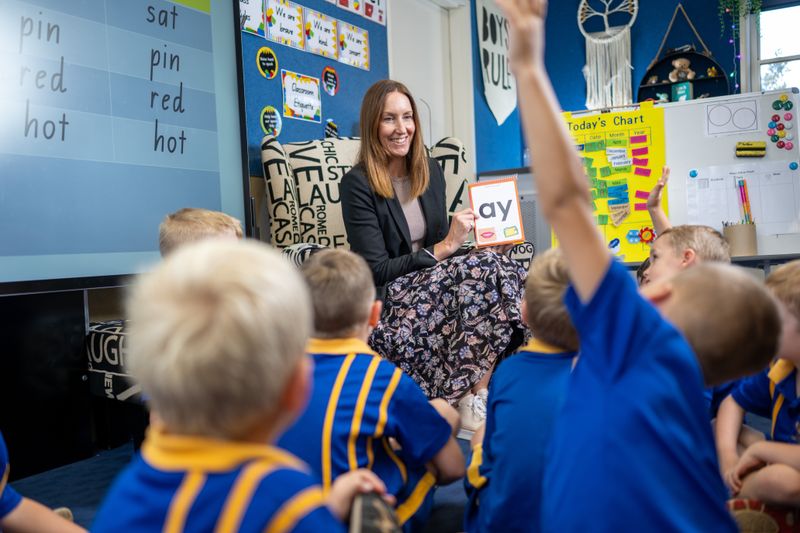
Building strong foundations in the Junior School
Research consistently shows that the primary school years are critical in shaping boys’ attitudes towards learning, literacy and self-belief.
This is particularly important for boys, who often develop language, organisation and self-regulation skills at different rates to girls during early childhood and adolescence (Rinaldi et al., 2021; van Tetering et al., 2020).
An all‑boys environment provides a valuable context to respond intentionally to these developmental patterns, supporting confidence, participation and a willingness to take academic risks.
This includes clear routines, explicit instruction, movement and hands-on learning opportunities, strong relational teaching and consistent expectations.
Importantly, boys are able to learn, contribute and grow without many of the social pressures that can emerge during adolescence.
This creates classrooms where boys are encouraged to ask questions, participate openly and develop confidence in themselves as learners from an early age.
A strong focus on literacy and communication
One of the greatest challenges identified globally in boys’ education is literacy engagement. Research shows boys are statistically less likely to read for enjoyment and are more at risk of falling behind in writing and communication skills as they progress through schooling (OECD, 2019).
At TGS, literacy development remains a significant focus across all year levels and subject areas. Reading, writing, discussion and communication are embedded intentionally throughout the curriculum. They are not confined to English classrooms alone.
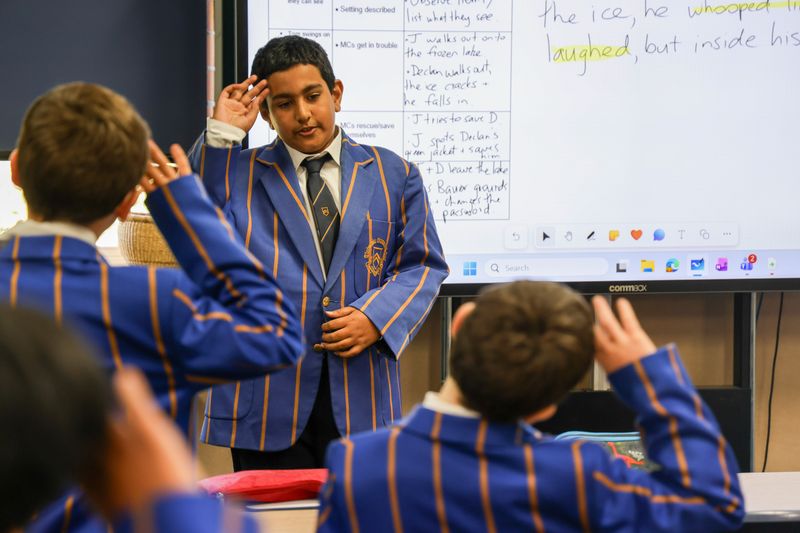
Teachers work deliberately to make learning visible and achievable, helping boys build confidence through structured support, clear feedback and explicit teaching practices.
Importantly, we see strong evidence that boys respond positively when expectations are high, learning is purposeful, and teachers provide clarity around what success looks like.
The power of positive academic culture
One of the often-overlooked strengths of boys’ education is culture.
In schools where academic effort is visible, encouraged and respected, boys are significantly more likely to participate openly and engage deeply in learning.
At TGS, we work intentionally to create a culture where boys can pursue academic success without hesitation and where curiosity, participation and effort are positively reinforced.
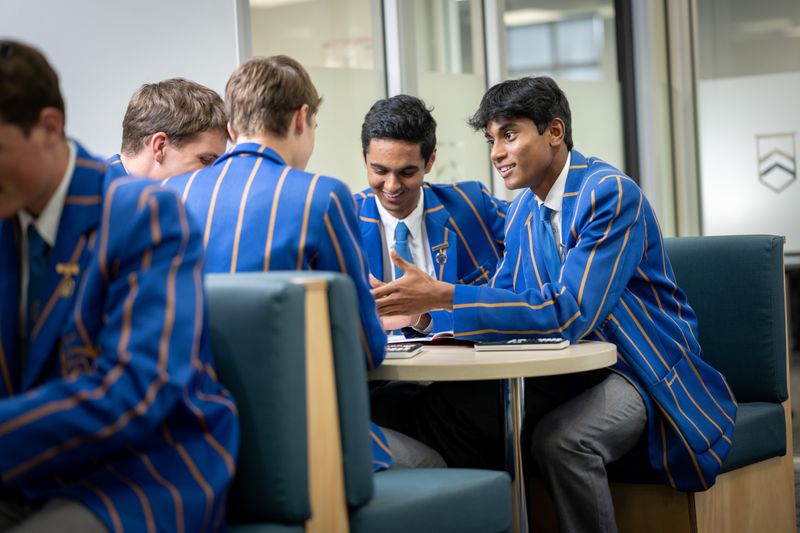
This matters because peer culture has a profound impact on boys’ attitudes towards learning, particularly during adolescence.
When boys see other boys contributing in class, asking questions, reading, performing, creating and striving for improvement, it helps normalise academic engagement and builds confidence across the cohort.
Relationships remain central
While structure and teaching practice are important, relationships remain at the centre of effective boys’ education.
Boys engage best when they feel known, supported and challenged by trusted adults who genuinely understand them.
Across the School, strong relationships between staff and students help create learning environments where boys feel safe to contribute, seek feedback, persist through challenge and continue developing confidence over time.
This relational approach is particularly important during the middle years of schooling, when boys are navigating significant academic, emotional and social growth.
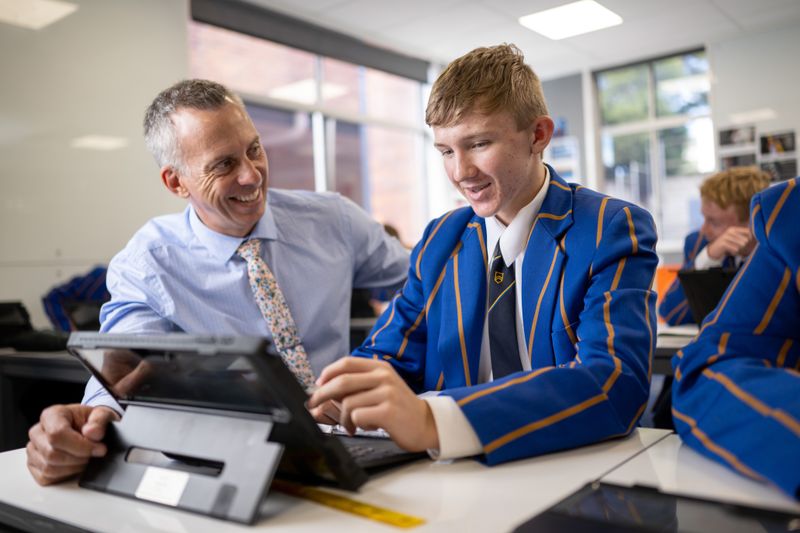
Preparing boys for the future
A high-quality boys’ education is not simply about improving classroom engagement. It is about developing capable young men who can think critically, communicate effectively, collaborate with others and approach challenge with confidence.
At TGS, we believe boys thrive when learning environments are intentionally designed to support both achievement and character development.
By combining strong relationships, explicit teaching, high expectations and a culture that values participation and growth, we continue to create conditions where boys can engage deeply in their learning and build the foundations for long-term success.
References
OECD. (2019). PISA 2018 results (Volume I): What students know and can do. OECD Publishing. https://doi.org/10.1787/5f07c754-en
Rinaldi, P., Pasqualetti, P., & Caselli, M. C. (2021). Gender differences in early stages of language development: Some evidence and possible explanations. Journal of Neuroscience Research, 99(10), 2435–2447
van Tetering, M. A. J., van der Laan, A. M., de Kogel, C. H., de Groot, R. H. M., & Jolles, J. (2020). Sex differences in self‑regulation in early, middle and late adolescence. PLOS ONE, 15(1), e0227607
Want to know more?
The best way to understand the value of a TGS education is to see the School in action via a Personalised Tour.
Book Your TourLatest Blog
A life in Words - Reading Biographies
Biography; from the Greek Bios - Life & Graphia - Writing; are books that chronicle the lives of real people. The subject of a Biography can be a celebrity, athlete, politician, athlete, historical figure or ordinary person that has achieved something of note. Reading Biographies is a valuable and oftentimes rewarding experience, with many potential benefits to the reader. Inspirational Biographies often recount successes and struggles of those people who have, over the course of their…
Spielberg in the Making...
I first became aware of film making when my brother showed me the behind-the-scenes featurette on our Lord of the Rings DVD. From then on, the process intrigued me, and I eventually got my hands on my dad’s camera and simple editing software. I made a bunch of little movies with my friends which were all pretty bad but I loved doing them anyway. What I liked most was that it was an easy way to share stories and even when the movies were not good, it was still a way of telling stories in a…
The Best Job in the World
Vocational Education and Training (V.E.T) plays a central role in preparing young people for work, developing skills, and responding to the labour-market needs of the economy. As the V.E.T Co-Ordinator at Toowoomba Grammar School, I have an immediate and positive influence on our young men’s skills, employability, and career development. I engage with the most amazing young men to guide their career journeys throughout Years 10, 11 and 12. I also have the privilege to work closely with their…
Inclusive and Exclusive Banter and Behaviour
As the School counsellor, who has been working in a variety of education systems, I would like to address a common and important issue that affects many of our teenage boys: banter, teasing, and bullying. Boys at this age are especially prone to these behaviours, and they can have a significant impact on their mental health and overall well-being. One of the most common mistakes for teenage boys "it's just banter" or "I'm just joking." While banter can be a positive thing and can help build…
I Have Returned to Where it Began and I Feel Right at Home
I have returned to where it all began, and I feel right at home. My parents decided when I was very young that I would attend Toowoomba Grammar School as a boarder. Coming from a property surrounded by a small community, my parents believed that sending me to TGS would provide me with many fundamental skills needed for a young man, as well as an education that I could not get in my hometown.. Starting my journey at TGS in Year 8 as a boarder in Mackintosh, adjusting from a small country high…
Tuning in to TGS Old Boy (1995-99) - Stuart St Vincent Welch
Our Old Boys have such diverse career paths; we are so proud of the good young men they become and how they make meaningful contributions to their communities. Stuart St Vincent Welch describes himself as an average student who had no idea what he wanted to do after school. But drawing on the TGS values of hard work, respect and resilience he is now working as a Sound Engineer for Barking Owl in New York City, rubbing shoulders with some of the world’s most renowned musicians and actors. He…
The TGS Show Cattle Team - On the moooove
The TGS Show Cattle Team commenced in Term 1 2021 under the guidance of Mr Jack Murphy and Mrs Julie Brophy. The concept of the team was to give boys a hands-on, extracurricular opportunity in the agricultural industry. The boys have been competing in the Young Judges’ competitions at a range of shows across Queensland. The Young Judges’ competition is based on the goal of expanding the boys' knowledge of the skills that are a foundation of the animal production industry, helping them as…
The Importance of Routines
Routines are an important part of our daily lives, providing structure and stability. This is especially true for children in their formative years, who benefit from having consistent and predictable routines in both their school and home environments. At Toowoomba Grammar School Junior School, we believe that routines are essential for helping students thrive both inside and outside the classroom. One of the key ways in which routines help students is by providing a sense of security and…
Ten Steps Ahead - Jackie Gallagher
As a high school athlete, Jackie Gallagher had the world at her feet. She was in a unique position where she was excellent at any distance from 100m to 800m. She broke Queensland and National records and was regularly selected for State and National teams. Jackie was selected for the Australian Youth team to compete at the World Youth Championships in Canada as an U18 along with the Australian Junior Commonwealth Games and the Youth Olympics, before making the U20 Australian team to compete at…


