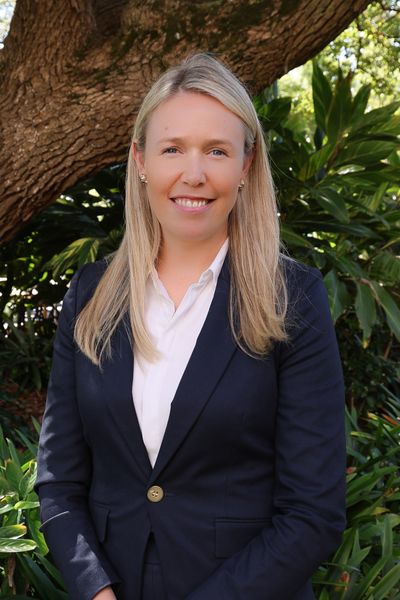
“The reality is that every single job can expect to change in some respect in the immediate and long-term future.”— Mrs Crystal Hede
In education, some things will never change. Students will thrive in environments that nurture human connections.
They will invariably be inspired by effective teaching and the satisfaction of personal achievement will always be motivating. At Toowoomba Grammar School, the power of high-quality instructional practices has resulted in the development of a strong academic culture that has endured for nearly 150 years. Preserving core principles provides stability and continuity. However, we must be open to continuously adapting our methods so that our students are well-prepared for the ever-changing world they will navigate. As put by CSIRO CEO, Dr Larry Marshall, “Australia is at a pivotal point. There is a tidal wave of disruption on the way, and it’s critical we take steps now to get ahead of it” (CSIRO, 2022).
Several megatrends identified by the CSIRO are set to shape future society. Technological advancement, particularly the rise of machine learning and the Internet of Things (IoT), will drive augmented and autonomous intelligence across many industries and blur the lines between physical and digital. A global focus on environmental sustainability is predicted to drive industrial change. Global geopolitical shifts will occur for stability and economic growth. Lastly, demographic change, particularly an ageing and more urbanised population, will create new needs. In relation to demographic change, Jobs and Skills Australia projects that across all industries, the greatest growth is expected in health care and social assistance, with its share of total employment reaching 16.7% by 2033 (Jobs and Skills Australia, n.d.).
These megatrends will have far-reaching implications for the workforce. According to the World Economic Forum (2023), 44% of workers’ core skills are expected to change by 2027. Incredibly, the Business Council of Australia estimates that 5–10% of jobs could be entirely substituted by technology over the next decade. Technological change will also generate jobs. The field of robotics, for example, has seen a sudden demand for automation specialists, robotics law specialists, robotics ethicists, trainers, educators and job re-design specialists tasked with developing new roles and skill sets for jobs with increased automation (International Federation of Robotics, 2024). It is important to consider that the above-mentioned jobs will be industry-agnostic and relevant to agriculture, sport, finance, retail trade and more.
Looking forward allows us to reflect on the gap that exists between where our students are now and where they will need to be. In his 2019 book Teaching for Tomorrow, renowned futurist and educator Michael McQueen identifies four capabilities that will be critical for individuals to succeed and thrive in future society. At TGS, we are aware of these projected “capability gaps” and are taking steps to address them in the following ways.
First, we know that students will require self-direction to cope with rapid technological and job change, especially in a booming gig economy. As such, we are positioning our students as lifelong knowledge seekers who can adapt their skill sets to stay ahead.
Second, we know that an increasingly competitive job market and pressure to continually master new skills will require tenacity. Consequently, we continually look to create opportunities for our students to deal with perceived failure and develop grit, resilience and optimism in the process. Third, we understand that the rise of artificial intelligence will result in competing organisations having access to the same information. Originality and creativity will, therefore, become highly sought-after skills, further solidifying their importance in our educational program. Lastly, a world of automation and information abundance will require individuals who can think ethically and with acuity. That is, to discern truth and identify biases. The TGS curriculum continues to place value on this higher-level thinking.
We know that developing all these skills requires a broad knowledge base, and this underpins our pedagogical approach of Explicit Direct Instruction within a knowledge-rich curriculum. Giving our boys deep and relevant background knowledge will develop their acuity to solve complex problems and to think critically and creatively in the future (AERO, 2024). Parents can be assured that we are building an educational program that is suitably responsive to future needs.
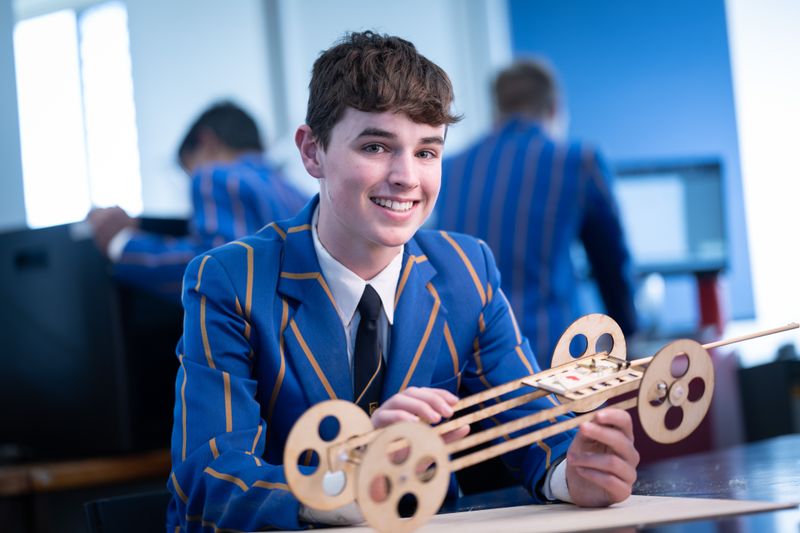
Additionally, we continue to explore ways of developing our students’ technological capacity. Our forthcoming Design, Engineering and Technology Centre exemplifies our commitment to this cause. Boys will gain further opportunities to automate workflows, use cloud-based solutions and engineer prototypes, for example. From virtual reality to robotics labs, there will be boundless potential for innovation, not to mention the opportunities that the Agriculture and Industry Centre will also offer. Importantly, these planned spaces will connect our boys with industry and the broader community to foster authentic learning.
In partnership with parents, we can equip TGS boys with the skills and dispositions needed to thrive in this ever-evolving world.
References
Australian Education Research Organisation. (2024, March). A knowledge-rich approach to curriculum design. Australian Education Research Organisation. https://www.edresearch.edu.au/sites/default/files/2024-02/knowledge-rich-approach-curriculum-design-aa.pdf
CSIRO. (2022). Our Future World. CSIRO. Retrieved May 05, 2024, from https://www.csiro.au/en/research/technology-space/data/our-future-world
Jobs and Skills Australia. (n.d.). Employment projections for the decade ahead. Jobs and Skills Australia. Retrieved May 01, 2024, from https://www.jobsandskills.gov.au/publications/towards-national-jobs-and-skills-roadmap-summary/employment-projections-for-the-decade-ahead
McQueen, M. (2019). Teaching for Tomorrow: A Blueprint for Future-Proofing Our Schools, Students and Educational System. The Nexgen Group Pty Ltd.
The World Economic Forum. (2023, May 1). Future of jobs: These are the most in-demand skills in 2023 - and beyond. The World Economic Forum. Retrieved May 02, 2024, from https://www.weforum.org/agenda/2023/05/future-of-jobs-2023-skills/
Latest Blog
Dr Ian Gunn
When Ian Gunn arrived at Toowoomba Grammar School, he did so on an academic scholarship that opened doors his family could never have imagined. As a young boarder from regional Queensland, he embraced the opportunities before him and quickly immersed himself in School life. Then tragedy struck. During his first year at TGS, Ian’s father passed away unexpectedly. Suddenly, his mother was left to raise three children alone while facing significant financial uncertainty. What had begun as an…
Emmanuel Geu
When Emmanuel Geu arrived in Australia from South Sudan in 2014, his family was seeking safety, stability and the chance to build a brighter future. Adjusting to a new country, culture and education system brought challenges, but it also opened the door to opportunities that would help shape the young man he is today. Through the support of a bursary at Toowoomba Grammar School, Emmanuel was able to access an education that would become transformational. Boarding life was not easy at first.…
From Toowoomba to the World Stage
After months on the road performing to thousands across the globe, Mason Watts has returned to Australia with a renewed appreciation for home and a career that continues to gain momentum. “It’s really nice,” Watts said of being back. “You don’t realise how good Australia is until you go overseas and you come back… it’s nice being home around Australians and family.” A TGS Old Boy who graduated in 2016, Watts’ journey from school performances to international touring has been anything but…
Single-Sex Education and Boys’ Learning: Why It Matters
While many boys appear settled and compliant while studying, research from organisations including the Australian Council for Educational Research (ACER), the University of Melbourne and UNESCO suggest boys are increasingly at risk of disengaging from learning over time, particularly in literacy, motivation and academic confidence. Importantly, this disengagement is not always visible through poor behaviour or disruption. More often, it appears quietly through reduced confidence, reluctance to…
Nurturing Curious Minds
Children are naturally curious about their world and always eager to explore. Harnessing that energy and enthusiasm is key for us in the Junior School. We want our boys to expand their knowledge base and approach learning with a passion that will set them up for the Senior School and beyond. First, let’s clarify some terms: extension and enrichment. Extension is curriculum-focused; it’s where a student’s knowledge, understanding and skills are advanced. Students feel a sense of “stretch” and…
Where it Began
Two of the three books that Louis has published are tucked into the Fantasy section in the W.M. Dent Library I really think my enthusiasm began in the younger grades, when an annual writing competition encouraged all boys to think creatively. This was where I was first truly introduced to writing fiction. These competitions planted a seed of creativity in my mind that would later grow. That seed first flourished in Years 5 and 6, when I wrote my first book with help from a friend called…
A Steady Rhythm, Exceptional Results
When Henry Geise first picked up the clarinet in Year 4, playing an instrument was compulsory at his primary school; he simply gave it a go. What followed has been shaped less by a single decision and more by years of steady commitment. Henry’s love of clarinet started when he was around eight years old He started on clarinet and bass guitar at the same time, and those two instruments have remained his favourites despite trying piano and picking up acoustic guitar more recently. “I would have…
2026 College Baudoux Visit
Early this term, we were delighted to host 24 students and two teachers for a week-long exchange, an experience made possible through the generosity of TGS families and our valued partnership with Fairholme College. What makes this exchange so special is the richness of the cultural experience. While 15 boys were immersed in daily life at TGS, the nine girls attended Fairholme College, allowing both schools to play an active role. Across the week, students participated in lessons, school…
Beyond Achievement: Cultivating Humanity in Boys’ Education
Mark Oliphant, Head of Senior School and Acting Deputy Headmaster and Luke Rawle, Head of Teacher Learning presenting in Adelaide The International Boys’ School Coalition Australasian Regional Conference was co-hosted by Prince Alfred College and St Peter’s College in Adelaide, South Australia between 3-5 May. The conference theme of Cultivating Humanity: A Compelling Responsibility in Boys’ Education drew over 150 educators from boys’ schools across Australia and New Zealand. Many of the…


