
Cultivating Humanity in Boys’ Education
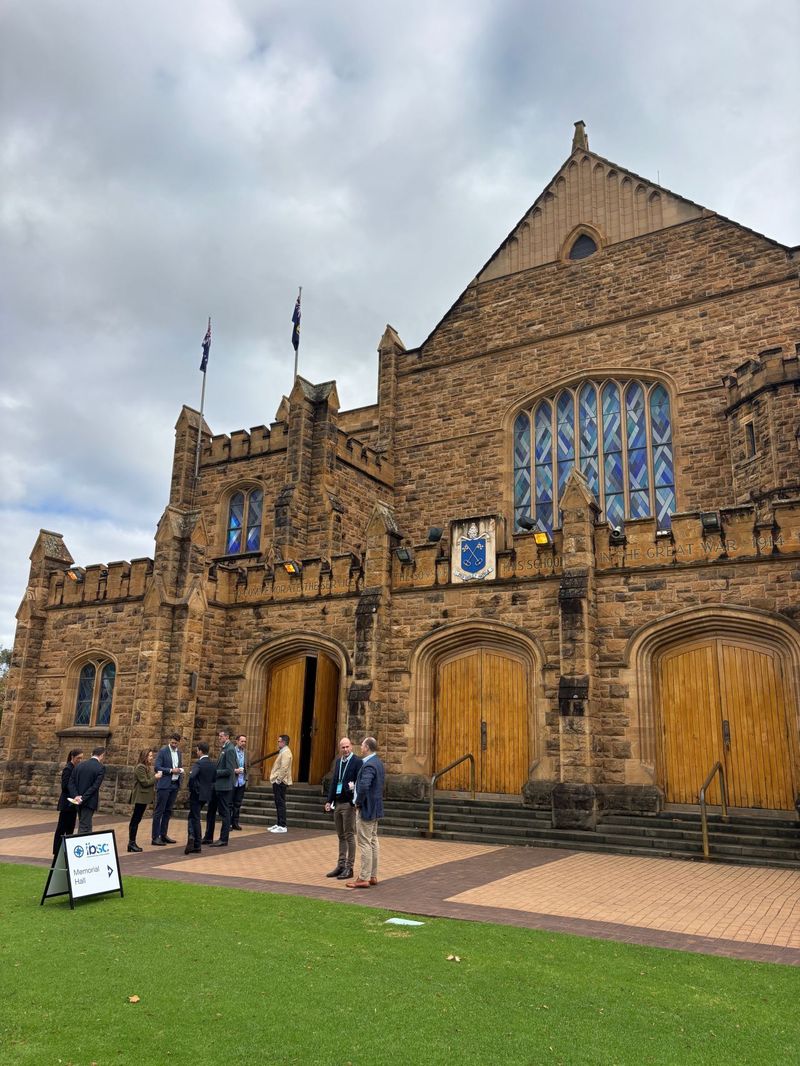
The International Boys’ School Coalition Australasian Regional Conference was co-hosted by Prince Alfred College and St Peter’s College in Adelaide, South Australia between 3-5 May. The conference theme of Cultivating Humanity: A Compelling Responsibility in Boys’ Education drew over 150 educators from boys’ schools across Australia and New Zealand. Many of the conference keynote presentations and workshops focused on the holistic development of boys and the responsibility of boys’ schools to cultivate humanity, not merely academic achievement.
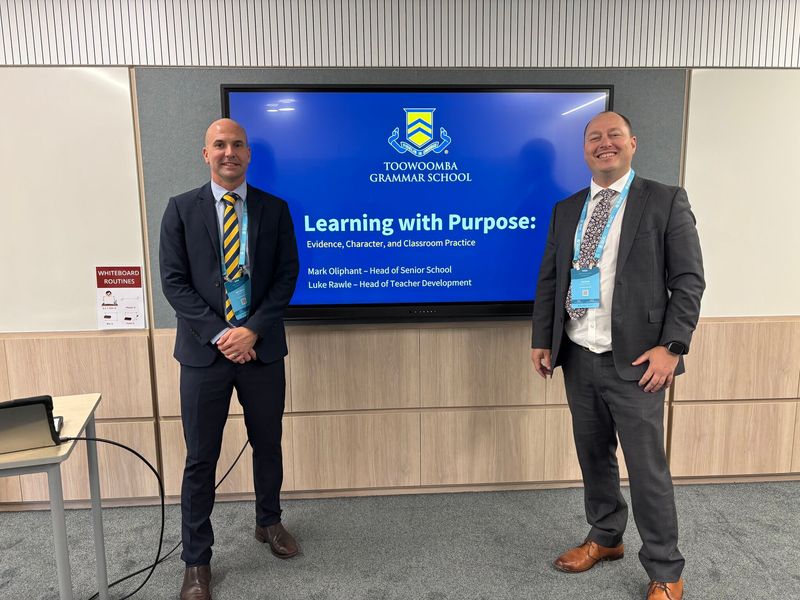
Toowoomba Grammar School was represented by Headmaster, Dr John Kinniburgh; Head of Senior School and Acting Deputy Headmaster, Mr Mark Oliphant and Head of Teacher Development, Mr Luke Rawle. The delegates also played an active part in the conference, presenting a workshop exploring the structures and professional learning used to align teaching practices to how boys learn and to position character as teachable, observable and aspirational. This included an outline of Toowoomba Grammar School’s journey in implementing strategic initiatives across teaching and learning, character development and wellbeing. Mr Rawle explored how principles from the cognitive science have informed improvements in teaching practice through intentional changes to professional learning, classroom design, schoolwide routines to align teaching with how boys learn. Mr Oliphant presented the School’s character education model, highlighting the structural reforms to embed dedicated wellbeing learning, the use of external partners to gather student voice and data, staffing structures to support delivery and the development of a bespoke taught wellbeing curriculum aligned to the School’s core purpose: educating boys and developing their good character for life.
A particular highlight of the conference was the keynote presentation by Mr Tom Bennett – No More Lost Boys. As a leading British educator, author and behaviour specialist, Mr Bennett used the motif of Peter Pan to acutely highlight many of the societal issues surrounding boys and concluded that without purpose, direction and meaning, many boys are simply drifting in society. Tom argued that boys are not broken, they are simply unanchored and currently face heightened challenges through the lure of a “Digital Neverland”. The important message for boys’ schools was that character is built, not found. Boys learn from their environment, through role models and discovering what boundaries exist, what is celebrated, valued and insisted upon.
These ideas were further emphasised by the closing keynote by Mr Andrew Lee, distinguished by his international career in law, who provided the perspective of a parent on boys’ education. His evocative presentation highlighted that the incredible success that he has enjoyed throughout his career, including postgraduate study at Harvard and Standford and subsequent international legal career, has been shaped most by his failures. He expressed that he hopes his son fails a lot, so that he can learn and grow from these experiences. Mr Lee, however, expressed that some failures should not be faced alone because they are not a reflection of effort or commitment. As such, he emphasised the importance of boys’ schools in cultivating compassion through service, to help instil a shared sense of purpose and humanity amongst students, teachers and parents.
Overall, the conference provided a valuable experience for our staff to both learn and contribute to the opportunities for collaboration, networking and sharing of best practice amongst a coalition of boys’ schools who are seeking to both build character and cultivate humanity in boys.
Latest Blog
The Power of Gratitude
“What do you say mate?” your mum nudges you as the waitress hands you your dinosaur nuggets. “Thank you.” You have always been told to use good manners, and to say thank you, but what does thank you actually mean? Is it just two meaningless words uttered with monotonous regularity, or is it a tool that can alleviate mental health issues generating happiness and a sense of wellbeing? Gratitude is the sunlight that lights up those dark days. The ability to be grateful is at the core of personal…
The Silent Epidemic: Unveiling the Consequences of Sleep Deprivation
“Sleep that soothes away all our worries. Sleep that puts each day to rest. Sleep that relieves the weary laborer and heals hurt minds.” William Shakespeare (Macbeth, 1606) Heart Disease, Cancer, and Alzheimer's. Three life-threatening diseases. Three diseases all linked to lack of sleep. According to Dr. Okorie from the children’s health division of Stanford University, “7 out of 10 high school students are falling short of… (sleep) on school nights.” The Bulk of American teens are not getting…
Tik Tok - From Fun to Fear
Social media platforms have ingrained themselves into our daily lives in a time when technology is constantly evolving and drawing millions of users with seductive features and never-ending streams of captivating content. Among these, TikTok has become a worldwide phenomenon, captivating users with its viral challenges and short-form films. Underneath the fun and inventiveness however, there is growing concern about the risks connected to TikTok and other social media platforms. TikTok's…
Active Procrastination – Unlocking the Gates of Time
“Procrastination is like a credit card: it’s a lot of fun until you get the bill.” - Christopher Parker – professional actor. Unfortunately, procrastination is a term that we are all familiar with as students; the vast majority of us have experienced it firsthand. It saps our time and results like a parasite, a burden on its host. However, despite it’s reputation, recent studies have shown that when harnessed correctly, procrastination can be a powerful tool to improve both academic efficiency…
It Takes a Village...
The Toowoomba Grammar School Boarding community plays a pivotal role in shaping the young minds of our boarders and instilling values whilst creating a sense of mateship that can last a lifetime. The nurturing and supportive network of staff not only ensure a safe and structured environment but also cultivates a sense of belonging and camaraderie among the boys. ‘The staff supply the fuel to the ship but ultimately it is the boys who steer it and decide upon its final destination’. Our TGS…
Unlocking Literacy - The Big Six Elements for Your Child’s Reading Success
Literacy skills are a core component of each day for our students, and parents often ask how they can support this from home. I am delighted to share with our parent community the essential components that underpin successful reading development. These elements, known as the Big Six, provide a solid foundation for your son’s literacy journey. These critical building blocks include: Oral Language: Communication skills are the bedrock of reading. Encourage rich conversations with your child.…
The Journey of a Boarding Mother
When you look up mother in the dictionary it reads: female parent of a child. When you look up boarder, it simply reads: a child who lives away from home. So, put “boarder mother” together and we have: the female parent of a child who lives away from home – if only it were that simple. My definition of boarding mother is: a strong, dedicated unbelievably great female parent of a child who has the wisdom to put her son’s educational needs, wellbeing and lifelong endeavours before her own. A…
The Importance of Differentiation
As parents, we all want our children to have the best possible education, and one of the most effective ways for teachers to provide this is through differentiation. Differentiation means tailoring instruction to meet the unique needs and interests of each student, and it can take many forms. First, let's define differentiation. Differentiation is a teaching approach that recognises that students have different strengths, interests, and learning styles. By adjusting instruction to meet these…
Addressing Anger in Teenage Boys
As a community dedicated to the growth and well-being of our teenage boys, it is essential to address the complexities of emotions we experience during adolescence. Among these emotions, anger stands out as a powerful and intense feeling that can influence their behaviour, relationships and overall wellbeing. Untreated anger can lead to a myriad of problems and challenges for our young boys. In this comprehensive guide, we will explore the dangers of untreated anger, ways to support healthy…


