Cultivating Humanity in Boys’ Education
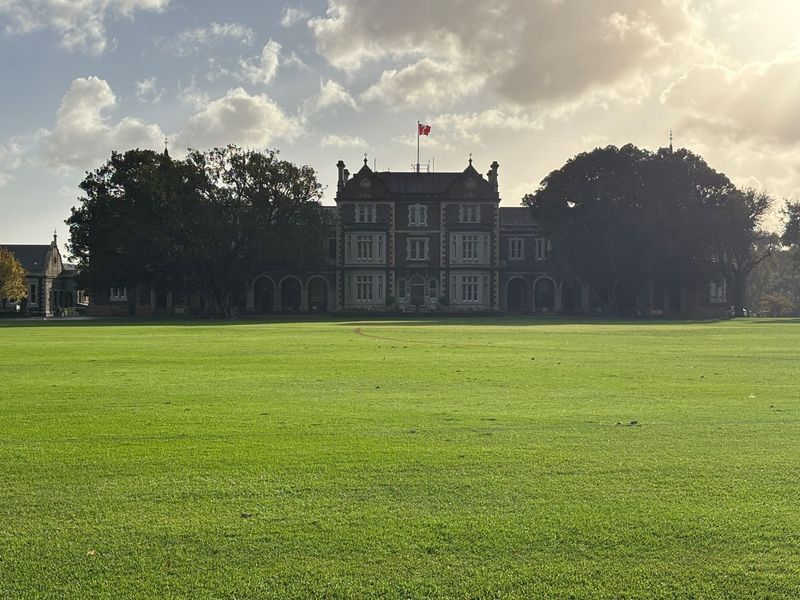
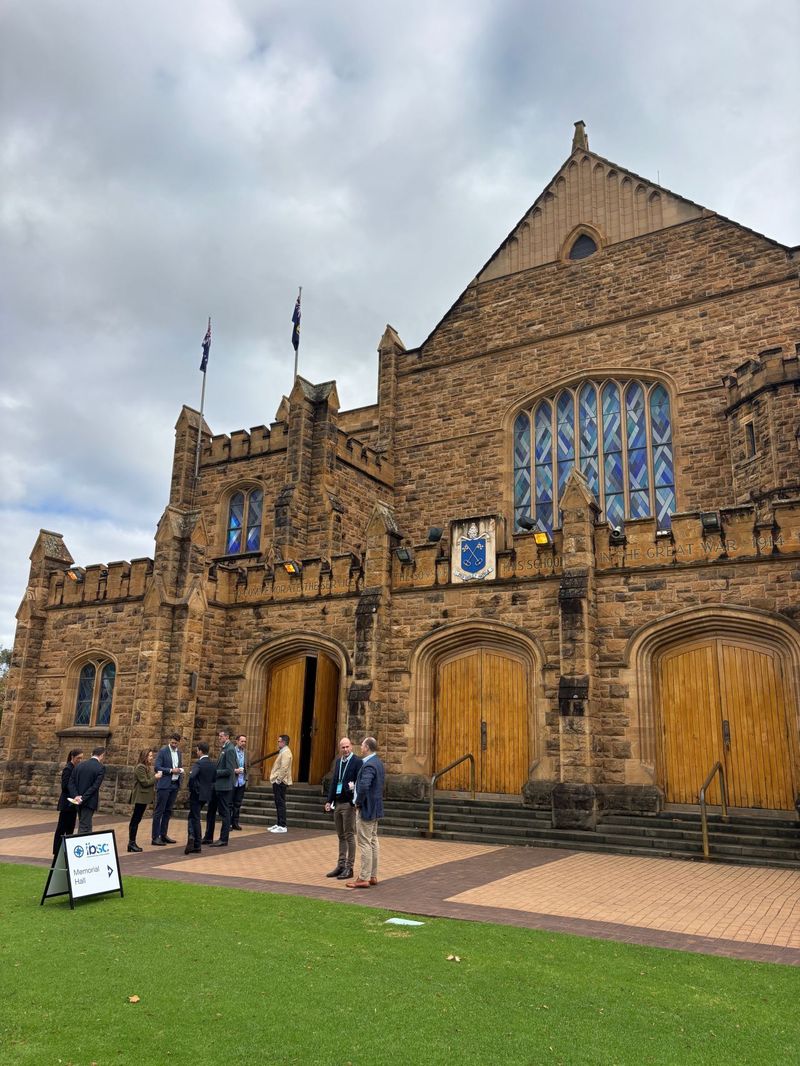
The International Boys’ School Coalition Australasian Regional Conference was co-hosted by Prince Alfred College and St Peter’s College in Adelaide, South Australia between 3-5 May. The conference theme of Cultivating Humanity: A Compelling Responsibility in Boys’ Education drew over 150 educators from boys’ schools across Australia and New Zealand. Many of the conference keynote presentations and workshops focused on the holistic development of boys and the responsibility of boys’ schools to cultivate humanity, not merely academic achievement.
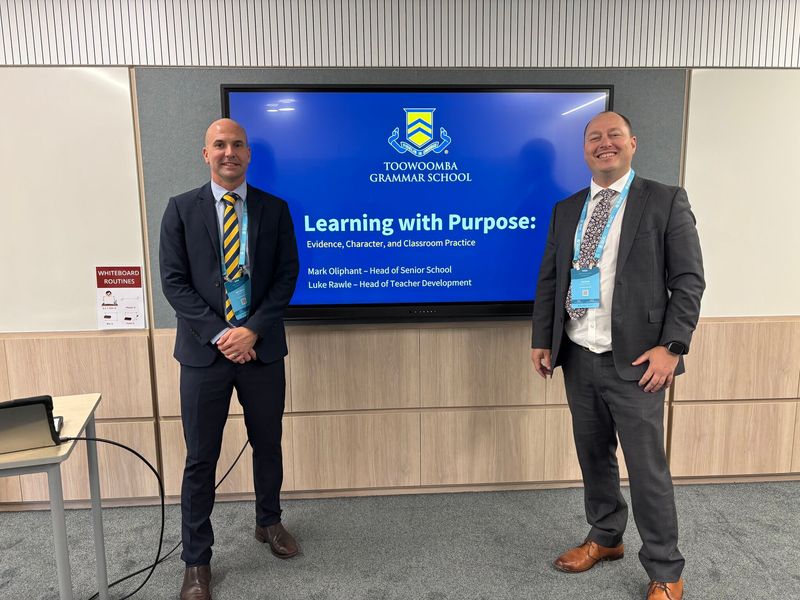
Toowoomba Grammar School was represented by Headmaster, Dr John Kinniburgh; Head of Senior School and Acting Deputy Headmaster, Mr Mark Oliphant and Head of Teacher Development, Mr Luke Rawle. The delegates also played an active part in the conference, presenting a workshop exploring the structures and professional learning used to align teaching practices to how boys learn and to position character as teachable, observable and aspirational. This included an outline of Toowoomba Grammar School’s journey in implementing strategic initiatives across teaching and learning, character development and wellbeing. Mr Rawle explored how principles from the cognitive science have informed improvements in teaching practice through intentional changes to professional learning, classroom design, schoolwide routines to align teaching with how boys learn. Mr Oliphant presented the School’s character education model, highlighting the structural reforms to embed dedicated wellbeing learning, the use of external partners to gather student voice and data, staffing structures to support delivery and the development of a bespoke taught wellbeing curriculum aligned to the School’s core purpose: educating boys and developing their good character for life.
A particular highlight of the conference was the keynote presentation by Mr Tom Bennett – No More Lost Boys. As a leading British educator, author and behaviour specialist, Mr Bennett used the motif of Peter Pan to acutely highlight many of the societal issues surrounding boys and concluded that without purpose, direction and meaning, many boys are simply drifting in society. Tom argued that boys are not broken, they are simply unanchored and currently face heightened challenges through the lure of a “Digital Neverland”. The important message for boys’ schools was that character is built, not found. Boys learn from their environment, through role models and discovering what boundaries exist, what is celebrated, valued and insisted upon.
These ideas were further emphasised by the closing keynote by Mr Andrew Lee, distinguished by his international career in law, who provided the perspective of a parent on boys’ education. His evocative presentation highlighted that the incredible success that he has enjoyed throughout his career, including postgraduate study at Harvard and Standford and subsequent international legal career, has been shaped most by his failures. He expressed that he hopes his son fails a lot, so that he can learn and grow from these experiences. Mr Lee, however, expressed that some failures should not be faced alone because they are not a reflection of effort or commitment. As such, he emphasised the importance of boys’ schools in cultivating compassion through service, to help instil a shared sense of purpose and humanity amongst students, teachers and parents.
Overall, the conference provided a valuable experience for our staff to both learn and contribute to the opportunities for collaboration, networking and sharing of best practice amongst a coalition of boys’ schools who are seeking to both build character and cultivate humanity in boys.
Latest Blog
Study Skills Program
Just as teachers benefit from an understanding of the Learning Sciences in their lesson planning and preparation, so to do students when they are studying for major summative assessments. A survey of TGS students in Years 9 to 12 found that 70% of our boys felt that they knew how to study, with the biggest impediments to study being lack of motivation and too many distractions. The most highly preferred study technique was found to be rewriting notes. Cramming, rereading the text and rewriting…
Developing Teachers Worldwide
I recently had the pleasure of attending the 2023 International Boys’ Schools Coalition (IBSC) Annual Conference at Westlake Boys High School in Auckland, New Zealand, in my capacity as a Team Leader in the IBSC Action Research Program. Action research is a systematic inquiry conducted by teachers in their own classroom to better understand the impact that an aspect of their practice is having on their students. Each year, 40 teachers from IBSC member schools from around the world are accepted…
Developing a Sense of Belonging for our TGS Boarders
How do we adequately develop a teenager’s 'sense of belonging' in boarding? Head of Boyce House, Boarding, Mr Michael Hall has investigated how 'Maslow's Hierarchy of Needs' applies to boarding. It is a psychological theory that suggests human beings have a set of fundamental needs that must be fulfilled in a hierarchical order. The theory proposes that individuals must first satisfy their physiological needs before moving on to higher-level needs, such as the 'belongingness' that is so…
Kia Moemoeā – Dream Beyond Limits
A 12-year study has found that boys consistently perform better in an all boys’ school compared to boys in co-educational schools. This was one of several interesting topics presented at the recent International Boys’ Schools Coalition (IBSC) Conference in Auckland, New Zealand which I attended alongside three of my Toowoomba Grammar School colleagues – Mr Luke Rawle, Mr Dave Klan and Mrs Jessica Galbraith. We joined 600 leading educators from 15 countries around the world for the four-day…
Blue and Gold in the Blood
“I had such fond memories from the School and enjoyed all the opportunities available, particularly participating in sport and learning at such a high level; my sons were going to have the same great education,” said Chris adamantly. Chris was a boarder from Dalby and an “all-rounder” as a student. He was part of the 1st XV, a CUO in the Cadets, a member of the debating team, involved in drama (featuring in two plays during his time) and a good academic student. “I really enjoyed boarding,”…
The Benefits of Repeated Reading
An effective and evidence-based method that can significantly improve your child's reading abilities is repeated reading. Reading proficiency is a vital skill that sets the foundation for academic success and lifelong learning. Repeated reading, a simple yet powerful technique, has been proven to enhance reading fluency, comprehension, and overall confidence. Let's delve into why repeated reading is such a beneficial practice for your child. Research consistently supports the benefits of…
Print v Digital
I recently read an article by Petra Stock, entitled "Streaming Stories: Will Children’s Digital Book Platforms Upend Print", an interesting discussion comparing ebooks and print media and the ways they are being used during and post COVID. Which is better according to the article? Well, there is a clear winner; however, like many things, the answer can depend on the situation. I'd like to break elements of the article down, along with my own thoughts and compare the two. Social…
Striking a Balance
We understand that, as parents, we aspire to provide our children with the best education and opportunities for growth. Within the Junior School at Toowoomba Grammar School, we believe in fostering a love for learning while enabling your son to reach his full potential. In this article, we would like to emphasise the significance of automaticity and basic skill practice in extending your child's learning journey, while emphasising the importance of respecting their individual pace. Automaticity…
Developing Sportsmanship from Prep
Overwhelming pride in wearing the Blue and Gold is a familiar emotion for Toowoomba Grammar School students, as is abundantly evident in all our boys, from Prep to Year 12. This emotion and passion for the School is the essence of our TGS culture and defines what it means to be a TGS student. The launch of the 2022 - 2026 Strategic Plan creates an exciting opportunity for our co-curricular program, which links perfectly into the "character and wellbeing" pillar. The development of good…


